Rose quartz, interiors, and symbolic practice
Spatial Alchemy: Rose Quartz Feng Shui for Relationship Harmony & Sanctuary
If you are searching for Feng Shui for Relationships, you are probably asking a more practical question than “Where should I put a crystal?” You may be trying to make a bedroom feel less tense, a shared living area feel more welcoming, or a home after a relationship shift feel like it belongs to the present again.
Rose quartz enters that search because many contemporary readers associate it with tenderness, affection, and emotional softness. Feng Shui-inspired placement adds another layer: direction, corner, material, balance, and flow. Used well, the two can create a symbolic home ritual and a more intentional atmosphere. Used carelessly, they can become a promise the room cannot keep.
The useful middle ground is simple: rose quartz feng shui can help shape a relationship-supportive home sanctuary when it is treated as symbolic design, not as a guaranteed relationship intervention. Its value comes from placement, light, texture, repetition, and the behavior the space quietly encourages.
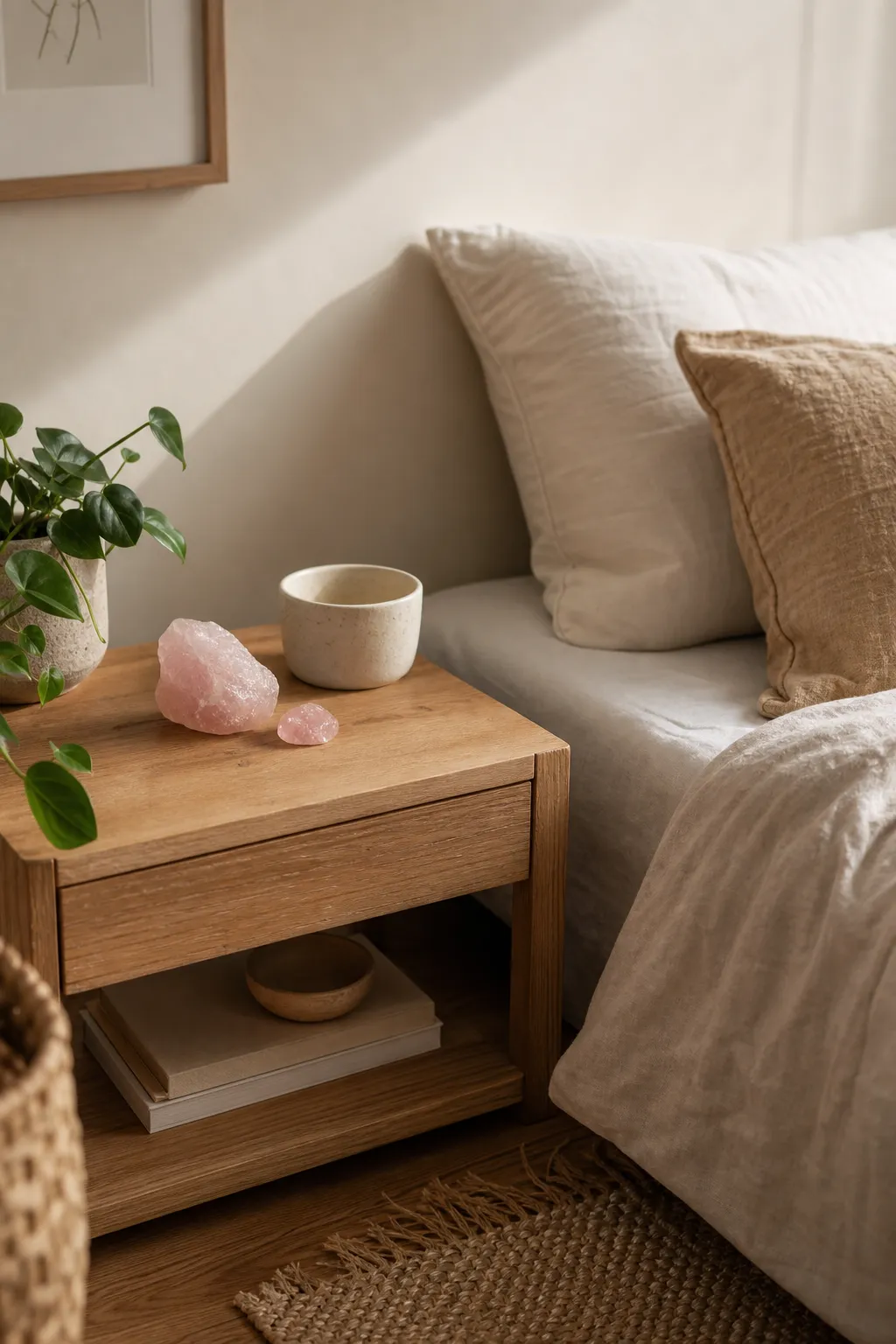
broader context
Rose quartz context note
This narrower page makes more sense after the broader rose quartz context page.
What Spatial Alchemy Means Here
Spatial alchemy is best understood as a design phrase. It describes the way a room changes when you edit what people see, touch, move around, and return to each day. A polished stone on a bedside table, a small bowl of tumbled rose quartz on a shelf, or a single carved piece near a reading chair can give the eye and hand a focal point.
The meaning comes from use and interpretation. The stone does not control another person’s feelings. It can, however, mark a place as calmer, more considered, or more aligned with how you want to behave in that room.
That distinction matters. A relationship-supportive sanctuary is not a room that forces harmony. It is a room that reduces avoidable friction where possible: fewer visual reminders of old arguments, fewer cluttered surfaces around rest, fewer objects that keep past stories in the center of daily life. Rose quartz can be part of that edit, especially for readers who already work with symbolic objects.
Feng Shui-inspired design brings in a language of orientation and balance. Readers often look for the Southwest Corner, Earth Element decor, relationship altars, and spatial energetics. Those terms can be meaningful inside personal practice, but this page treats them as symbolic and cultural design language rather than universal rules.
The Southwest Corner as a Symbolic Relationship Zone
The Southwest Corner is one of the most common ideas in southwest corner feng shui. In relationship-focused home styling, people often use this area to suggest steadiness, warmth, pair energy, and grounded support. The stronger question is not whether the corner “works” automatically. It is whether that part of the home can hold a clear relationship intention without becoming cluttered, anxious, or performative.
If the Southwest area is already calm, visible, and easy to maintain, it may be a natural place for rose quartz. A small pair of stones, a low ceramic dish, a warm lamp, or a soft textile can feel more coherent than a crowded crystal display. If that area is full of laundry, storage, old paperwork, or unfinished tasks, clearing the competing message of the space comes before adding symbolism.
Earth Element decor is often used in this conversation because earth language suggests weight, steadiness, containment, and support. In practical design terms, that might look like clay, stone, matte ceramics, sand-colored textiles, low furniture, square shapes, muted pinks, or warm neutrals. A bedroom sanctuary can feel grounded through restraint as much as through objects.
A simple Southwest arrangement might include
- One piece of rose quartz instead of a crowded cluster.
- A warm, low light source instead of harsh overhead brightness.
- A ceramic, wooden, or stone tray to visually contain the arrangement.
- One paired object, such as two small stones or two cups, if pair symbolism feels natural.
- Enough empty space around the arrangement for it to feel intentional.
The common mistake is turning the Southwest Corner into a command center for romance. A home sanctuary usually benefits from less pressure, not more. If the setup starts to feel like a demand for instant change, simplify it.
Rose Quartz, Pairs, and Relationship Altars
A relationship altar can be beautiful when it is modest, private, and honest. It can also become strained when it is used to manage another person’s behavior, rewrite a breakup, or avoid direct conversation. The difference is not the stone. The difference is the intention behind the arrangement.
Rose quartz is often used in contemporary home ritual as a symbol of affection, gentleness, self-regard, and relational openness. On a bedside table, it may remind you to soften the room before sleep. Near a seating area, it may mark a place where conversation should stay respectful. On a shelf after a separation, it may help signal that the home is being reclaimed for steadiness rather than longing.
Control-oriented uses are different. A symbolic home ritual should not be framed as a way to make someone return, override a boundary, force attraction, or bypass serious conflict. Post-divorce space clearing, for example, can be described as reorganizing a home after a life transition: removing reminders that no longer belong in the center, refreshing textiles, changing sleeping arrangements, or creating a shelf that reflects the present.
The same care applies to rose quartz mantras or written intentions. Keep the language centered on your own conduct and the atmosphere you want to practice. “I want this room to support honest speech” is more grounded than a phrase aimed at changing someone else’s emotions. “May this bedroom feel restful and kind” is more appropriate than a promise about what the stone will make happen.
Spatial energetics, in this restrained sense, means the felt pattern of a room: where attention goes, where the body relaxes, what objects repeatedly trigger memory, and whether the layout invites closeness or withdrawal. That is enough. The practice does not need a stronger claim to be useful.
Bedroom Sanctuary Choices That Change the Room
The bedroom is where rose quartz feng shui can easily become either helpful or overburdened. Bedrooms already carry expectations around rest, intimacy, privacy, and vulnerability, so every object can feel louder there. A bedroom sanctuary should begin with atmosphere before symbolism.
Start with visibility. If a rose quartz piece is hidden behind charging cables, surrounded by unfinished tasks, or constantly knocked over, it becomes part of the clutter field. A smaller placement with breathing room will usually feel stronger than a large piece competing with visual noise.
Then look at symmetry. In relationship-focused styling, pairs are often used to suggest mutuality: two bedside lamps, two pillows, two small stones, two vessels. This can be a useful visual cue for couples, but it should not become rigid. A single person may prefer one central object that represents readiness and self-respect. A couple may prefer balanced nightstands so one person does not have all the comfort while the other gets the leftover corner.
A Digital Sunset Routine can make the rose quartz placement more coherent. If the bedroom is dominated by screens, notifications, and late-night work, adding a stone will not change the room’s mood by itself. A stronger sequence might be to charge devices away from the bed, lower the light, place the stone where it marks the transition into rest, and keep the nightstand from becoming a control panel.
An emotional regulation chair can also fit the home sanctuary frame if it stays design-focused. This might be a chair outside the bed zone with a soft throw, a small table, a warm lamp, and perhaps a rose quartz piece nearby. Its purpose is not to solve conflict. It gives the home a designated place for pausing, reading, breathing, or returning to a steadier tone before a hard conversation continues.
The room can be arranged to feel softer, less chaotic, and more respectful. It cannot be styled into doing the work of consent, communication, accountability, or real-world support.
Biophilic Design for Couples Without the Buzzwords
Biophilic Design often appears beside relationship sanctuary language because natural materials and living textures can make a room feel less sterile. For couples, the useful question is not whether a trend label applies. The question is whether nature-linked cues make the space feel more breathable and less defensive.
In practical terms, biophilic design for couples may include an easy-care plant, linen or cotton bedding, a wooden tray under the rose quartz, natural light where available, a view toward something green, or a bowl of stones arranged without excessive polish. These details work best when they reduce sensory strain rather than create another maintenance burden.
The phrase “Biophilic 2.0” sometimes appears in market language around responsive or emotionally attuned interiors. Without stronger source support, it is better treated as aspirational language. A room does not need a futuristic identity to feel supportive. It needs coherent choices: air, texture, sound, light, and a layout that respects how people actually move.
Soft minimalism is useful here because it gives relationship spaces room to breathe without making them cold. Instead of stripping the room bare, it edits the room down to fewer, warmer, more meaningful objects. A rose quartz piece can sit well in that setting because it does not have to compete with a dozen other symbols.
Sensory grounding design can stay just as simple. A textured blanket, a smooth stone, a warm rug underfoot, and a dim lamp can all help the room feel more present. These are observable design choices, not proof of a guaranteed emotional result.
When 2026 Feng Shui Language Helps, and When It Distracts
Searches around 2026 Fire Horse Feng Shui, Flying Star 7, Fire Element balancing, and Southwest sector defense reflect a real reader pattern: people want time-specific guidance and a sense that the year has its own spatial mood. These phrases may be meaningful for readers already working within a contemporary Feng Shui practice, but this page does not verify annual systems, calculations, or traditional claims from the supplied material.
That does not mean the language has to be ignored. It means it should be placed correctly.
If “2026 Fire Horse” language helps you notice that your home feels overstimulating, too red, too bright, too argumentative, or too busy, it can function as a symbolic design prompt. You might soften lighting, reduce visual heat, add earth-toned textiles, or keep rose quartz in a quieter arrangement rather than a dramatic altar.
If “Flying Star 7” language makes you feel that one corner of your home is dangerous unless defended by a complex rose quartz grid, the practice may be creating more pressure than sanctuary. A phrase like “setting up a rose quartz defense grid in the 2026 Southwest sector” belongs in the category of symbolic practice language unless stronger evidence is available. It should not be presented as necessary protection or as a guaranteed neutralizing method.
The same applies to salt water methods, full moon resets, mirror affirmation rituals, Peach Blossom energy, and future self altars. These can be described as contemporary rituals of reflection, release, or intention when readers use them gently. They should not be elevated into promises about attracting a partner, repairing a relationship, or changing life outcomes.
A grounded 2026-oriented approach would ask
- Does this space feel too visually intense for the relationship atmosphere I want?
- Are symbolic objects helping me act more clearly, or making me more anxious?
- Is my ritual centered on my own choices rather than another person’s response?
- Can I maintain this arrangement without turning it into a source of pressure?
That is enough structure for symbolic practice to stay useful.
Moving On and Reclaiming Space After a Relationship Shift
Relationship-focused rose quartz placement is not only for couples. Many readers arrive at this topic after a breakup, divorce, estrangement, or personal reset. The language of space clearing can be appealing because the home often holds visible memory: shared objects, old gifts, bed placement, photographs, furniture bought for a former life.
A spatial pattern disruption ritual can be understood in plain terms: change the physical pattern so the room no longer repeats the same emotional cue every day. Move the bed if possible. Change the side table arrangement. Wash or replace a textile. Retire objects that keep a past connection in the center of the room. Place rose quartz only after the space has been edited, so it marks a new intention rather than covering over the old one.
A rose quartz water ritual should stay symbolic and simple. Because this page has no source basis for mineral safety claims or ritual effectiveness, it should not instruct readers to drink, ingest, or soak materials in ways that imply physical benefit. A safer symbolic version is visual: place a glass bowl of clean water near, not necessarily containing, the stone; use it as a temporary reflection point; then empty and clean the bowl. The meaning is in the pause and reset, not in a claimed material transfer.
“Clearing somatic cellular memory from a living space” is a phrase that can drift into unsupported territory. A more grounded version is this: homes store reminders through objects, routes, scent, sound, and habit. Changing those cues may help a space feel less tied to an old chapter, but it should not be framed as a verified body-level process.
Post-divorce space clearing is best treated as practical and symbolic reclamation. It can include decluttering, rearranging, repainting, changing lighting, replacing shared bedding, creating a small relationship altar for future values, or keeping rose quartz in a place associated with self-respect rather than longing.
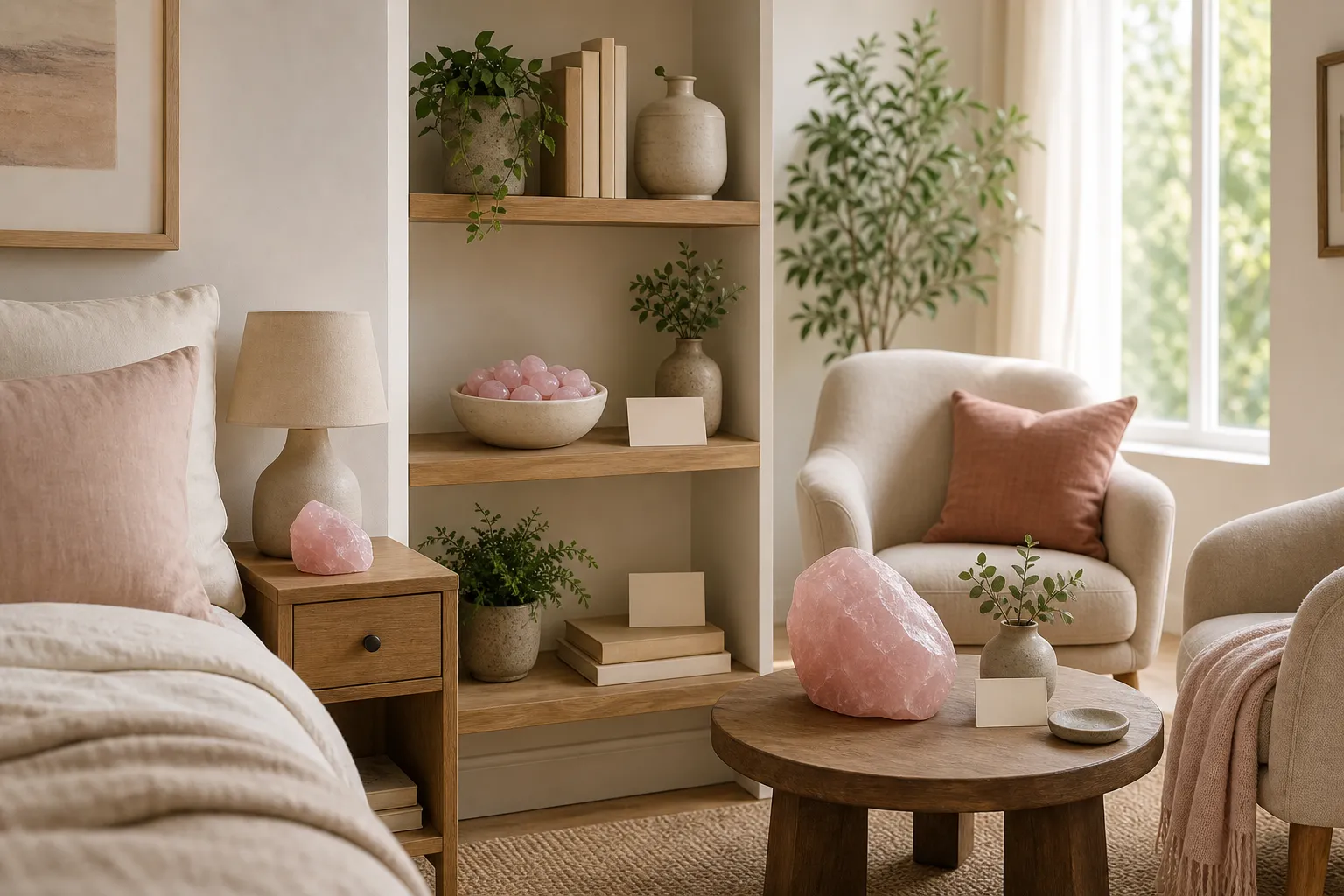
A Decision Frame for Rose Quartz Feng Shui Placement
Before choosing a placement, decide what role the stone is meant to play. Most confusion comes from asking one object to do too many things.
Mood marker
Best use
Softens the visual tone of a room.
Watch for
Expecting the object to change behavior by itself.
Intention object
Best use
Reminds you how you want to show up.
Watch for
Aiming the intention at controlling someone else.
Design anchor
Best use
Gives a shelf, altar, or bedside area coherence.
Watch for
Overcrowding the arrangement with too many symbols.
Transition marker
Best use
Marks moving on, resetting, or returning home.
Watch for
Using ritual to avoid real conversations or support.
For a shared bedroom, the most stable choice is usually subtle and mutual: low light, uncluttered surfaces, balanced access to comfort, and rose quartz as one quiet accent.
For a single person creating a future self altar, the arrangement may be more personal: a stone, a written value, a natural texture, and one object that represents the kind of connection they want to be available for without grasping.
For a living room, rose quartz works better when it does not dominate. A small piece near a pair of chairs can suggest conversation. A bowl on a central table may feel welcoming if the table is otherwise clear. If the living room is where conflict often happens, the bigger design question may be seating angle, sound level, clutter, and whether people can step away from the conversation when needed.
For a Southwest Corner, choose simplicity over intensity. If you already use Feng Shui-inspired design, the Southwest can be a symbolic relationship zone. If you do not, it can still be a useful prompt to choose one area of the home for steadiness, affection, and care.
Where the Boundary Belongs
Rose quartz, Feng Shui-inspired design, and spatial energetics can be meaningful parts of a home ritual. They can give form to intention, make a shelf or bedroom feel more deliberate, and remind you to notice what the home is asking from the people who live there.
They cannot guarantee relationship harmony, attraction, reconciliation, safety, or emotional repair. They should not be used to minimize coercive, unsafe, abusive, or seriously distressing relationship situations. In those circumstances, the relevant support is real-world help from trusted people, appropriate services, or qualified professionals, not crystal placement or home styling alone.
That boundary does not make the practice empty. It makes it more honest. A relationship-supportive home sanctuary is built from small material choices and the behavior those choices encourage: a cleared surface, a softer lamp, a chair that invites pause, a bedroom that is not ruled by screens, and a symbolic stone that reminds you to speak and listen with care.
Spatial alchemy, at its best, is not the fantasy that a room can force love to happen. It is the quieter practice of arranging a home so that tenderness, steadiness, and honest presence have somewhere to land.