The Safe Way to Perform a Glass Scratch Test on Your Quartz
By Luna Harper
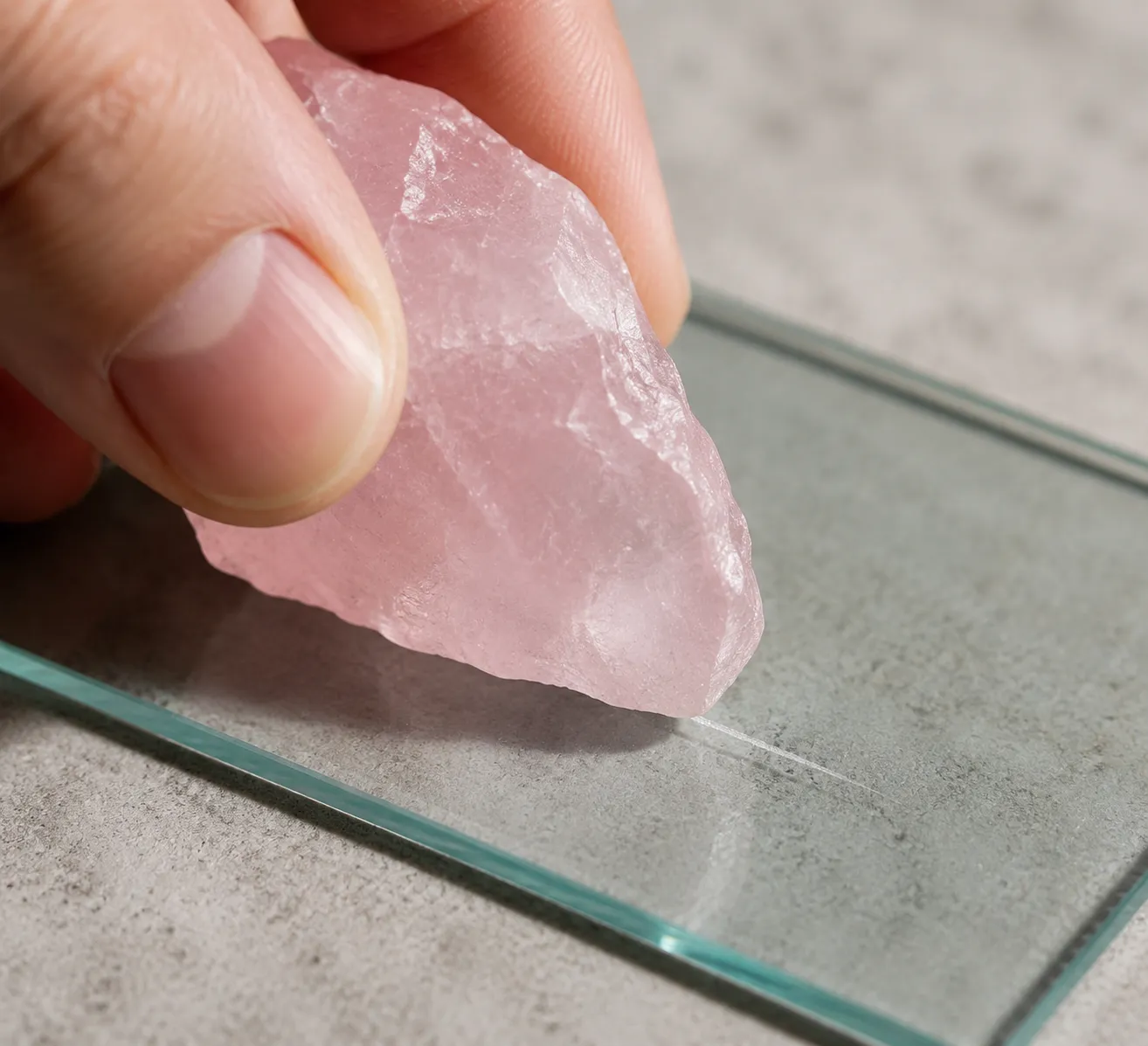
The Safe Way to Perform a Glass Scratch Test on Your Quartz
Yes — a quartz edge can often scratch ordinary scrap glass, because quartz is commonly listed at Mohs 7 and everyday glass is usually softer. That makes a glass scratch test a simple Mohs Hardness Test clue, not proof that a stone is definitely quartz or a full check of authenticity, value, or origin.
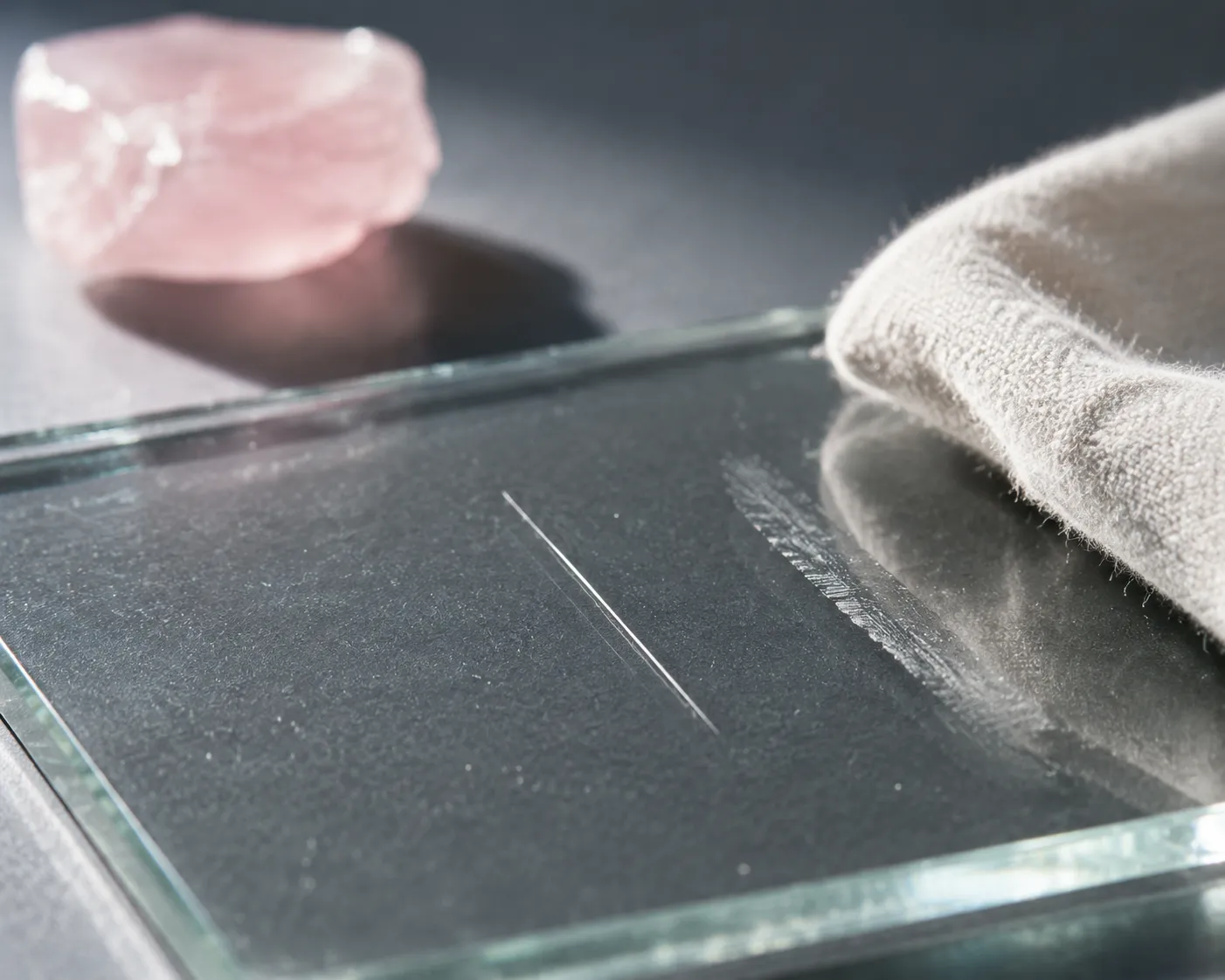
The safe version is limited and deliberate: use only scrap glass, choose a sharp quartz edge, make one short light stroke, and then check whether the line is still there after a gentle wipe with a cloth. If the mark wipes away, it was probably residue rather than a true scratch.
What this test can tell you
A Mohs hardness test compares relative scratch resistance. In plain terms: a harder material can scratch a softer one.
So the useful question is not, “Did this prove my crystal is real?” It is:
Is this edge hard enough to scratch this piece of glass?
If yes, that result is consistent with quartz hardness. It suggests the tested edge is harder than the glass surface you used.
That can be useful if you are trying to rule out something much softer. But it is still only one clue. It does not confirm natural origin, treatment status, value, source, or full mineral identity.
It also helps to separate hardness from toughness. Quartz is scratch-resistant, but it can still chip or crack.
Before you test
Keep the setup simple, and do not test anything you would mind damaging.
You need:
- A small piece of scrap glass
- A quartz piece with a natural point or sharp edge
- A stable, flat surface
- Good angled light
- A soft cloth
- Optional gloves and eye protection
Avoid testing on windows, mirrors, phone screens, eyeglasses, car glass, tables, countertops, display cases, or any other useful household surface. Also avoid jewelry-set stones or collector pieces unless minor damage would be acceptable.
A rounded or polished stone may not scratch clearly even if it is quartz, simply because it does not have a good testing edge.
How to do a safe glass scratch test
-
1. Clean the glass
Wipe away dust, grit, and fingerprints. Use a fresh area without old scratches.
-
2. Choose the quartz edge
Use an existing point, corner, or natural edge. Do not break the quartz to make one.
-
3. Lay the glass flat
The glass should sit fully supported on a stable surface and should not flex or wobble. Keep your free hand away from the test line.
-
4. Make one short, light stroke
Draw the quartz edge across the glass once, using controlled pressure. Think light and steady, not forceful.
-
5. Stop if the glass feels unsafe
If it shifts, flexes, chips, or cracks, stop.
-
6. Check the line under angled light
A real scratch usually looks like a fine cut in the surface.
-
7. Wipe gently with a cloth
If the line disappears, it was likely powder or residue. If it remains, it is more likely a true scratch.
If the result is unclear, try once more on a different clean spot. Do not keep repeating the test with more pressure.
How to read the result
A likely positive result is simple: the quartz leaves a narrow line that stays visible after wiping and looks cut into the glass under light. That suggests the tested edge is harder than the tested glass.
An unclear result often comes down to one of these:
- the quartz edge is too rounded or polished
- the surface is dirty or coated
- the glass already has marks
- the line is transferred powder, not a cut
- the stroke slipped
- loose grit made a false mark
A failed scratch does not automatically mean the piece is not quartz. It only means that this edge did not clearly scratch this glass under these conditions.
A successful scratch should not be overread either. Many materials harder than ordinary glass can scratch it. So if a quartz edge scratches glass, that supports a hardness clue — nothing more.
The most common misunderstanding
The biggest mistake is treating any visible line as a scratch.
In a true glass scratch test, the line should be a physical mark in the glass itself. If it wipes away, it was not a scratch. Sound is not enough, and neither is a pale streak on the surface.
Glass also varies. In simple mineral testing, ordinary glass is often treated as softer than quartz, but not all glass behaves exactly the same way. Surface condition, coatings, and composition can affect the result. That is why this is best treated as a rough household check, not a precise standard.
When this test is the wrong tool
A home Mohs Hardness Test works best when the question is small and practical: does this piece behave like a hard mineral against ordinary glass?
It is the wrong tool when the piece is valuable, sentimental, jewelry-set, or part of a purchase dispute. In those cases, scratching either the stone or the test surface is not worth it, and one hardness result still would not answer every identity question.
Quick summary
Use the test only if damage to the glass is acceptable and minor wear to the quartz is also acceptable.
- Use scrap glass only
- Use a sharp quartz edge
- Keep the glass flat and stable
- Make one short light stroke
- Check the line under angled light
- Wipe with a cloth
- If the mark remains, it may be a true scratch
- Treat the result as one hardness clue
The most accurate conclusion is a modest one: if your quartz edge leaves a true scratch on ordinary scrap glass, that result is consistent with quartz Mohs 7 behavior. It does not fully identify the stone, prove authenticity, or settle value.
Sources
Sources and further reading
Reference links are limited to sources considered suitable for public citation in this page.