Offline attention ritual
The Offline Lunar Ceremony: Unplugging to Restore Deep Focus
An offline lunar ceremony is a symbolic, phone-free ritual for creating a calmer boundary around your attention. It is not a clinical method, a neuroscience intervention, or a guarantee that deep focus will appear on command.
In this article, Algorithmic Detox Moon Ceremonies means something simple: choose a clear offline window, move devices out of reach, make the room quieter, write one intention, and decide how you will return to your phone afterward.
The useful part is not the moon as an authority or “detox” as a technical claim. The useful part is the boundary. For a short, chosen period, your attention has fewer places to scatter.
broader context
Start with the main rose quartz page
This narrower page makes more sense after the broader rose quartz context page.
What an Offline Lunar Ceremony Can Actually Do
A grounded offline lunar ceremony can turn a vague wish like “I should check my phone less” into a visible act: the phone is outside the room, notifications are not part of the next hour, and the space is arranged for one kind of attention.
That is the realistic promise. The ceremony can help you mark a pause, reduce obvious digital interruptions during the window, and give reflection a quieter container. It should not be described as resetting brain chemistry, restoring attention in a measurable way, or producing a guaranteed productivity result.
The lunar element can still matter as symbolism. Moon language often feels cyclical, quiet, and separate from the tempo of feeds, alerts, and algorithmic prompts. But unless you are working from reliable cultural or historical context, it is best to treat the ceremony as a private lunar-themed boundary practice, not as an authoritative tradition.
A simple version looks like this
- Choose a phone-free window, such as 30, 60, or 90 minutes.
- Put the phone, watch, tablet, and laptop outside the space unless one device is essential.
- Set a clear start and end time before you begin.
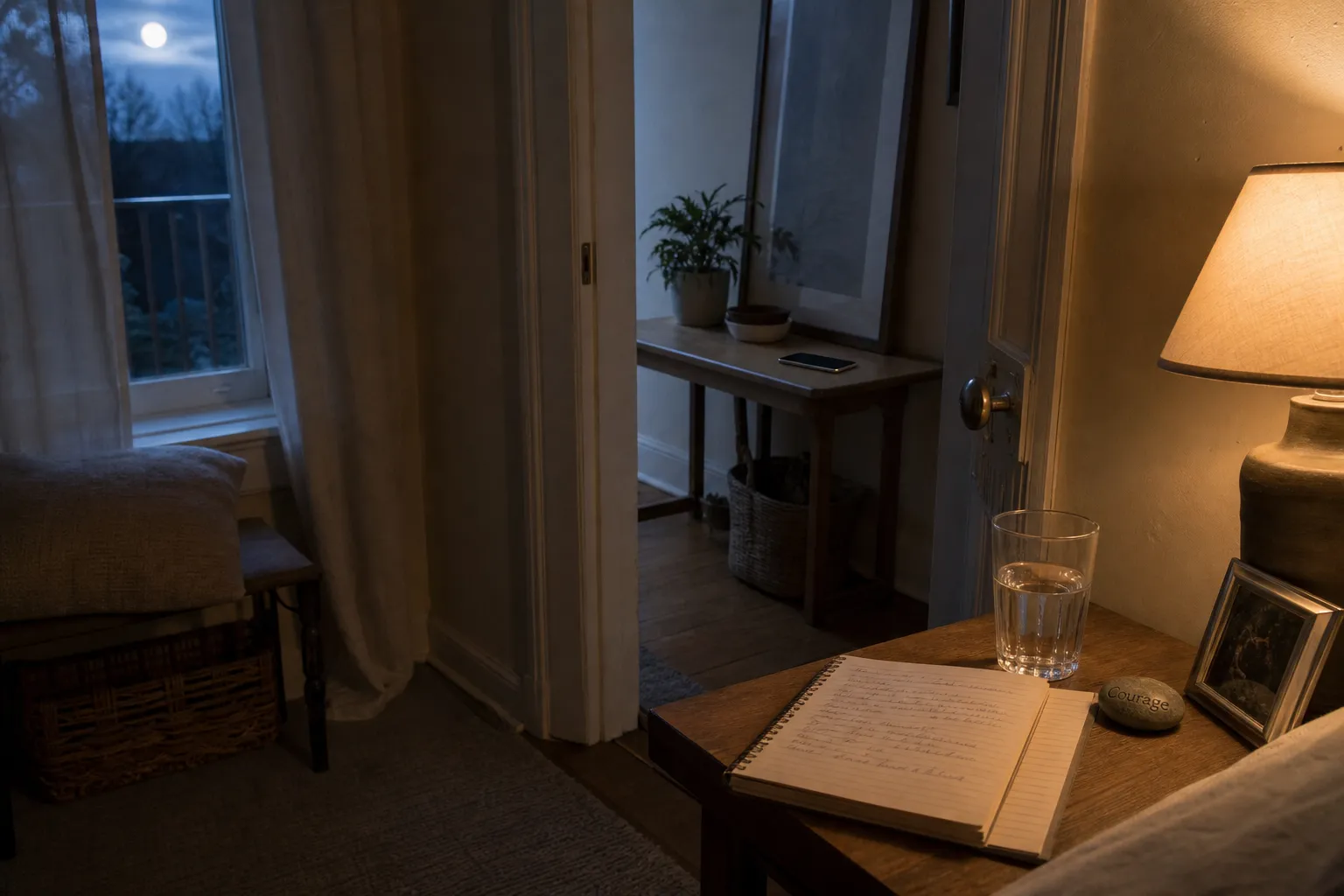
- Prepare a quiet space with a notebook, water, a candle or lamp, and one meaningful object if you use one.
- Write one intention for what you are stepping away from and what you are making room for.
- Close with a re-entry rule so the first action afterward is not automatic scrolling.
The ceremony does not need to be elaborate. It needs to make the boundary visible enough that you do not have to renegotiate it every few minutes.
How to Build It Without Overclaiming
Start with the edge of the ritual. “From 8:00 to 9:00, my phone stays outside the room” is stronger than “I will be less online tonight.” One sentence can be acted on. The other can dissolve as soon as a message arrives.
Name the purpose in ordinary language
- “I want one hour of quiet reading.”
- “I want to write three pages without checking feeds.”
- “I want to sit with the day before I answer more people.”
These are not promises of transformation. They are directions for the space.
The quiet space can be plain: a cleared surface, softer light, a closed door, and a notebook. If you use rose quartz, treat it as a symbolic anchor rather than an object with guaranteed effects. It can represent softness, steadiness, or emotional warmth, but the ritual should not depend on the stone producing an outcome.
Keep the journaling short
- What am I unplugging from tonight?
- What kind of attention do I want to protect?
- What will I do when the offline window ends?
That last question matters. Many digital boundaries fail at the return, not the beginning. If the ritual ends with “now I can check everything,” the phone can immediately reclaim the room. A re-entry boundary gives the ending shape: check urgent messages only, avoid social feeds until morning, or spend five minutes deciding what actually needs a response.
If the phrase “digital quarantine” feels too severe, do not use it. The same practice can be called an offline window, a quiet hour, or a device-free interval. The language should support the boundary, not make it feel punitive.
What Changes the Answer
The ceremony is reasonable if you want a symbolic pause, a calmer room, or a practical phone-free window. It gives your attention a beginning, middle, and end. It may also help you notice how quickly you reach for a device, without turning that observation into a diagnosis or a conclusion about your brain.
The answer becomes more cautious if you expect a “dopamine detox.” Popular language often uses that phrase to mean stepping away from highly stimulating digital habits. But this page is not making claims about dopamine mechanisms. A better framing is simpler: an offline boundary may reduce exposure to digital prompts during the window, but it should not be described as resetting brain chemistry.
The answer also changes if you expect deep focus to arrive immediately. A quiet room removes some interruptions; it does not automatically create concentration. You may still feel restless, tired, bored, or pulled toward the device. That does not mean the ritual failed. It may simply show what you brought into the room.
If distress, compulsive technology use, severe sleep disruption, or mental health concerns are part of the picture, do not make a ritual the whole plan. A phone-free window may still feel supportive, but qualified help is the right place for concerns that need more than a self-guided boundary.
Common Confusion Around Algorithmic Detox Language
“Algorithmic detox ceremony” is attractive because it names a familiar feeling: attention being pulled by feeds, recommendations, alerts, and loops you did not consciously choose. The phrase becomes misleading only when it sounds like a technical intervention.
An offline lunar ceremony does not cleanse an algorithm, change platform design, erase habit loops, or prove that your focus has returned. It changes your local conditions for a chosen period. The phone is not in your hand. The feed is not open. The room is arranged for a different kind of attention.
There is also a difference between digital wellbeing boundaries and digital avoidance. A boundary says, “Not now, not in this room, not during this window.” Avoidance can become a way to postpone necessary communication, work, or care. The ceremony works best when it is honest about what it protects and what still needs to be handled later.
Moon timing can create another misunderstanding. A new moon or full moon may feel personally meaningful because it suggests phases, endings, beginnings, and return. That symbolism can be useful. It should not be presented as a rule unless you have separate, reliable context for the tradition you are referencing.
Finally, do not let the ceremony become another optimization task. If the ritual turns into finding the perfect candle, journal, crystal placement, and hour, it may start imitating the same attention economy it was meant to interrupt. A bounded offline ritual should reduce decisions, not multiply them.
A One-Hour Version
Five minutes before the start, decide what will be offline. Put the phone in another room. If you need a timer, use a non-networked timer or set the device before placing it away. Tell anyone necessary that you will be unavailable, but avoid turning preparation into a long round of messages.
At the start, mark the boundary in one physical way. Close the door. Dim the light. Place a notebook on the table. Hold a stone or another small object if it helps the pause feel tangible. The object does not need to prove anything. It is simply a marker: this hour is different.
For the first ten minutes, write the intention. A plain sentence is enough: “Tonight I am stepping away from feeds so I can hear my own thoughts.”
For the main part of the window, do one quiet activity. Read, write, sketch, plan tomorrow on paper, sit in silence, stretch gently, or clean one small surface. Do not stack the hour with too many tasks. The purpose is to protect attention, not complete a full self-improvement routine.
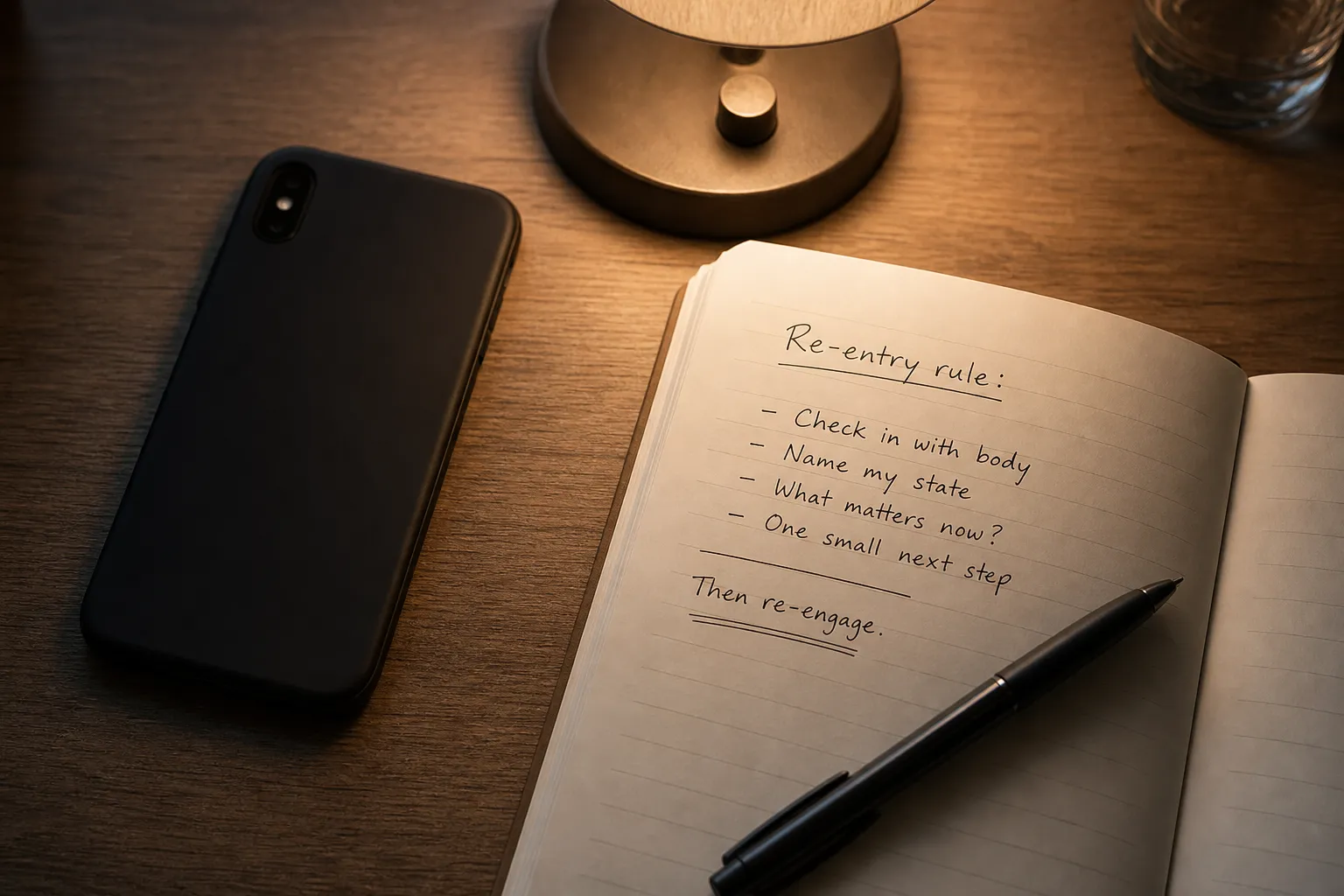
For the final five minutes, write the re-entry rule. Decide what happens when the window closes. You might check urgent messages only, leave social apps closed, or keep the phone out of the bedroom. The closing matters because it keeps the ritual from ending in an immediate return to the same loop.
If the first few minutes feel uncomfortable, treat that as information rather than failure. The room may feel unusually loud when the usual background stimulation is gone.
When to Keep It Smaller
Make the ceremony smaller whenever the language starts feeling too grand. If “offline lunar ceremony” helps you unplug with care, use it. If “algorithmic detox” feels harsh, replace it. If “digital quarantine” feels rigid, call it a quiet hour.
A smaller ritual can be just three steps: phone outside the room, one written intention, one re-entry rule. That is enough for this page’s purpose.
It should also become smaller when life is not quiet. Caregiving, shift work, urgent communication, shared housing, and accessibility needs can all change what a phone-free window looks like. In those cases, the boundary may be partial: one app closed, one device face down, one room quieter, or one notification category paused. A partial boundary is still a boundary if it is chosen clearly.
The most grounded version is both symbolic and practical. Symbolic, because the moon, the notebook, the dim room, or the object you choose can mark a threshold. Practical, because the start time, end time, device placement, and re-entry plan are what make the boundary real.
An offline lunar ceremony cannot guarantee deep focus. It can give focus a calmer place to begin.
FAQ
Is an offline lunar ceremony the same as a dopamine detox?
No. “Dopamine detox” is a popular phrase, but this ceremony should not be framed as changing dopamine levels. It is better understood as a short offline boundary that reduces digital prompts for a chosen window.
Do I have to follow the moon phase?
No. You can choose a new moon, full moon, or any ordinary evening if the symbolism helps. The timing is personal unless you are working within a specific tradition with reliable context.
What if I cannot put my phone away completely?
Use a partial boundary. Silence nonessential notifications, close one app category, place the phone across the room, or keep only urgent contacts available. The point is a clear boundary, not perfection.
What is the simplest version?
Put your phone outside the room, write one intention, spend 30 minutes offline, and decide what you will check first when the window ends.