Safe ritual method
How to Safely Brew Rose Quartz Moon Water for Energy Support
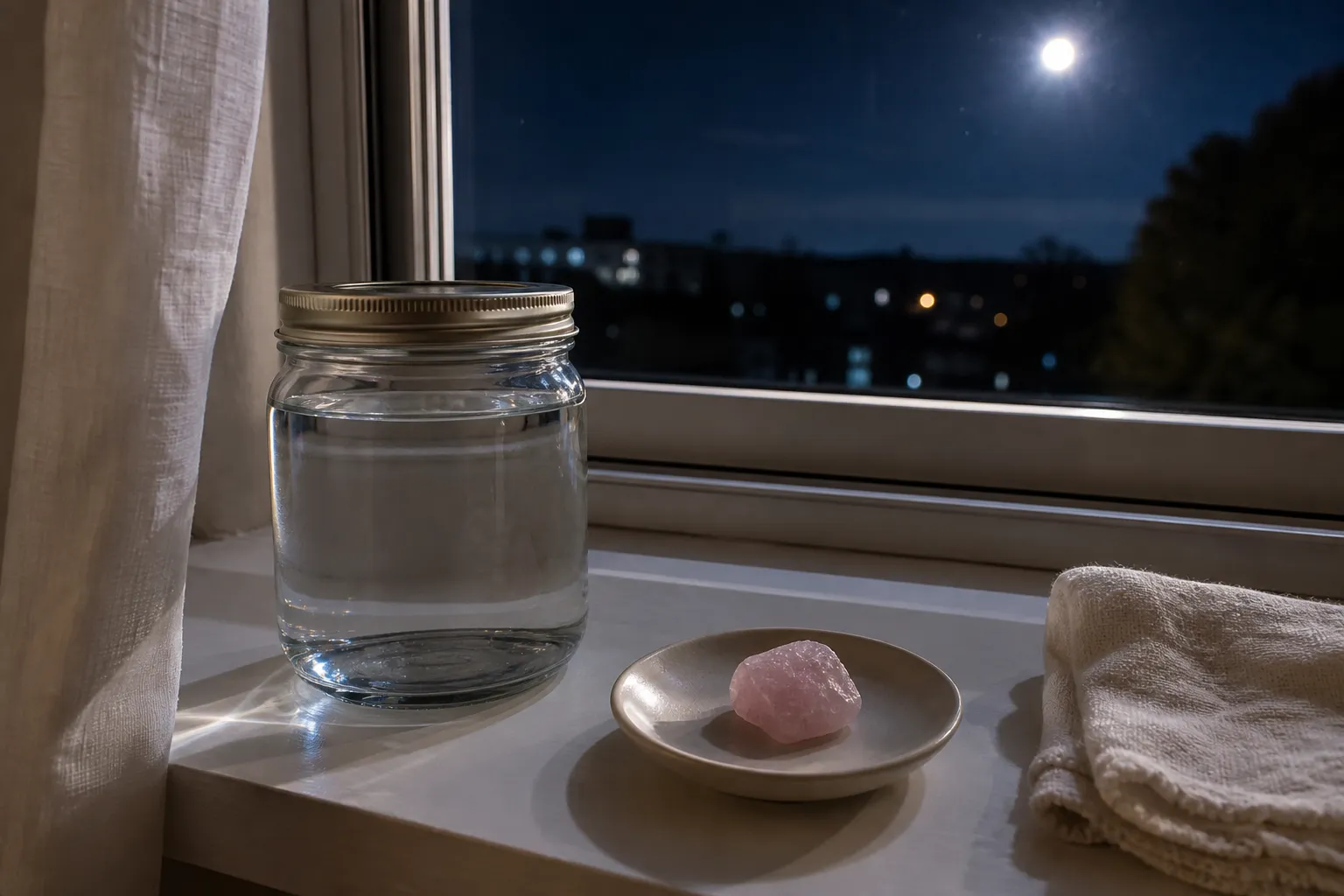
The safest way to make rose quartz moon water is to keep the crystal out of the water. Use a clean glass jar, plain water suitable for your intended use, and a piece of rose quartz placed beside, under, or around the sealed container overnight. This rose quartz moon water brewing method keeps the practice gentle and low-contact: the water holds the ritual moment, the stone holds the intention, and neither has to be treated as changing the water in a measurable way.
If you plan to drink it, treat it as ordinary water first and ritual water second. Clean handling matters more than moon-language. If you only plan to use it symbolically — for a bath, a candle ritual, a written intention, or a space-clearing routine — a clean setup is still the better default.
broader context
Start with the main rose quartz page
This narrower page makes more sense after the broader rose quartz context page.
A Conservative Rose Quartz Moon Water Method
Set up the ritual as if you are preparing something delicate, not as if the crystal has to be submerged. The indirect method is the safest default because a specific rose quartz piece may have unknown polish, dye, coating, glue, metal, surface residue, or inclusions.
A simple method
- Wash your hands and choose a clean glass jar with a lid.
- Fill it with distilled water, or another clean water source appropriate for how you plan to use it.
- Seal the jar before placing it on a windowsill, outside, or in another moonlit spot.
- Put the rose quartz beside the jar, under it, or around it without touching the water.
- Add a short intention if that is part of your practice.
- Bring the jar in the next morning and store it briefly in the refrigerator if you plan to keep it.
That is enough. More stones, longer exposure, or stronger claims do not make the ritual more responsible. A clean container, plain water, indirect crystal placement, and a clear intention are the useful parts.
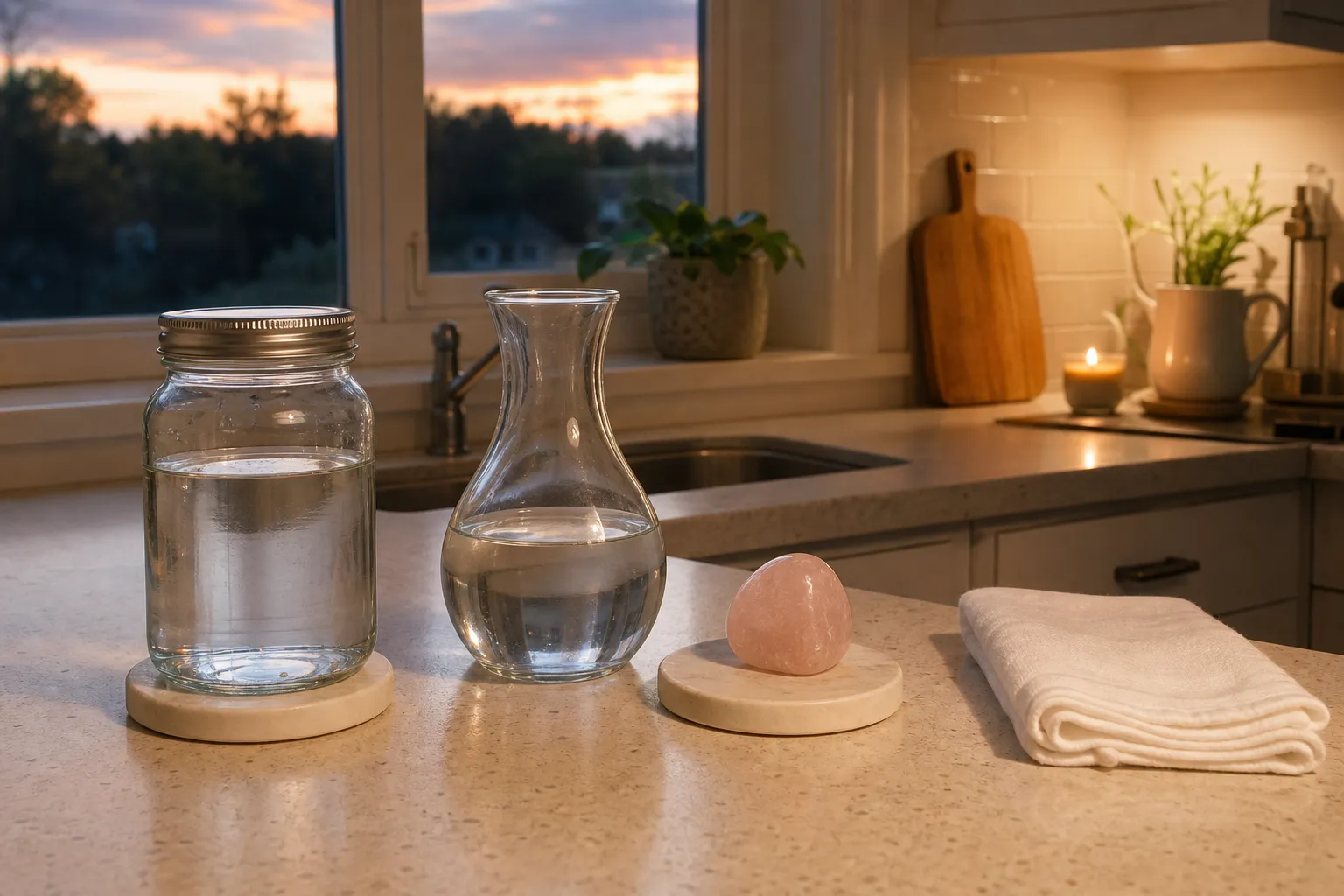
If you like visual symbolism, place the rose quartz on a small dish, cloth, or coaster beside the jar. Some readers arrange the stone so the jar sits within the “field” of the crystal. That belongs to ritual language, not measurement, but it can give the practice a quiet structure.
For intention setting, keep the wording grounded. Instead of asking the water to create a guaranteed outcome, try phrases such as “I return to softness,” “I meet the day with steadiness,” or “I make room for care without forcing an answer.”
Why Indirect Crystal Charging Is the Better Default
Many short moon water recipes tell readers to drop a crystal directly into the jar. For rose quartz moon water, direct immersion should not be the default, especially if the water might be consumed.
The issue is not that every piece of rose quartz is known to be unsuitable for water. The issue is uncertainty. A stone may be polished, treated, dyed, coated, glued into jewelry, handled with unknown substances, or stored in conditions you cannot verify. A seller’s spiritual description is not a water-safety assessment.
Indirect charging avoids that problem. The crystal stays part of the ritual without becoming an ingredient. It also fits the softer symbolism of rose quartz: the stone can mark care, tenderness, or reflection without entering the water.
If someone still chooses direct contact, the narrowest safer boundary is this: do not use jewelry, glued pieces, dyed stones, cracked stones, unknown coatings, or pieces you cannot identify with confidence. If the water is for drinking, keep the rose quartz outside the jar.
Clean Water, Clean Container, Short Storage
The practical safety steps are ordinary ones: clean water, clean container, covered storage, and short use.
- Use a freshly cleaned jar. Keep the lid on. Avoid open water where dust, insects, plant matter, pets, or outdoor debris can enter.
- If the jar has held oils, herbs, incense blends, or non-food materials, choose a different container.
- Distilled water is a common ritual choice because it feels simple and neutral, but the water should be clean and suitable for its intended use.
- If you would not use it as plain water, do not treat moonlight or rose quartz as changing that.
- Make a small amount, label the jar if needed, refrigerate it if you plan to keep it briefly, and discard it if it smells unusual, looks cloudy, has visible residue, or you are unsure how clean the setup remained.
For non-ingested use, the same common sense applies. A small bowl left open for days is different from a sealed jar handled carefully. If you plan to mist fabrics, surfaces, or skin, keep the mixture plain unless you have a separate, well-supported reason to add anything else.
Where “Energy Support” Fits
“Energy support” works best here as ritual language. It can describe a practice that helps you pause, focus, soften the atmosphere, or mark a personal transition. It should not be framed as a verified effect on the body, mood, sleep, hormones, fertility, detoxification, or physical energy.
The same boundary applies to “feminine frequency.” Some readers use that phrase to mean receptivity, softness, cyclical awareness, sensuality, care, or lunar symbolism. Those meanings can be personally resonant. But the phrase should not be treated as a biological frequency, a medical mechanism, or a universal spiritual category. If the wording feels useful, use it as metaphor. If it feels limiting, choose another phrase.
“Lunar photons” also needs careful handling. Moonlight is reflected light, but this page does not have a source basis for saying lunar photons charge rose quartz, restructure water, or transfer a measurable property. In ritual terms, setting water under moonlight can align an object with night, reflection, stillness, or a lunar calendar. That is different from making a mechanism claim.
This distinction does not make the ritual empty. It simply keeps the meaning in the right place: symbolic, sensory, seasonal, and personal.
What Can Change the Right Method
Intended use
If the water may be consumed, use the most conservative setup: clean drinking water, sealed container, no direct crystal contact, no additives, and short storage.
If the water is for symbolic use only, direct ingestion risk is not the same, but clean handling still matters. Plain water and indirect rose quartz placement remain the simplest approach.
The stone itself
A loose piece of rose quartz placed beside a jar is different from a pendant with metal parts, a bead on elastic cord, a polished object with unknown treatment, or a decorative item with glue.
The more complicated the object, the stronger the reason to avoid water contact.
Location
A sealed jar on a clean indoor windowsill is simpler than an open jar left outdoors overnight. Outdoor placement may feel more atmospheric, but it adds dust, insects, weather, temperature shifts, and surface contamination.
If you want moon exposure without those variables, a windowsill is a reasonable compromise.
Timing
Timing is optional. Many people prefer the full moon, but the ritual does not require it.
A new moon can suit beginnings, a waxing moon can suit building intention, and a waning moon can suit release language. These are symbolic associations, not rules with verified force.
Common Confusions to Avoid
- “Safe” does not mean spiritually guaranteed. In this article, safe means the method reduces avoidable uncertainty around materials, water contact, handling, and storage.
- More contact is not automatically better. Direct immersion may look stronger in a photo, but it is not the more careful method when the water may touch or enter the body. Keeping rose quartz outside the jar is not a weaker ritual; it is a cleaner boundary.
- More ingredients can make the water less useful. Herbs, oils, salt, glitter, fragrance, other crystals, and flower petals may look beautiful, but each addition changes how the water can be used. For a simple rose quartz moon water ritual, plain water and indirect crystal placement are enough.
- Moon water should not replace practical care, emotional support, or professional help when those are needed. A ritual can sit beside daily care; it should not stand in for it.
A Small Ritual Structure You Can Keep
Use a three-part rhythm: prepare, place, close.
Prepare
Prepare the jar with clean water and set the rose quartz beside it. Keep the area uncluttered. If you use a candle, incense, or another ritual object, keep it separate from the water preparation.
Place
Place the jar where it can rest undisturbed. Say or write one sentence of intention. For energy support, the most grounded intentions are usually about attention rather than outcome: “I choose a steadier rhythm,” “I allow softness without losing clarity,” or “I give myself one quiet place to return to.”
Close
Close the ritual in the morning. Bring the jar in, thank the moment if that language fits your practice, and decide how the water will be used. You might add a few drops to a bath, wipe a windowsill, or water a non-delicate plant if plain water is appropriate for that plant. If drinking it, return to the simplest rule: clean water, clean container, no crystal contact, and no added ritual ingredients.
The Clear Limit
A safe rose quartz moon water ritual is mainly a clean, symbolic practice. It can help organize attention, mark a lunar moment, and give rose quartz a place in a gentle personal routine. The available material for this page does not support claims that rose quartz, moonlight, lunar photons, feminine frequency, or crystal energy mechanisms produce measurable effects in the water or the body.
So the most careful answer is also the simplest: use indirect crystal charging, keep the water plain, handle it cleanly, store it briefly, and let the meaning stay symbolic.