Symbolic ritual practice
The Fire and Water Ritual: Safely Releasing Heart Chakra Blockages
A gentle Full moon heart chakra release ritual can be used as a symbolic self-reflection practice, not as proof that the moon changes your emotions or that a chakra blockage is a measurable condition. The simple version is this: write one manageable feeling on paper, use fire or a fire-free substitute to mark release, use water to mark cooling and return, then close the ritual before it turns into rumination.
Keep the practice physically cautious and emotionally bounded. Use only a small flame if the setting is safe, burn only a tiny piece of paper in a fireproof dish, keep water nearby, and stop if the ritual makes you feel more overwhelmed rather than steadier.
broader context
Start with the main rose quartz page
This narrower page makes more sense after the broader rose quartz context page.
A Grounded Way to Read Fire, Water, and the Heart Chakra
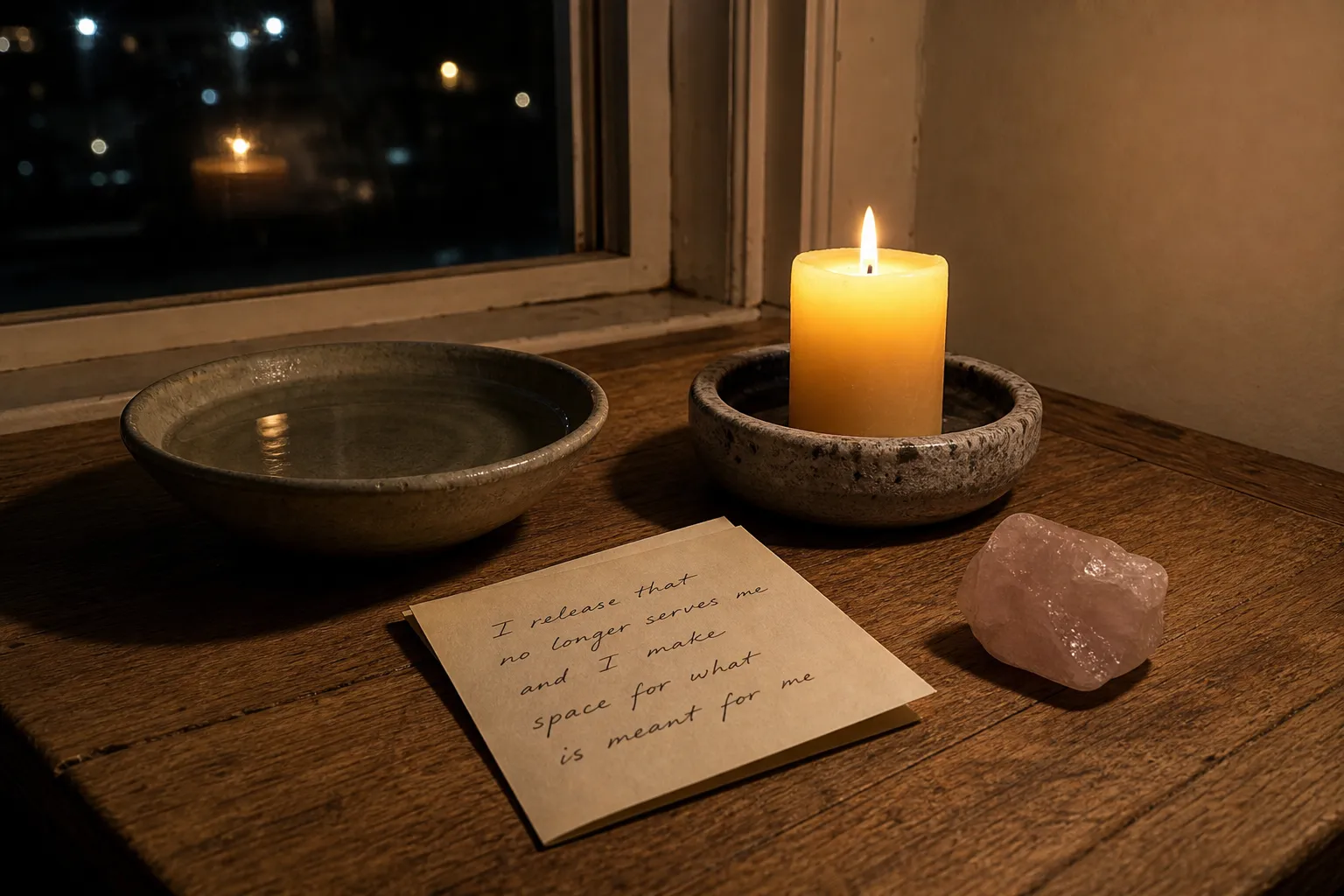
A rose quartz stone, a bowl of water, a candle, and a folded note are ordinary objects before they become symbols. The material reality matters first: stone, paper, flame, water, surface, air movement, and your own state of mind. The meaning comes from how you choose to arrange them.
In this ritual frame, “heart chakra release” is best read as spiritual language for reflecting on tenderness, trust, resentment, grief, disappointment, or self-protection. Some readers imagine the heart chakra as a symbolic center for emotional openness; others use the phrase more loosely, as a name for relational feelings that feel heavy. This page does not treat chakra blockages as a diagnosis or present the ritual as a confirmed emotional intervention.
Fire and water carry the contrast. Fire can represent naming and letting go; water can represent cooling, softening, and return. Full moon timing adds atmosphere because it gives the practice a visible date, but it is optional. If the moon phase supports your spiritual language, use it. If it creates pressure, choose an ordinary evening.
Rose quartz may sit nearby as a visual anchor rather than a promise. Its pink surface and common association with love in crystal symbolism can support the mood of the ritual, but the specimen does not need to be treated as a mechanism. It can be a stone, a symbol, and a focus object; that is enough.
Set Up the Ritual: Small, Slow, and Cautious
Choose a place where flame is manageable, or skip flame entirely. A clear table, stable surface, fireproof dish, small bowl of water, and one candle are enough. Keep loose fabric, dried plants, curtains, stacked papers, sprays, pets, children, and sudden movement away from the flame. If burning paper feels unsafe, tear the paper and place it in water instead.
You may use:
- A small piece of paper for one phrase
- A pen
- A candle or symbolic light source
- A fireproof dish if burning is used
- A bowl of water
- A rose quartz stone, if meaningful
- A timer, so the ritual has an ending
Before beginning, set the emotional edge of the practice. This is not the place to force intense memory work. Choose one modest sentence, such as “I am ready to stop replaying this conversation tonight” or “I want to soften my grip on this resentment.” The wording should give the feeling a boundary, not widen it into a spiral.
If you are distressed, panicked, unsafe, or close to harming yourself or someone else, do not use this ritual as your main support. Step away from the flame and contact a qualified professional, local emergency support, or a trusted person who can stay with you. A symbolic ritual should not stand in for human help when the situation needs it.
A Gentle Full Moon Heart Chakra Release Ritual
Arrange the objects deliberately. Place the bowl of water within reach. Set the candle in a stable holder if you are using one. Put the fireproof dish in front of you. Place rose quartz to one side, not as the authority in the practice, but as a quiet reminder of the tone you want: softer attention, not forced transformation.
Take a few ordinary breaths. Notice the table, the light, the water, and the weight of your body in the room. This keeps the ritual tied to what is actually present.
Release prompts for one small feeling
Write one release prompt on the paper. Choose a phrase that is specific but not overwhelming:
- “I release the need to replay this hurt tonight.”
- “I let this old apology remain unfinished for now.”
- “I am setting down the pressure to be instantly open.”
- “I can care about this without carrying all of it at once.”
- “I am allowed to pause before I respond from pain.”
Read the line once. If the words feel too sharp, rewrite them more gently. A physically safe ritual also needs to be emotionally grounded.
If you are using flame, light the candle and touch only one corner of the paper to it. Let it catch briefly, then place it immediately into the fireproof dish. Do not hold burning paper in your hand, burn a full sheet, or lean over the flame. The burn ritual symbolism is complete with a small fragment; more fire does not make the reflection more meaningful.
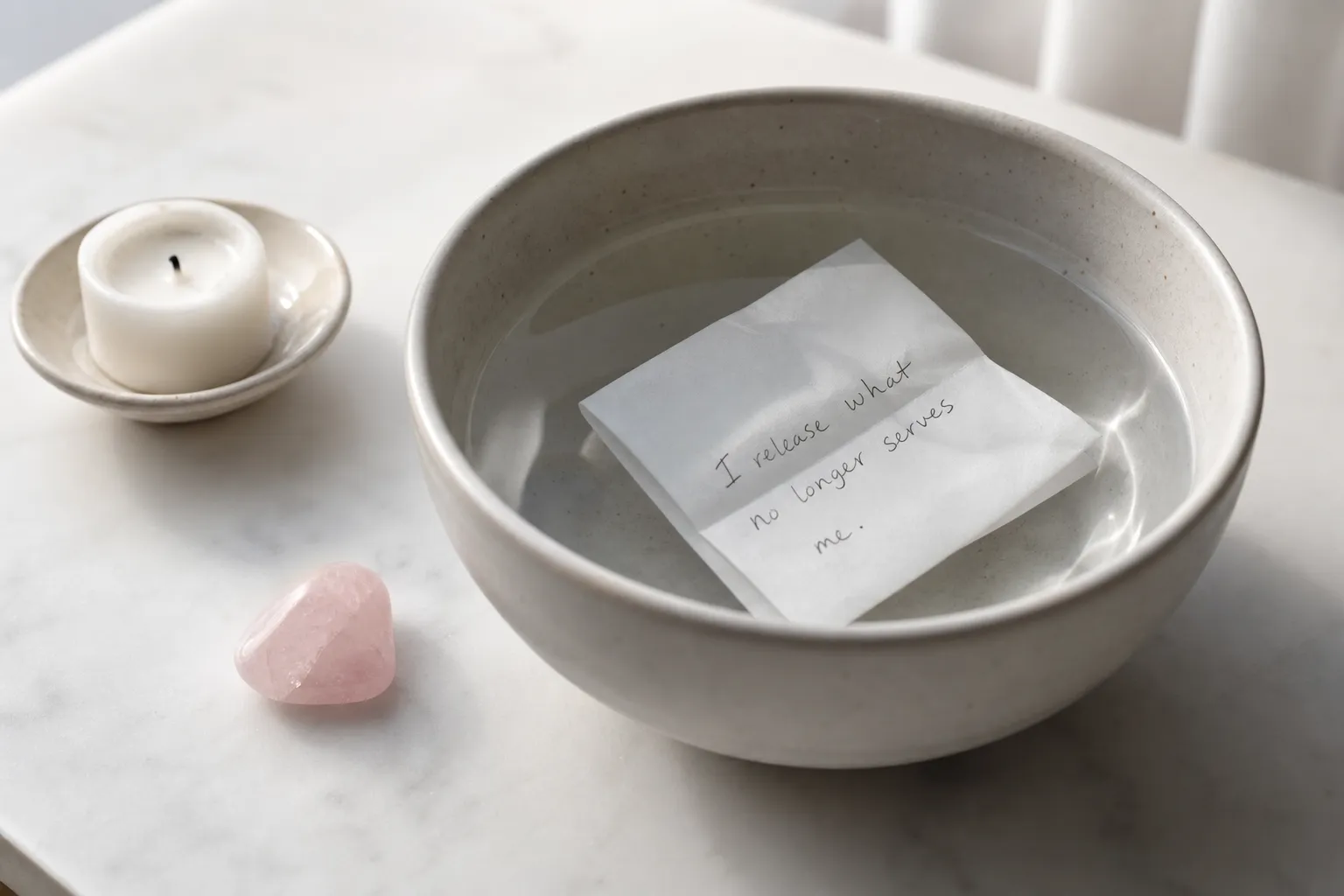
If you are not using flame, fold the paper, tear it once or twice, and place it into the water. You may imagine the water taking heat out of the thought. This keeps the fire and water ritual symbolic without open flame, which may be better in apartments, shared spaces, dry climates, or any setting where burning is not sensible.
After the release gesture, place your hands near the bowl or beside the rose quartz. Say one plain closing sentence: “This is enough for tonight,” or “I can return to myself slowly.” The closing matters because it gives the ritual a door out.
Extinguish the candle fully. Wait until ash is cold before discarding it. Pour away the water if it contains paper, or dispose of it in a way that fits your home and materials. Then do something ordinary: wash your hands, drink water, turn on a lamp, or step away from the ritual space.
What Changes the Answer
Moon timing
Full moon timing changes the atmosphere, not the core practice. If lunar symbolism helps you mark completion or illumination, let it frame the evening. If it makes you feel rushed, guilty, or afraid of missing a spiritual window, remove the timing pressure. An optional symbolic ritual should remain optional.
Emotional state
Your emotional state matters more than the moon phase. If you feel calm enough to write one sentence and close the practice, the ritual may work as personal meaning-making. If you feel flooded, detached, compulsive, or pulled toward unsafe action, the practice is too small for the need. Choose support over symbolism.
Fire handling
The presence of fire also changes the answer. A candle burning paper ritual requires conservative handling. Open flame is never just aesthetic. If you cannot control the surface, container, nearby materials, airflow, or your attention, use the water-only version. The symbolic structure remains intact.
Intention wording
The wording of your intention sets the emotional scale. “I release all my pain forever” asks too much from one small ritual. “I am setting down this one loop for tonight” is gentler and more realistic. One evening does not need to settle an entire life.
Common Confusion Around “Releasing”
The first confusion is treating release as proof that something has been removed. In this page’s frame, release means you completed a symbolic act around a feeling: you named it, marked it, cooled it, and closed the practice. That is different from proving that a hidden blockage has left the body.
The second confusion is mistaking intensity for depth. Tears, anger, shaking, or dramatic language are not required. A quieter ritual may be the better fit, especially with tender material.
The third confusion is thinking fire is essential. Fire can be visually satisfying, but water cleansing symbolism can carry the release on its own. Soaking a folded note, dissolving ink, or washing your hands after naming a feeling can provide a clear symbolic ending. The safer version is often the wiser version.
The fourth confusion is making the ritual morally loaded. If you do not feel lighter afterward, it does not mean you did it wrong. If you prefer not to use chakra language, the same structure still works as a symbolic self-reflection ritual: name, mark, cool, close.
Emotional Release Prompts That Stay Within Bounds
Use prompts that fit one evening rather than your whole emotional history. The best prompts here are narrow, present-tense, and reversible. They leave room for complexity.
Try one:
- “What am I ready to stop rehearsing tonight?”
- “Where am I confusing openness with overexposure?”
- “What feeling needs a softer edge, not a final answer?”
- “What can I place down until I have more support?”
- “What would feel kinder than forcing myself to move on?”
Avoid prompts that pressure you to forgive, forget, confront, cut off, or permanently decide. A full moon release can be a pause rather than a verdict. If the prompt pulls you into old harm, intense fear, or unsafe impulses, stop the ritual and choose care over symbolism.
Heart-centered language can remain useful without becoming inflated. You may imagine the heart area as a place of attention, or you may simply let the paper hold one relational burden for a few minutes. Either way, the practice is a container for reflection, not a promise of guaranteed change.
The Evidence Limit to Keep in View
No visible public sources were supplied for this page that could support factual claims about chakra traditions, lunar effects, emotional catharsis, ritual history, trauma processing, or health-adjacent outcomes. For that reason, the ritual should stay framed as optional symbolism and personal meaning-making.
The practical guidance remains conservative because flame, water, paper, and emotional intensity are real-world factors. Use less fire, not more. Use fewer words, not a dramatic confession. Use rose quartz as a focus object if it helps the setting feel tender, while keeping meaning beside material reality.
A gentle fire and water ritual can give a feeling a small ceremony: write it, mark it, cool it, close it. That is the supported shape of this page. The rest should remain unpromised.