Reconnecting the Tensegrity Matrix: Grounding Practices for Remote Workers
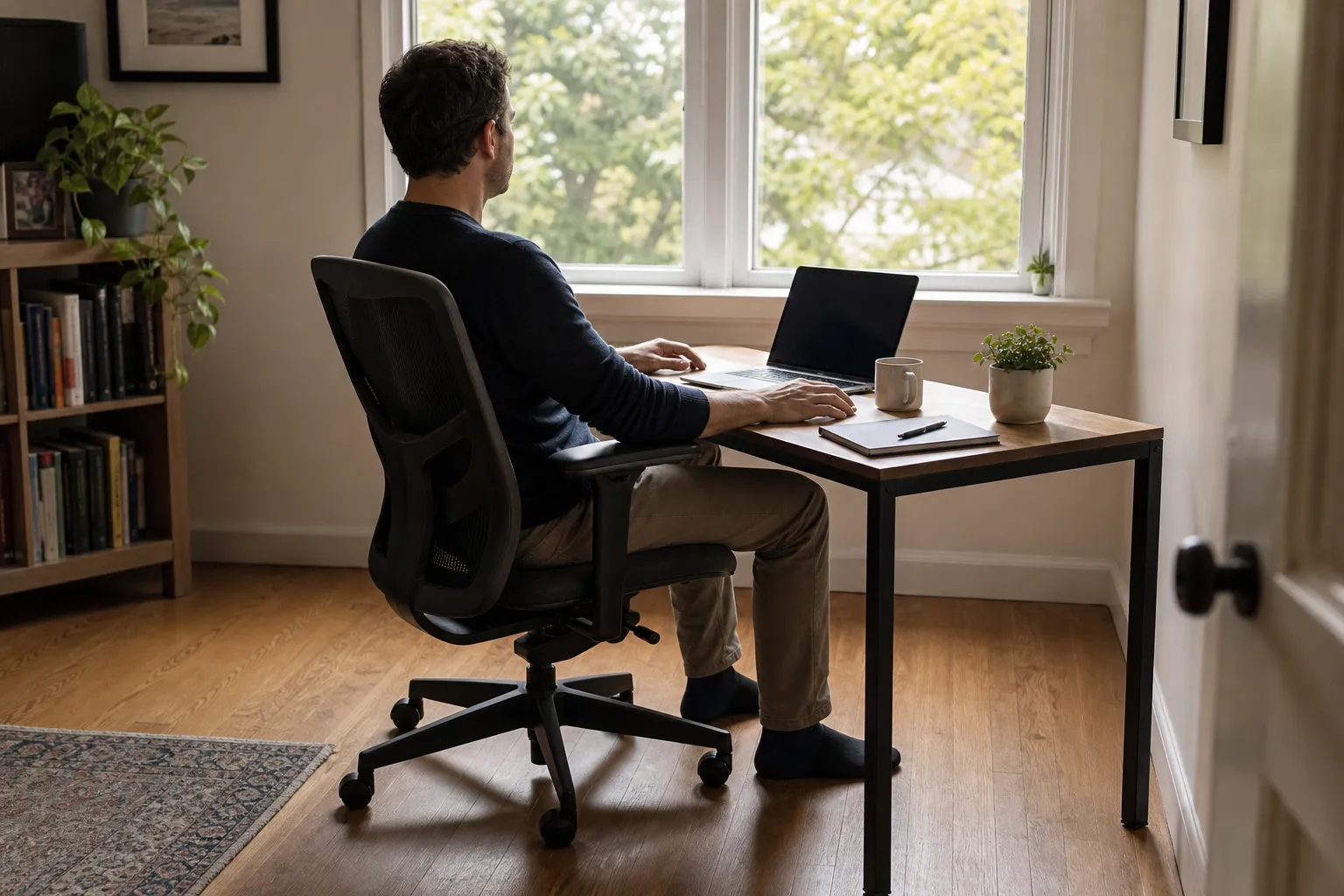
For remote workers, Tensegrity matrix physical grounding is best understood as a body-awareness metaphor, not as a confirmed biomedical or electrical process. In practical terms, it means using floor contact, posture variation, breath, gaze, and small task transitions to bring attention back into the body during a screen-heavy day.
A grounded version is simple: feel your feet, let the chair support you, move what has been held still, look away from the screen, breathe for a few cycles, and begin the next task with one deliberate physical cue. That can make remote work feel less disembodied without claiming that it changes connective tissue, resets a biophysical network, corrects posture, or releases harmful static electricity from the body.
The value is in the pause. Remote work often collapses meetings, messages, focus time, and rest into the same chair. A modest grounding routine gives your attention a physical anchor before the next screen-based task begins.
broader context
Broader rose quartz guide
This narrower page makes more sense after the broader rose quartz context page.
What “reconnecting the tensegrity matrix” can responsibly mean
The phrase sounds precise, but it needs careful handling. Here, it can be read as a poetic way to describe whole-body noticing: feet, seat, spine, shoulders, hands, breath, and visual attention all shaping how work feels.
That does not make it a verified mechanism. It is a practical lens.
A low-claim routine might look like this:
- Place both feet on the floor and notice pressure under the heels, toes, and outer edges.
- Let the chair support you without forcing a rigid “perfect” posture.
- Move one area that has been held still: ankles, wrists, neck, ribs, shoulders, or jaw.
- Look away from the screen and rest your eyes on something farther away.
- Take a few unforced breaths.
- Begin the next task with one physical cue, such as placing both hands on the desk before typing.
That is enough. The practice does not require a product, a specialized device, a complex body map, or a claim that hidden forces are being reset. For a desk-based person, the immediate issue is usually more ordinary: long stillness, screen focus, shallow transitions, and a fading sense of where the body is in space.
How the tensegrity lens helps without overstating it
“Tensegrity” is often used to describe structures held through distributed tension and compression. In remote-work language, the useful part of the image is not a technical diagnosis of the body. It is the reminder that a local habit rarely feels local.
A clenched jaw may change the breath. A lifted shoulder may affect how the hands meet the keyboard. Feet hovering off the floor may make sitting feel less settled. A screen pulled too close may pull the whole upper body into the task.
The tensegrity image asks a better question than “Which part is wrong?” It asks: What else is participating?
Workday checks
- If your shoulders feel braced, check whether your feet are barely touching the floor.
- If your hands feel tense, check whether your breath is paused while reading.
- If your attention feels scattered, check whether your body had any transition between a call, a message thread, and focused work.
- If your posture feels collapsed, change the task shape before blaming the body: stand briefly, sit back, shift sideways for a moment, or adjust the screen view if possible.
This is not a claim that connective tissue has been physically “reconnected.” It is a way to widen attention. The body is experienced as a whole during work, and the tensegrity image gives that whole-body noticing a name.
A simple desk routine for remote work
Keep the routine small, observable, and non-grand. You are not trying to produce a measurable health outcome. You are creating a workday pause with physical reference points.
Before opening the laptop
Stand or sit with both feet in contact with the floor. Notice weight, pressure, and temperature. If your morning begins with messages, this brief pause can mark the difference between being awake and entering work.
Ask:
- Where are my feet?
- Is my breath easy or held?
- Am I already leaning toward the screen before the task has started?
Then begin.
Between calls or task switches
Remote work removes many natural thresholds. There may be no hallway between meetings, no walk to another room, no visible change of place. A grounding pause can replace a small part of that missing transition.
Try this:
- Put both feet flat or comfortably supported.
- Let the hands leave the keyboard.
- Turn the head gently and look away from the screen.
- Take a few quiet breaths.
- Name the next task in plain language: “Now I am writing,” “Now I am reviewing,” or “Now I am done with that call.”
The naming matters because remote work can blur attention. The body cue and the verbal cue create a simple boundary.
During long focus blocks
If you have been still for a while, variation may help more than intensity. Change the relationship between body and desk. Stand for a short interval if that feels comfortable. Sit back. Shift the feet. Rest the eyes. Roll the shoulders once or twice without turning the pause into a full exercise session.
The aim is not to find the one correct posture. It is to reduce the feeling of being locked into a single shape.
At the end of the workday
A closing routine can be especially useful when the workplace is also a dining table, bedroom corner, or living room. Choose one physical action that marks the end:
- Close the laptop and place both palms on the table for a moment.
- Step away from the desk and feel both feet on the floor before checking your phone.
- Put a small object back in its place.
- Turn off a desk lamp.
- Take one slow walk through the room before beginning the evening.
This is a boundary ritual, not a claim about internal systems. It tells attention that one mode has ended.
Where grounding language gets overstated
Grounding language often mixes body sensation, wellness culture, electricity metaphors, and spiritual symbolism. For this page, those meanings should stay separate.
Connective tissue is not a shortcut explanation
It is tempting to say that a grounding routine works through connective tissue or changes fascia. The available source set for this article does not support that kind of statement. In a responsible remote-work routine, connective tissue can be mentioned only as part of the language of bodily interconnectedness, not as proof of a mechanism.
A better sentence is: “This practice uses the idea of whole-body connection to guide attention.”
A stronger-sounding but unsupported sentence would be: “This practice changes the connective tissue matrix.”
“Biophysical network” should stay interpretive here
“Biophysical network” can make an ordinary pause sound more authoritative than it is. Without strong public references, it should not be used to imply that desk grounding changes measurable internal systems.
For remote workers, the practical question is simpler: does the pause help you notice your body, interrupt autopilot, and enter the next task more deliberately? That is a reasonable reflective question. It does not require a hidden mechanism.
Static electricity release is a different topic
Static electricity is often pulled into grounding conversations, but it should not be blended with body-awareness practice. A person may experience static shocks in ordinary environments, yet that does not support broad claims that desk grounding routines release harmful electricity from the body or improve wellbeing.
It is also not a reason to improvise with outlets, wires, electrical equipment, grounding devices, or product-based setups. This article is not offering electrical-safety instructions. Keep the remote-work practice non-electrical: feet, chair, breath, attention, posture variation, and task boundaries.
Products are not the center of the routine
Grounding mats, earthing accessories, crystals, and other objects may appear in the broader marketplace around grounding language. They are not needed for the routine described here.
If an object helps you remember to pause, it can function as a personal cue. That is different from saying the object produces a verified physical effect. A stone on the desk, for example, may be meaningful as a tactile reminder, design element, or personal symbol. It should not be presented as the mechanism that changes the body.

Practical checks before you use the routine
A useful grounding routine should be brief, quiet, and easy to abandon if it feels unhelpful.
Use these checks:
- Is it observable? You can notice foot contact, breath, gaze, and posture without inventing a hidden process.
- Is it modest? The routine should not promise major outcomes.
- Is it non-electrical? Do not turn static electricity language into device use or safety advice.
- Is it adaptable? Different bodies, desks, rooms, and work demands require different positions.
- Is it a transition? Its strongest use may be before work, between tasks, after calls, and at the end of the day.
If a practice causes discomfort, confusion, or pressure to override your own body signals, simplify it or stop. The point is not to force a correct state. It is to restore a little contact with ordinary physical reality during a screen-heavy day.
A one-minute version to try today
- Sit or stand with stable floor contact.
- Notice three points of support: feet, seat, hands, or back.
- Let the eyes move away from the screen.
- Take three easy breaths.
- Shift one part of the body that has been still.
- Name the next task before returning to the screen.
That is the whole practice. Within the tensegrity image, it is a reminder that the working body is not just a head in front of a monitor. Within the evidence boundary, it remains a simple body-awareness and transition routine for remote work.
FAQ
Is Tensegrity matrix physical grounding a medical or electrical practice?
Not in this article. It is framed as a body-awareness routine for remote workers. It should not be treated as medical care, posture correction, electrical grounding instruction, or a product-based protocol.
Do I need to stand barefoot or use a grounding device?
No. The routine described here does not require bare feet, devices, mats, wires, or accessories. Floor contact simply means giving attention to physical support, whether you are sitting or standing.
Can I use a crystal or desk object as part of the routine?
Yes, if it functions as a reminder to pause. A tactile object can be a personal cue or symbol. It should not be described as the cause of a physical effect.
What is the clearest benefit I can reasonably expect?
The clearest low-claim benefit is a more deliberate transition: noticing your body, breaking screen autopilot, and entering the next task with a little more physical presence.
Bottom line
Tensegrity matrix physical grounding can be useful for remote workers when it is treated as a careful metaphor: a reminder to reconnect attention with floor contact, posture variation, breath, gaze, and workday transitions. It should not be framed as evidence of changes in connective tissue, a biophysical network, static electricity release, or measurable health outcomes. Keep it practical, modest, and embodied. The point is not a dramatic claim; it is the quiet act of returning to the body before the next screen-based task begins.