Ritual boundary note
Cutting the Cord: A Forgiveness Ceremony for Online Conflicts
A forgiveness and energetic release ceremony can be used as a private, symbolic way to stop feeding an online conflict from your side. It does not approve what happened, remove accountability, change another person, or replace blocking, reporting, documentation, or outside help when contact is unsafe.
The direct answer is simple: pause before re-engaging, name the conflict plainly, choose forgiveness as an internal release of resentment or revenge, visualize the energetic cord loosening, and then set one real digital boundary. The ceremony can mark intention-based closure; it cannot make an online situation safe by itself.

broader context
Broader rose quartz guide
This narrower page makes more sense after the broader rose quartz context page.
When a Cord-Cutting Ceremony Fits an Online Conflict
A small piece of rose quartz on a desk can make the ritual feel tangible, but the stone is still a material object first: pink quartz, held or placed nearby as a symbol. The meaning comes from how you use it. In this setting, the ceremony is ritual context with mineral literacy, not proof that energy cords are measurable structures or that a crystal changes another person.
This kind of ceremony fits best after an ordinary online conflict: a painful comment thread, a humiliating exchange, a disrespectful direct message, a friendship argument that keeps replaying, or a public disagreement you do not want to keep feeding. Online conflict can feel sticky because platforms keep the exchange visible. Notifications, screenshots, mutual followers, algorithmic resurfacing, and the urge to check for new replies can keep attention attached long after the conversation has stopped.
The “cord” language gives that attachment a symbolic shape. In contemporary spiritual vocabulary, energy cords or energetic ties often describe lingering attention, emotional charge, resentment, or a felt pull toward someone or something. For this page, that language is symbolic and reflective. It can help you name what you are releasing, but it should not be treated as a clinical or scientific mechanism.
Forgiveness has a clearer evidence boundary. Psychology-oriented sources commonly describe forgiveness as a voluntary release of resentment or vengeance. They also separate forgiveness from denial, excusing harm, forgetting, reconciliation, and removal of accountability. That distinction matters online, where the person who hurt you may never apologize, may still have access to you, or may be performing for an audience.
The ceremony is useful only if it preserves that distinction. Forgiveness can mean, “I am no longer organizing my attention around punishing this person.” It does not have to mean, “What happened was acceptable.”
A Bounded Forgiveness and Energetic Release Ceremony
Choose a time when you are not actively arguing. If the exchange is still escalating, begin with practical distance: close the app, mute the thread, save screenshots if you may need them, and move away from the screen. A symbolic release ritual works better as a deliberate pause than as another reaction inside the conflict.
Set a simple space. You might place rose quartz beside a notebook, light a candle if that is already part of your practice, or sit with one hand on the table and one hand holding the stone. None of these objects is required. Their role is to make the moment visible and contained.
Plain naming sentence
“I am releasing my attachment to the argument with [name or handle] about [specific exchange].”
Keep the wording specific. Do not turn it into a broad life inventory, a character judgment, or a wish for punishment. The point is to name the online conflict without widening it.
Forgiveness without access
“I choose to release the resentment I am carrying from this exchange. I do not approve of what happened, and I do not have to restore contact.”
That sentence is the hinge of the ceremony. It holds forgiveness boundaries and digital boundaries together. You are not pretending the conflict was harmless; you are choosing not to keep re-entering it internally.
Now use the cord-cutting image. Picture a line of attention running from your chest, hands, or screen toward the other person, the thread, or the replay of the comments. You do not need to imagine danger, darkness, or drama. Let the cord become slack. In your mind, untie it, cut it, dissolve it, or place it down. Use the image that feels least theatrical and most final.
If “emotional detox” is language you already use, keep it modest. In this ceremony, it means clearing the ritual space around resentment, rumination, and the urge to keep checking. It should not be treated as a body process, a mental-health intervention, or a guaranteed reset. A calmer phrase may be enough: “I am letting this exchange stop taking up my attention.”
Make the boundary observable
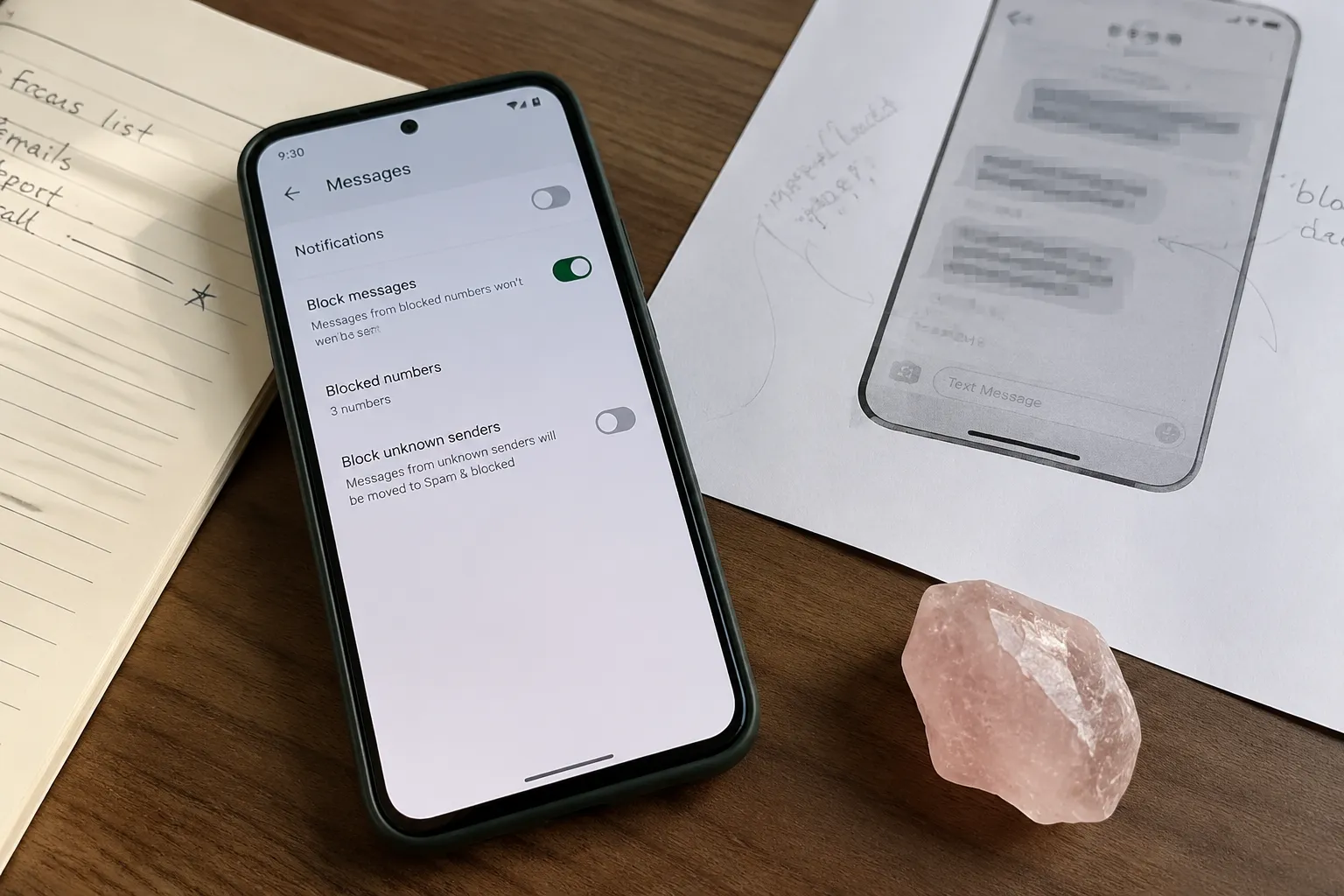
After the visualization, choose one digital boundary. This is where the ritual touches observable reality. Depending on the situation, that may be muting a thread, unfollowing, blocking, restricting comments, leaving a group, turning off notifications for the night, archiving the chat, or deciding not to reply. If you need records, save them before deleting anything.
Closing statement
“I release the cord of attention. I keep the lesson, keep my boundaries, and stop feeding this conflict.”
Then end the ceremony. Put the notebook away. Move the stone back to its place. Do something ordinary: wash a cup, step outside, make tea, or set the phone in another room. A clean ending helps the ritual stay bounded.
When the Answer Changes
The answer changes when the online conflict is not just painful but unsafe. A forgiveness ceremony can sit beside practical action, but it should not be the only response to threats, stalking, doxxing, coercive contact, sexual content, impersonation, workplace or school abuse, cyberbullying, self-harm risk, or ongoing harassment.
In those situations, the first step is not energetic cord release. The first step is safety and documentation. Save evidence, use platform tools, tell a trusted person, follow school or workplace processes if relevant, and seek appropriate help when there is immediate risk. If you are in danger, local emergency or crisis resources matter more than a private ritual.
This boundary is not anti-spiritual. It keeps the ritual honest. A ceremony can help you mark the moment when you stop emotionally negotiating with the conflict, but it cannot make another person stop posting, prevent new accounts from contacting you, or resolve a platform process. It also cannot decide legal, school, employment, or safety questions for you.
Accountability can remain in place after forgiveness. You can forgive without replying. You can forgive and still block. You can forgive and still report. You can forgive and still refuse reconciliation. In online spaces, that distinction is especially important because people often confuse closure with access. Your internal release does not give someone a new route back to you.
This is also where rose quartz symbolism should stay measured. A small stone may help you focus on softness without surrendering judgment, but it does not verify safety or prove anyone’s intention. The visible facts of the online situation still matter.
Common Confusion Around Forgiveness, Release, and Energy Cords
The most common confusion is thinking forgiveness means approval. It does not. Forgiveness can be an inner decision to release resentment or vengeance while still naming the harm clearly. In an online conflict, that may sound like: “I will not keep replaying this argument, but I know the comment was cruel, misleading, or invasive.”
Another confusion is thinking forgiveness requires reconciliation. It does not. Reconciliation needs changed behavior, trust, and mutual participation. A private forgiveness ceremony does not create those conditions. If the other person has not taken responsibility, if contact would pull you back into harm, or if the relationship was never close enough to repair, forgiveness without reconciliation may be the cleaner boundary.
Cord cutting is also often misunderstood as control over another person. In a grounded ritual frame, it is not about making someone disappear, changing their emotions, or forcing them to stop thinking about you. It is about your side of the attachment: your checking, replaying, arguing in your head, waiting for the next notification, or measuring your peace against their next move.
The phrase “reclaiming energy” is most useful when it means reclaiming attention and choice. It becomes risky when it is treated as proof of a hidden mechanism or a promised outcome. The available material supports careful language about forgiveness boundaries and digital stress context; it does not provide authoritative evidence that energetic cords are factual structures or that a cord-cutting ceremony produces predictable effects.
A final confusion is treating the ceremony as a way to avoid accountability for your own part. If you harmed someone, sent a cruel message, spread a screenshot, joined public shaming, or crossed a boundary, release is not a substitute for repair. You may still need to apologize, correct misinformation, remove a post, stop contacting someone, or accept consequences. Forgiveness ceremonies should not become a spiritual bypass around responsibility.
A Short Checklist Before You Call It Complete
Before ending the ritual, check three things.
- First, have you named the conflict accurately without expanding it into every old wound? A leaf-level ceremony works because it is narrow. It releases this exchange, this thread, this direct message, this replay.
- Second, have you separated forgiveness from access? If the person should not be able to reach you, the ceremony is incomplete until the digital boundary is real. Mute, block, restrict, document, or report as the situation requires.
- Third, have you avoided making the ritual carry a promise it cannot support? It can be a symbolic release ritual, a moment of conscious release of resentment, and a way to mark closure without re-engaging. It should not be framed as treatment, protection, proof of safety, or evidence that the other person has changed.
If you use rose quartz, let it remain simple: a pale object in the room, chosen for symbolic softness, not for guaranteed results. Hold it, set it down, and let the action be ordinary enough to end.
If the Conflict Returns After the Ceremony
Sometimes the conflict returns because the platform returns it. A like appears. A mutual friend mentions it. The other person posts indirectly. Your body may react before your values have time to answer. That does not mean the ceremony failed. It means online conflict is built around reminders.
Use the ceremony as a reference point rather than repeating it endlessly. You can say, “I already released my side of this.” Then choose the next boundary: do not open the thread, do not search their page, do not draft a reply at midnight, do not ask friends for updates that keep the argument alive.
If you need to repeat anything, repeat the digital action, not the drama. Tighten notification settings. Leave the group. Move the app off your home screen. Ask a friend not to send screenshots. The practical boundary is often what allows the symbolic release to hold.
The grounded version of cord cutting is not a spectacle. It is a decision to stop giving an online conflict more of your attention than it deserves, while keeping evidence, accountability, and safety in view. That is the part this page can support: ritual language beside material reality, forgiveness without reconciliation when needed, and a clear boundary between inner release and real-world protection.