Quartz authenticity note
Magnifying the Truth: How to Tell Natural Cloudiness from Glass Bubbles
A magnifying glass can help with Spotting Fake Quartz, but it should be used as a sorting tool, not a verdict. Rounded, smooth, isolated bubble-like features may raise concern about imitation glass; natural-looking quartz cloudiness more often appears irregular, veil-like, fractured, milky, or unevenly spread through the stone.
That is the useful at-home distinction. It is not proof of authenticity.
A rose quartz bead, palm stone, carving, or tower may contain cloudy zones, internal veils, surface-reaching fractures, or tiny marks that look dramatic under light. Some suspicious features may resemble glass bubbles under magnification, but visual inspection alone cannot confirm material identity, origin, treatment, value, or authenticity. If the piece is valuable, sentimental, newly purchased, or tied to a seller’s authenticity claim, take the observation to a qualified jeweler, gemologist, or gemological laboratory.
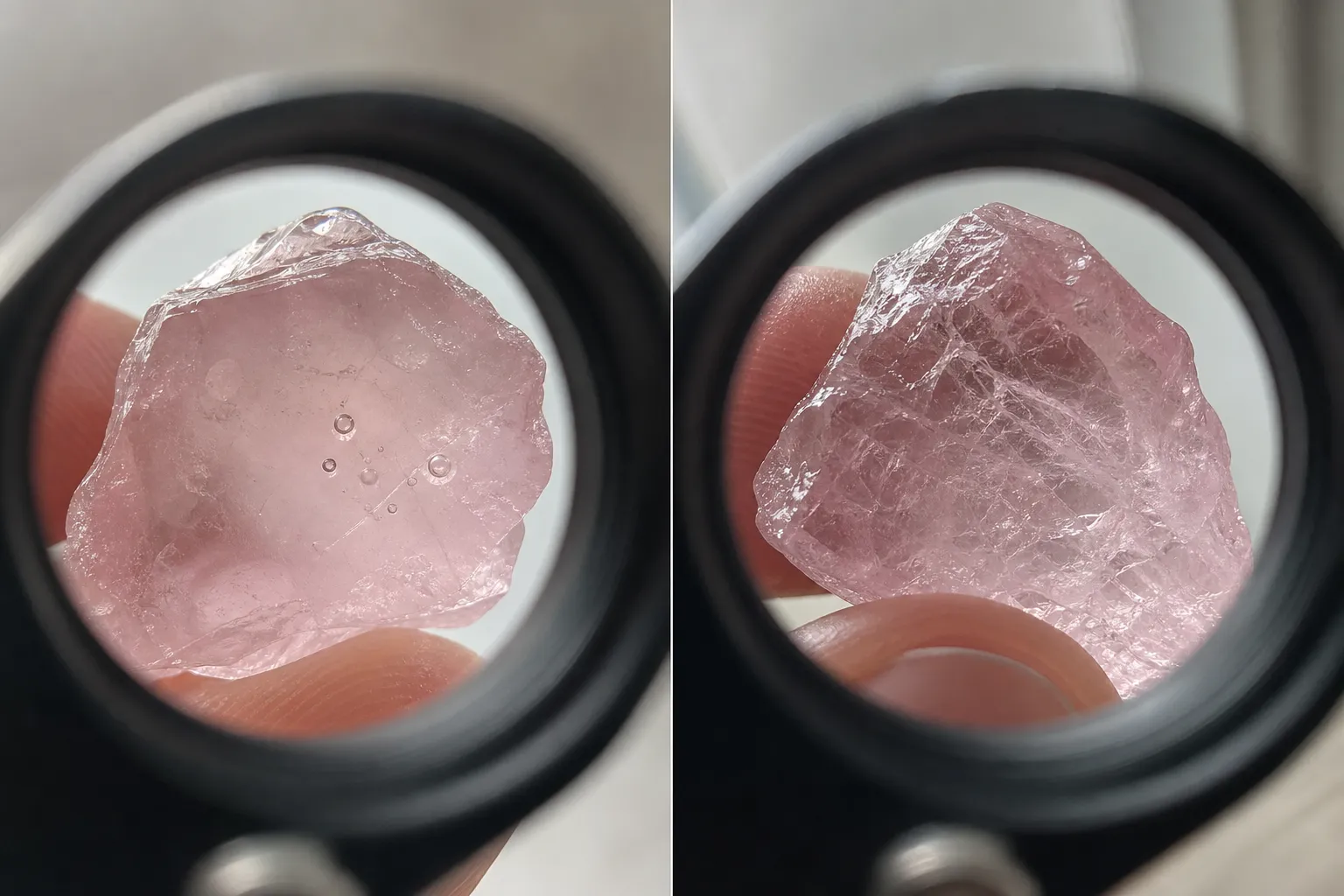
The Quick Difference: Bubble-Like Features Versus Natural-Looking Cloudiness
Under magnification, the first question is not “Is this real?” It is “What kind of pattern am I seeing?” That shift keeps the specimen before the symbol. Rose quartz may carry personal meaning in a room, gift, or ritual setting, but the authenticity question starts with material evidence.
Possible imitation glass bubbles are usually suspected when a feature looks rounded, smooth-edged, and separate from the surrounding material. It may appear as a small circle, oval, or trapped-looking void. If several similar rounded features repeat in a tidy way, the concern grows. The important word is concern; it is not a final identification.
Natural-looking cloudiness reads differently. Instead of one neat round point, the cloudy area may look hazy, milky, wispy, layered, or uneven. It may seem to drift through the stone rather than sit as a separate dot. In rose quartz, that soft internal mist is part of what many buyers notice: pink color, gentle translucence, and light that scatters instead of passing cleanly through.
Fracture-like inclusions add another source of confusion. A fracture, veil, or internal plane may catch light and create pale lines, bright flashes, or cloudy patches under a loupe. These can be mistaken for bubbles if the stone is turned too quickly or viewed under harsh glare. Slow looking matters.
What you see under magnification
What it may suggest
How to treat it
Rounded, smooth, isolated bubble-like shapes
Possible imitation glass
A clue, not proof
Wispy or milky cloudiness
Natural-looking quartz texture
Not proof of natural origin
Lines, veils, or plane-like hazy zones
Fracture-related cloudiness
View from several angles
Repeated identical-looking features
Manufactured-looking pattern
Escalate if the item has value
Mixed cloudy and clear zones
Common buyer confusion
Do not decide from one sign
The goal is to compare cloudiness and bubbles, not to turn one visual clue into a complete authentication result.
How to Use a Magnifying Glass Without Overreading It
A useful magnifying glass check is calm, repeatable, and limited. It needs clean light, a clean surface, and patience more than special equipment.
- Wipe the stone with a soft cloth first. Dust, polish residue, fingerprints, and tiny surface pits can look more important than they are when magnified. Place the rose quartz under steady light, then rotate it slowly so the same mark can be seen from more than one angle.
- Start with shape. Bubble-like features usually become suspicious because they look rounded and self-contained. If a mark stays circular as you turn the piece, make note of it. If it stretches into a line, joins a hazy plane, or disappears when the angle changes, it may be part of a different internal or surface feature.
- Then check depth. A surface chip, polishing mark, or tiny pit can mimic an internal bubble. If the mark seems to sit on the surface, catches a fingernail, or lines up with wear, do not treat it as a trapped internal feature.
- Distribution matters too. One tiny rounded mark carries less weight than many similar rounded marks spread through a bead, carving, or decorative object sold as natural quartz. Repetition may raise concern, especially in an otherwise glassy-looking piece, but it still does not replace testing.
- Finally, watch how the cloudiness behaves. Natural fracture cloudiness often looks less tidy than a bubble. It may sit along a plane, break into threads, or hang like a veil inside the pink body of the stone. A cloudy zone that follows a crack-like path is different from a neat sphere, even if both interrupt transparency.
Use the check to sort the piece into three plain categories: reassuring, suspicious, or uncertain. Do not use it as a certificate.
Why Rose Quartz Makes This Hard to Read
Rose quartz is not usually valued for perfect glass-like clarity in the way some transparent faceted gems are. Many pieces are appreciated for softness: milky pink color, internal haze, gentle translucence, and the way light diffuses through a carved surface. That same softness can make quartz cloudiness clues harder to judge.
A cloudy rose quartz sphere, heart, or tower may look natural because the visual language of the material is already misty. Seller language can add another layer. Words such as natural, genuine, or authentic may create confidence before the object has been examined, but a label is not evidence.
Imitation glass can also be made in colors near the rose quartz palette. Color alone is not the issue. The whole object matters: internal features, weight in the hand, surface finish, drilling, carving, price context, and seller reliability. This page stays with magnified visual clues because that is the narrow question, but the market confusion is broader than one bubble.
Fracture-like inclusions can also create false certainty. A bright internal line may look like a natural fracture to one reader and like a suspicious flaw to another. Neither response is enough on its own. Under magnification, the better question is: does the feature connect to a plane, haze, or irregular internal structure, or does it look like a rounded trapped void?
Meaning and material reality can sit beside each other. A rose quartz piece may matter as a bedside object, shelf accent, meditation item, or gift, but that meaning does not authenticate the material.
Clues That Deserve Caution
Many tiny rounded forms that look smooth, repeated, and suspended inside an otherwise glassy body deserve closer attention. If the object was sold as natural quartz at a meaningful price, that concern should lead to verification rather than a private guess.
A single bubble-like feature calls for slower viewing. It may be a surface pit, reflection, polishing artifact, or mark you cannot interpret confidently. The same point can look different in daylight, under a desk lamp, or beside a phone flashlight. One angle can exaggerate a shape.
Cloudiness should not be overread in the other direction. Natural-looking cloudiness is only a visual description. It does not rule out imitation, treatment, assembly, coating, or mislabeling. A cloudy pink object can still need identification if authenticity affects money, trust, or provenance.
Fracture-like inclusions do not automatically make a piece more valuable. Internal complexity is not the same as quality, rarity, or price. Some buyers like veils and cloudy texture because they make the stone feel visually soft; others prefer clearer pieces. Value depends on more than internal features.
A grounded inspection can stay with these questions:
- Is the feature round, smooth, and separate, or irregular and veil-like?
- Does it keep the same shape when the stone is turned?
- Does it sit inside the material, or could it be on the surface?
- Are there many similar marks, or only one confusing point?
- Does the cloudy area follow a fracture-like plane?
- Is the piece expensive, sentimental, or sold with strong authenticity claims?
If the last answer is yes, magnification should not be the final step.
When to Stop Looking and Ask for Identification
There is a point where more home inspection creates more confidence than the evidence deserves. With quartz authenticity limits, that point comes quickly. Magnification can help you notice; it cannot authenticate.
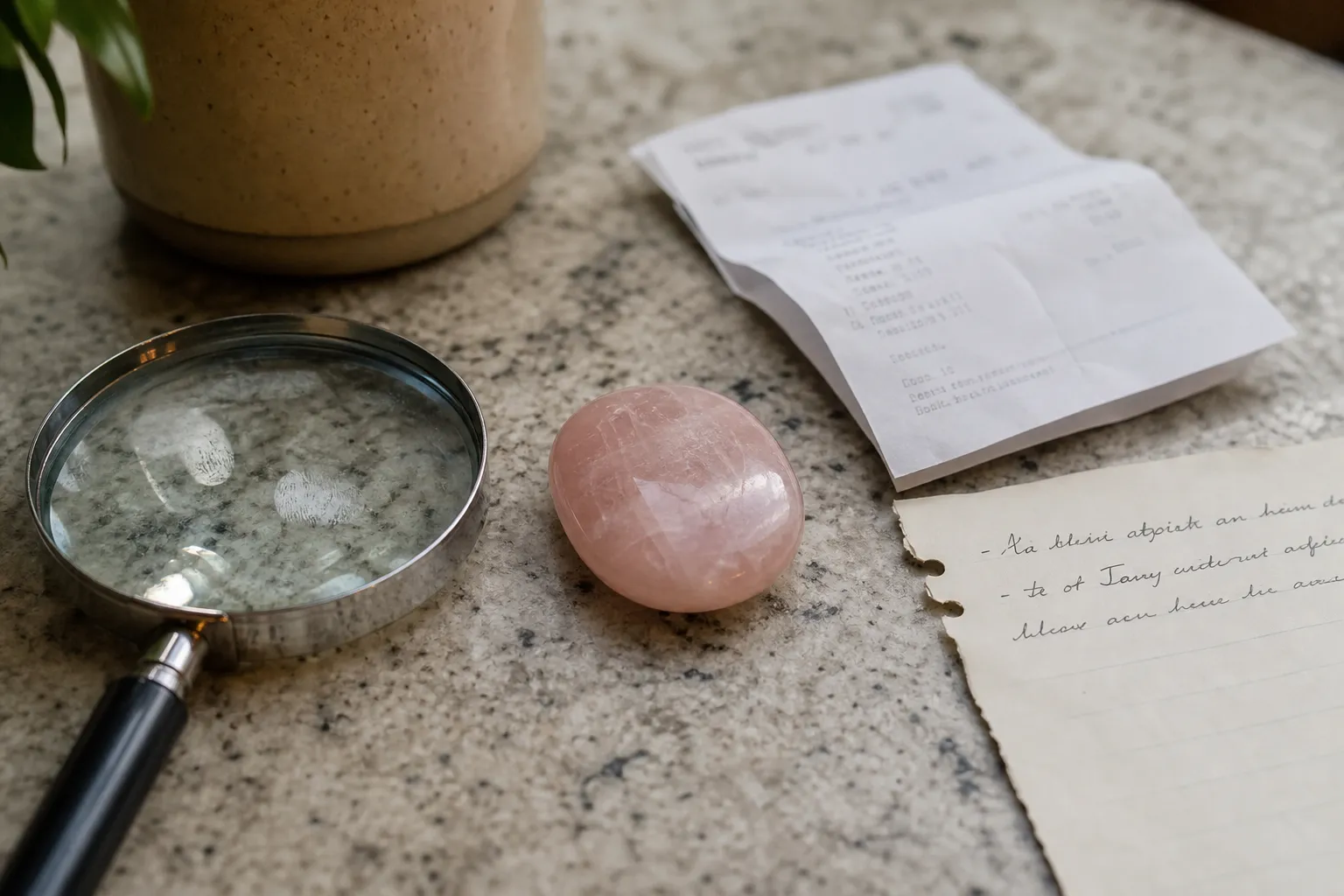
Professional identification matters most when the item is valuable, newly purchased, inherited, being resold, or represented as natural quartz in a way that affects price. A qualified jeweler, gemologist, or gemological laboratory can examine the object with more appropriate tools and methods. That does not mean every small rose quartz bead needs formal testing. It means the level of verification should match the consequence of being wrong.
For everyday decorative pieces, a magnifying glass check may be enough to decide whether you feel comfortable keeping, gifting, or questioning the item. If you bought a small tumble for its color on a shelf, uncertainty may not carry much consequence. If you bought a costly carving, a strand of beads sold as natural rose quartz, or a piece tied to provenance, the same uncertainty matters more.
Keep receipts, seller descriptions, and written claims. If the piece is examined later, those details help separate what was promised from what can be observed.
The most useful result of magnification is a better question: “These features look rounded and repeated,” or “This cloudiness appears fracture-like rather than bubble-like.” Clear observation travels better than a rushed conclusion.
Small FAQ
Do glass bubbles always mean a quartz piece is fake?
No. Rounded, repeated, trapped-looking features can be suspicious, especially in a glassy-looking body, but a magnifying glass alone should be treated as an early clue, not a final identification.
Does cloudy rose quartz prove it is natural?
No. Cloudiness can look consistent with the soft visual character buyers associate with rose quartz, but natural-looking cloudiness does not prove origin or authenticity. It only gives you a pattern to compare against more suspicious rounded forms.
Is a magnifying glass enough for valuable quartz pieces?
No. For valuable quartz pieces, purchase disputes, resale, inheritance, or strong seller claims, use magnification as an early screening step and seek professional quartz identification. The more the answer affects money or trust, the less a home visual check should carry the decision.
The Bounded Takeaway
Use magnification to slow the eye. Rounded, repeated, bubble-like features may raise concern about imitation glass; hazy, irregular, fracture-like cloudiness may look more consistent with natural quartz texture. Neither side proves the case.
For rose quartz, the soft pink surface can carry personal meaning in a room or ritual context, but authenticity still belongs to material evidence. A magnifying glass can sharpen your questions; it cannot turn visible clues into proof.