Mineral Identification Note
Scratching the Surface: Using the Mohs Scale to Authenticate Rose Quartz
A pale pink tumble stone can look persuasive under soft light, but color is easy to imitate. Hardness gives you one material clue that color cannot. Mohs Hardness Quartz testing can help screen whether a suspected rose quartz piece behaves like quartz, because quartz is commonly placed around Mohs 7 and ordinary glass is usually softer.
That clue has limits. A rose quartz scratch test can suggest quartz-like hardness, especially against a suspected glass imitation, but it cannot confirm natural origin, treatment status, value, sourcing, or full identity. It is a screening clue, not a verdict.
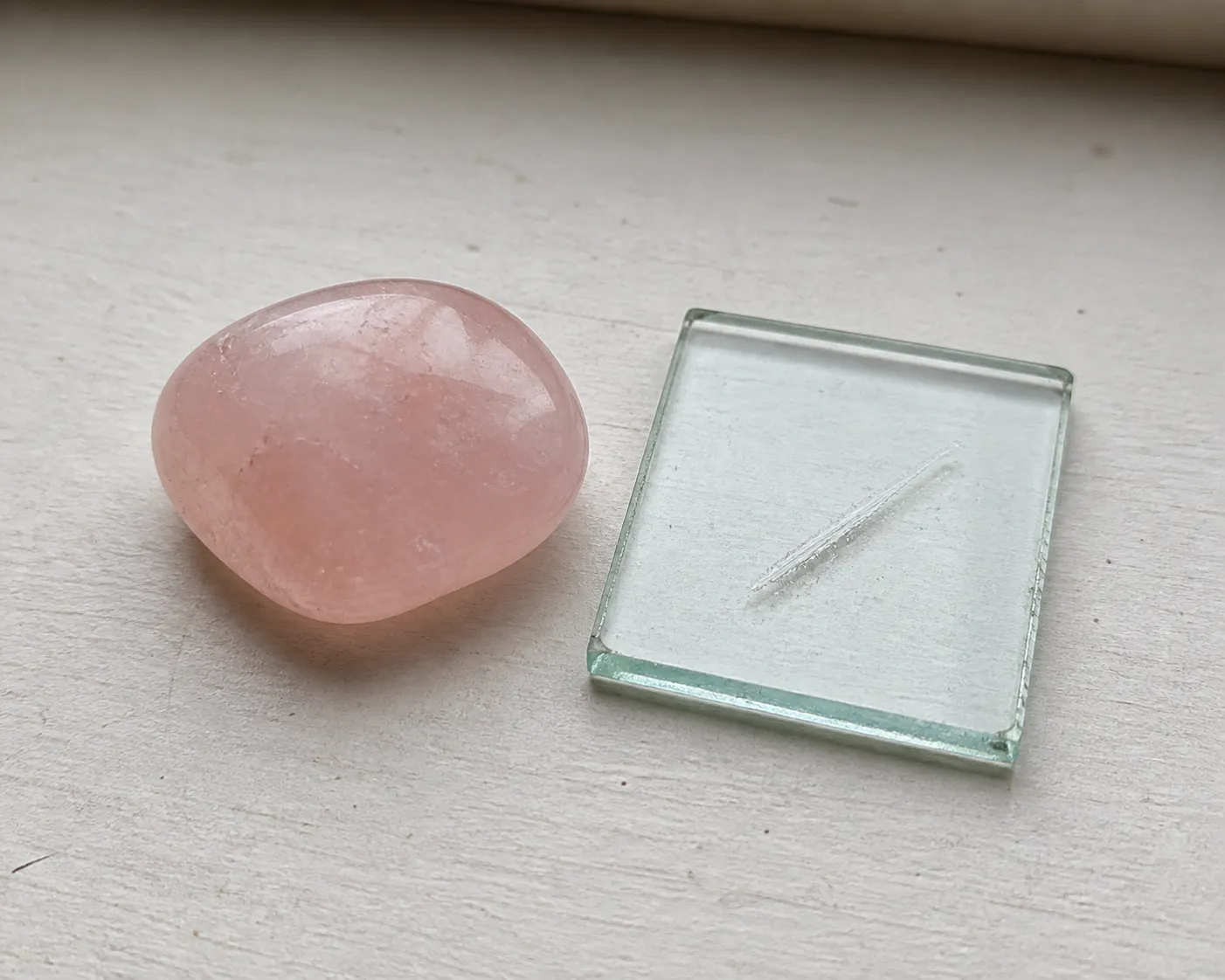
What the Mohs scale can tell you
Rose quartz is described in gemological and mineral references as a variety of quartz. Its expected hardness therefore follows quartz: about 7 on the Mohs scale.
The Mohs scale is comparative, not a laboratory measurement with equal spacing between numbers. It asks a practical question: can one material scratch another? If quartz marks a softer glass surface, that behavior fits the basic hardness relationship. If a sample is easily marked by glass or another softer object, it is not behaving as quartz should.
For a rose quartz reader, the useful point is narrow. A pink stone that behaves much softer than quartz deserves doubt, especially if it is being sold as rose quartz. A stone that resists easier scratching and can mark softer comparison materials may fit quartz physical properties.
That places the piece in a hardness neighborhood. It does not name the whole address.
Quartz versus glass hardness
The common question is simple: “Is this glass fake rose quartz?” Pink glass, dyed glass, and other look-alike materials can imitate the soft color of rose quartz, especially in beads, polished carvings, and decorative objects where natural texture has been reduced.
The Mohs hardness comparison helps because quartz is harder than common glass. Quartz should be able to scratch many glass surfaces; ordinary glass should not easily scratch quartz. This is why the quartz scratch test appears in basic mineral identification.
The sample scratches ordinary glass
It may be as hard as quartz or another harder material. It is not automatically rose quartz.
Glass easily scratches the sample
The sample may be softer than quartz. More checks are still needed.
The sample resists a light scratch attempt
It may fit quartz-like scratch resistance. It does not confirm origin, treatment, value, or sourcing.
The surface is damaged after testing
The test affected the finish. The damage is not an identification result by itself.
The better takeaway is not “scratch glass and you know.” It is that quartz versus glass hardness can separate some obvious mismatches from stones that deserve closer inspection.
Before you scratch a rose quartz piece
A scratch test can damage the object. Even a small mark may matter on a polished palm stone, bead, pendant, carving, coated surface, or piece kept for personal meaning. Testing a visible face can leave a permanent scar on the surface you were trying to understand.
For loose rough material, a tiny inconspicuous test area may be reasonable if the piece has no special value. For finished jewelry, mounted stones, antiques, sentimental objects, or costly carvings, a home scratch test is usually the wrong first move. A gemological evaluation can consider hardness alongside other evidence without reducing the object to one risky mark.
If testing is appropriate, keep the logic modest:
- Compare behavior, not beauty.
- Use an inconspicuous area.
- Avoid visible polished faces.
- Treat the result as one mineral identification clue.
- Stop if the piece is mounted, fragile, coated, old, costly, or emotionally important.
This matters with rose quartz because much of its appeal lives in finish, placement, and personal use. A soft pink stone on a shelf, bead strand, or small ritual object may not be worth damaging for one clue.
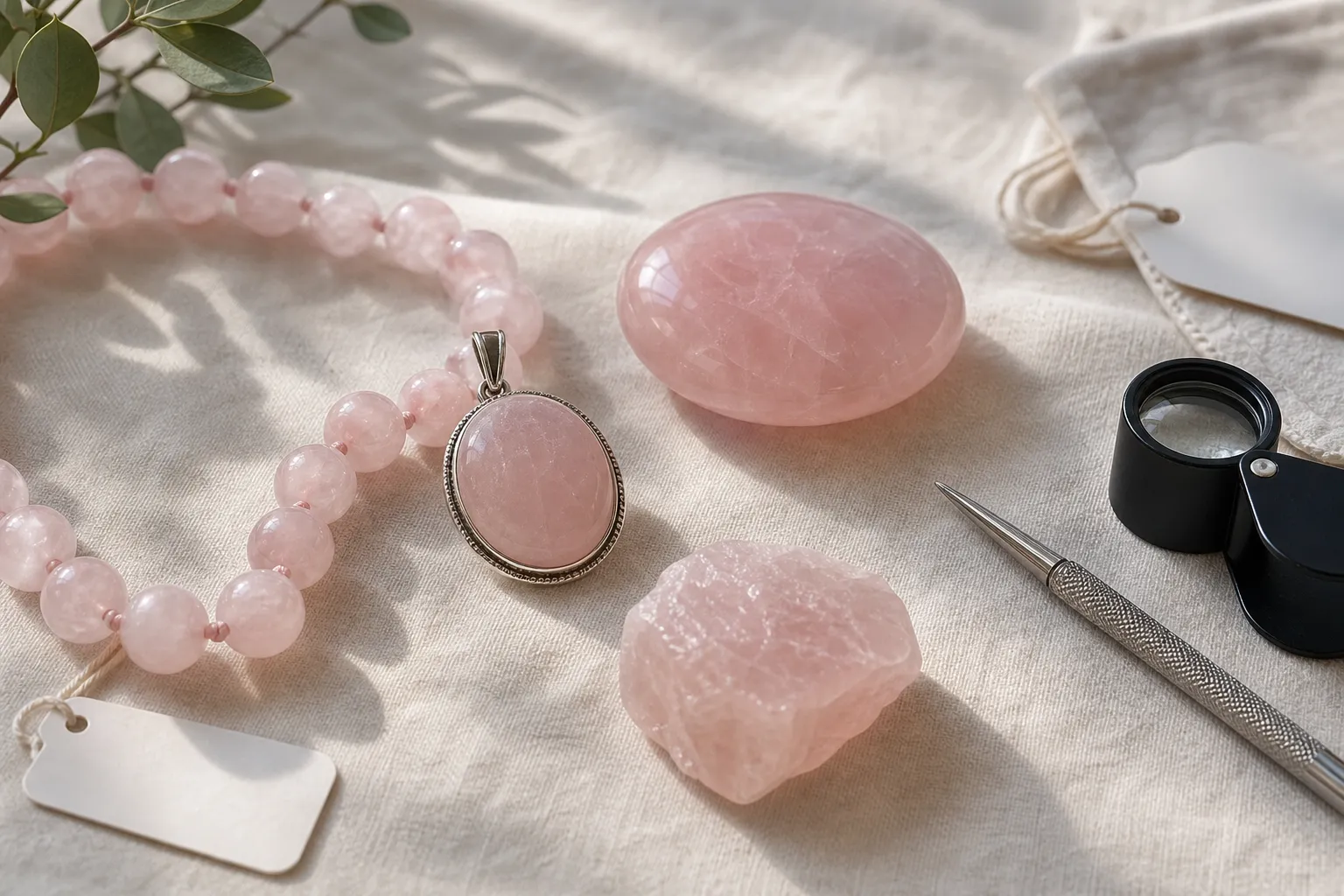
What can change the result
The Mohs test for quartz sounds simple, but the surface in your hand can complicate the reading.
A polished surface may not behave like a fresh mineral face. Coatings, wax, dirt, wear, or surface treatments can interfere with what you think you are scratching. A curved bead or small carving can make contact uneven. Too much force can cause crushing, chipping, or surface drag that looks like a scratch but is not a clean hardness comparison.
The comparison material matters too. “Glass” is a familiar word, but a window pane, bottle, display glass, and decorative glass object can differ in composition and surface condition. For this page, glass is useful as a practical comparison because common glass is generally softer than quartz; it is not a complete protocol for every glass object.
The sample also matters. A stone that scratches glass could be another hard material, not necessarily rose quartz. A pink material with quartz-like hardness may be rose quartz, dyed quartz, another quartz variety, or something that needs more context.
Hardness narrows the field. It does not finish the identification.
Common confusion about hardness and authenticity
One confusion is treating Mohs 7 as a precise lab value. The Mohs scale quartz number is a comparative position, not a fine measurement of every specimen under every condition. It is useful because it is simple, and limited for the same reason.
Another confusion is giving rose quartz a special hardness because it has a special appearance. Rose quartz is pink quartz; its color and translucency affect visual recognition, but the hardness expectation follows quartz. A claimed rose quartz piece that behaves far softer than quartz should raise questions.
A third confusion is assuming that a stone that scratches glass is automatically genuine rose quartz. Hardness can argue against some softer glass-like imitations, but other hard materials can scratch glass too. Mineral identification usually combines evidence: hardness, appearance, fracture, transparency, inclusions, context, and sometimes laboratory methods.
There is also a meaning boundary. A rose quartz object may be used in interiors, kept as a symbolic piece, or placed in a ritual setting. Those uses belong to human interpretation and lived aesthetic use. Mohs hardness belongs to mineral behavior. The scratch test can speak to the specimen before the symbol.
What the test cannot authenticate
A quartz-like scratch result does not show that a stone is natural. It does not show that the color is untreated. It does not show that a bead, sphere, tower, or carving is worth its asking price. It does not show locality, mining history, ethical sourcing, or seller honesty. Those claims need different evidence.
It also does not show that the stone is rose quartz rather than another quartz material or a hard imitation. Hardness is one physical property. Rose quartz mineral identification needs a broader pattern, and the evidence for this page stays deliberately narrow: quartz classification, rose quartz identity, Mohs hardness behavior, and scratch-test limits.
The most careful wording is: “This sample behaves consistently with quartz hardness,” or “This result is not consistent with ordinary soft glass.” Those statements are useful because they keep the evidence where it belongs.
When the Mohs clue is enough
The Mohs clue may be enough for a low-stakes screen when the object is loose, inexpensive, not sentimental, and already suspected of being a simple glass imitation. If the piece appears pink, is sold as rose quartz, and behaves around quartz Mohs 7 rather than like common glass, the hardness evidence supports treating it as plausible quartz while you consider other signs.
It is not enough when the object carries higher stakes. Finished jewelry, inherited pieces, large decorative carvings, antiques, or stones sold with strong origin or treatment claims need more than a home scratch comparison. The question is no longer only quartz versus glass hardness; it becomes a question of identity, condition, disclosure, and value.
A calmer decision path works better than a dramatic test:
- Start with the claim being made about the object.
- Ask whether hardness can address that claim.
- Avoid damaging visible or meaningful surfaces.
- Use Mohs hardness only to screen for quartz-like behavior.
- Seek gemological evaluation when the answer affects value, repair, resale, or trust.
This keeps the rose quartz scratch test useful without asking it to do work it cannot do.
Bottom line
Mohs hardness can help authenticate rose quartz only in a limited screening sense. Because quartz is around Mohs 7, a rose quartz piece should behave like quartz in a comparative hardness check, and that can help separate some suspected glass imitations from material that is more consistent with quartz.
But the scratch test does not fully authenticate rose quartz. It cannot confirm natural origin, treatment status, source, value, or symbolic meaning. Use it as one bounded mineral identification clue; for valuable, mounted, antique, or emotionally important pieces, keep the surface intact and look for a fuller evaluation.