Post-Divorce Space Clearing: Reclaiming Your Home's Energy Boundary
The practical version of Gray Divorce Spatial Regeneration is usually plain and visible: move, remove, or reassign the objects that still make the home feel shared. Rose quartz can sit inside that change as a symbolic marker, but it does not prove an energetic shift.

upward
Read the full overview first
Use the broader guide first if you need the full scope before this page.
Start With What You Can See
The first reset is often visual. Shared photos, duplicated furniture arrangements, leftover toiletries, and familiar routines can keep a room feeling suspended in the old relationship. In that sense, post-divorce space clearing is less about removing an invisible force and more about changing the cues your eyes meet every day.
That is why visible home changes after divorce matter. A different lamp, a cleared bedside table, a relocated chair, or a new entryway tray can shift the room's tone without pretending to solve everything. The point is not to perform a transformation. The point is to interrupt the old pattern of recognition.
For many people, that change also has an identity function. Divorce can leave the home carrying a kind of spatial dissolution, where the room still looks organized but no longer matches the person living in it. Replacing shared visual cues with personal ones helps establish a self boundary at home. It gives the room a clearer owner, even if the ownership is practical rather than symbolic.
Where Rose Quartz Fits
Rose quartz belongs here as a physical object and a symbolic marker, not as evidence of a result. It has visible clues like a pale pink tone and a polished or rough surface, but appearance alone cannot confirm authenticity or anything about its effect. In this context, it is better treated as a small object that carries meaning because the reader assigns meaning to it.
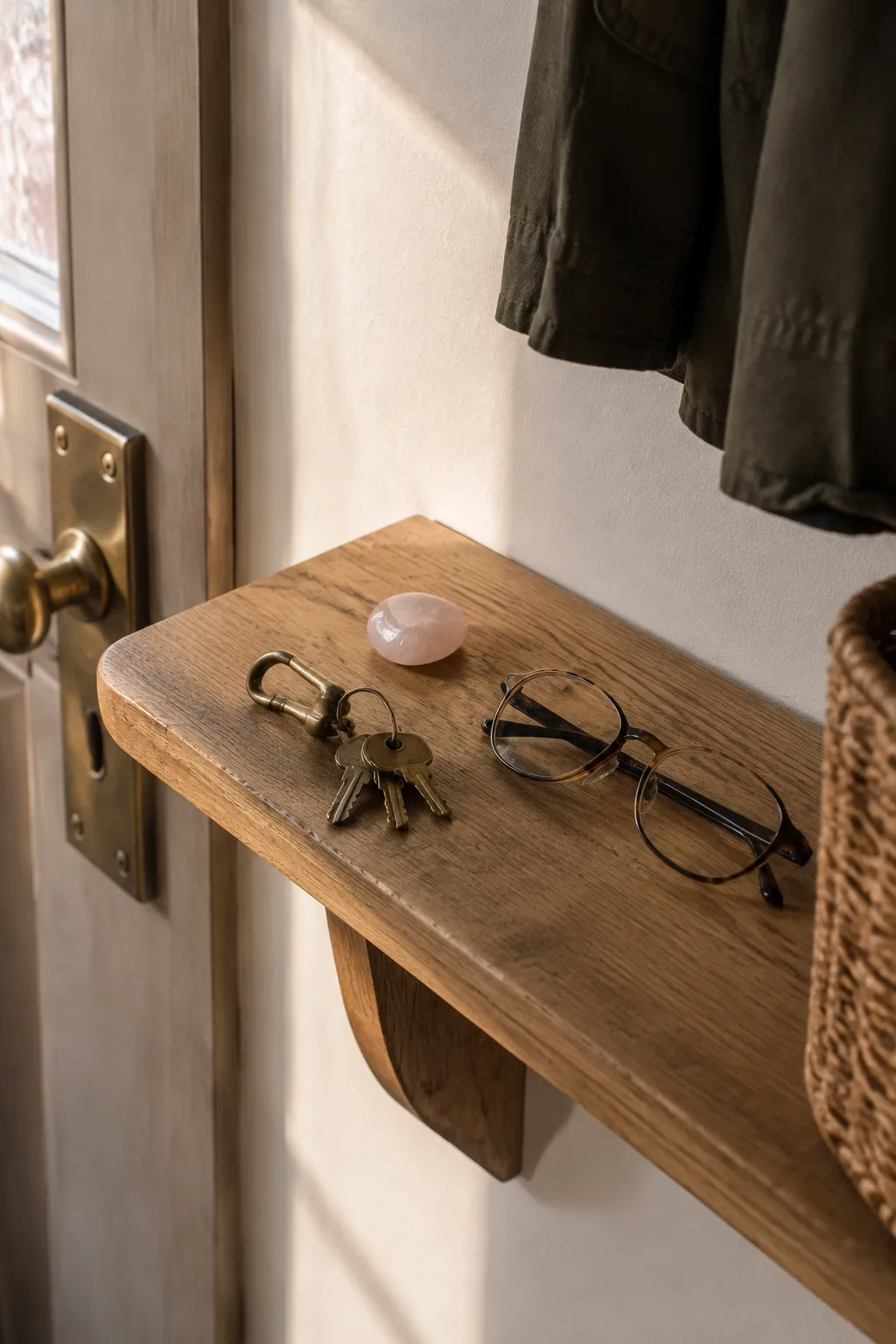
That is the most grounded way to use a rose quartz symbolic marker after divorce. Place it where you will notice it during ordinary routines. A bedside table works if the goal is a quiet morning cue. An entryway works if the goal is a threshold reminder. A shelf near your seat works if you want a stable personal point in the room. The placement matters more than any story around it.
Commonly, rose quartz is associated with softness, love, and self-regard. That association can be useful as symbolic language. It gives the object a role in a new domestic arrangement. But the association is interpretive, not proof. If you use it as part of symbolic space clearing, it is better to think of it as a marker of intention than as an instrument that changes outcomes.
A simple placement rule helps keep the practice honest: if the stone looks decorative but does not clearly mark your space, it is just decor. If it helps you notice the room as yours, it is doing symbolic work. That is all it needs to do.
What Actually Helps a Room Feel Reclaimed
The strongest changes after divorce are usually modest and repeatable. A new resting place for personal objects is often more effective than a dramatic reset because it changes habit, not just appearance. A mug, a book, a charging cable, or a pair of glasses in a new location can quietly redraw the room's daily map.
This is also where a threshold ritual after divorce can make sense, as long as it stays small. Open a window. Put away one shared object. Wipe one surface. Place the rose quartz in its chosen spot. Repeat the same action for a few days. The value is in the repetition, because repetition teaches the body that the room now answers to a different pattern.
Some readers prefer a bedside ritual after divorce because the bedside is where the day begins and ends. Others prefer the front door because the entryway carries arrival and departure. Either way, the ritual does not need special language. It only needs to be consistent enough to create a visible boundary between what the room used to signal and what it signals now.
- Remove one shared visual cue from the room.
- Give one personal object a new fixed place.
- Set the rose quartz where you will actually notice it.
- Repeat the same placement for a short period before changing anything else.
That kind of sequence supports reclamation because it is specific. It does not promise relief. It simply makes the home easier to read.
What This Can and Cannot Mean
This is the main limit: symbolic space clearing is reflective language, not proof of an emotional shift or energetic change. It may feel clarifying to change a room after a divorce, and the feeling can be real. But the meaning of that feeling is personal, not measurable from the arrangement alone.
That distinction matters because divorce often brings an identity crisis along with the practical split. The house may still contain the habits of two people, even when only one person remains. A rearranged room can help a reader recognize that the shared chapter is over, but it cannot certify closure. It can support self boundary establishment. It cannot guarantee anything deeper than that.
It is also easy to overread the rose quartz itself. A stone on a shelf is still a stone on a shelf. It may help the room feel softer, warmer, or more deliberate because the reader assigns it that role. That is a valid use of symbolic object placement. It is not the same as claiming the object changed the room on its own.
So the most accurate framing is modest. The room changes because you changed it. The object matters because you chose it. The boundary feels clearer because the visible cues now point back to you. That is enough.
A Grounded Way To Use The Idea
If you want the cleanest interpretation of post-divorce space clearing, treat it as a home practice rather than a belief test. You are not checking whether the room has hidden properties. You are deciding what should remain visible in a life that no longer includes the marriage.
That makes the practice useful in a gray divorce context as well, where the split may involve long routines, shared property, and older domestic patterns. In those cases, the room often needs fewer dramatic gestures and more precise ones. A removed object, a new tray, a changed lamp angle, or a bedside stone can be enough to mark a shift in the home memory after divorce.
The same rule applies across the page: visible changes are real, symbolic readings are optional, and outcome claims go too far. Rose quartz can sit inside that boundary as a quiet marker of self-regard. The room may feel different after you place it, but that feeling should be understood as lived experience, not evidence of a guaranteed effect.
That is the clean line. Make the room yours first. Let the symbol follow.