Symbolic clearing with clear limits
Using the Salt Water Method to Clear Stagnant Energy in the Southwest
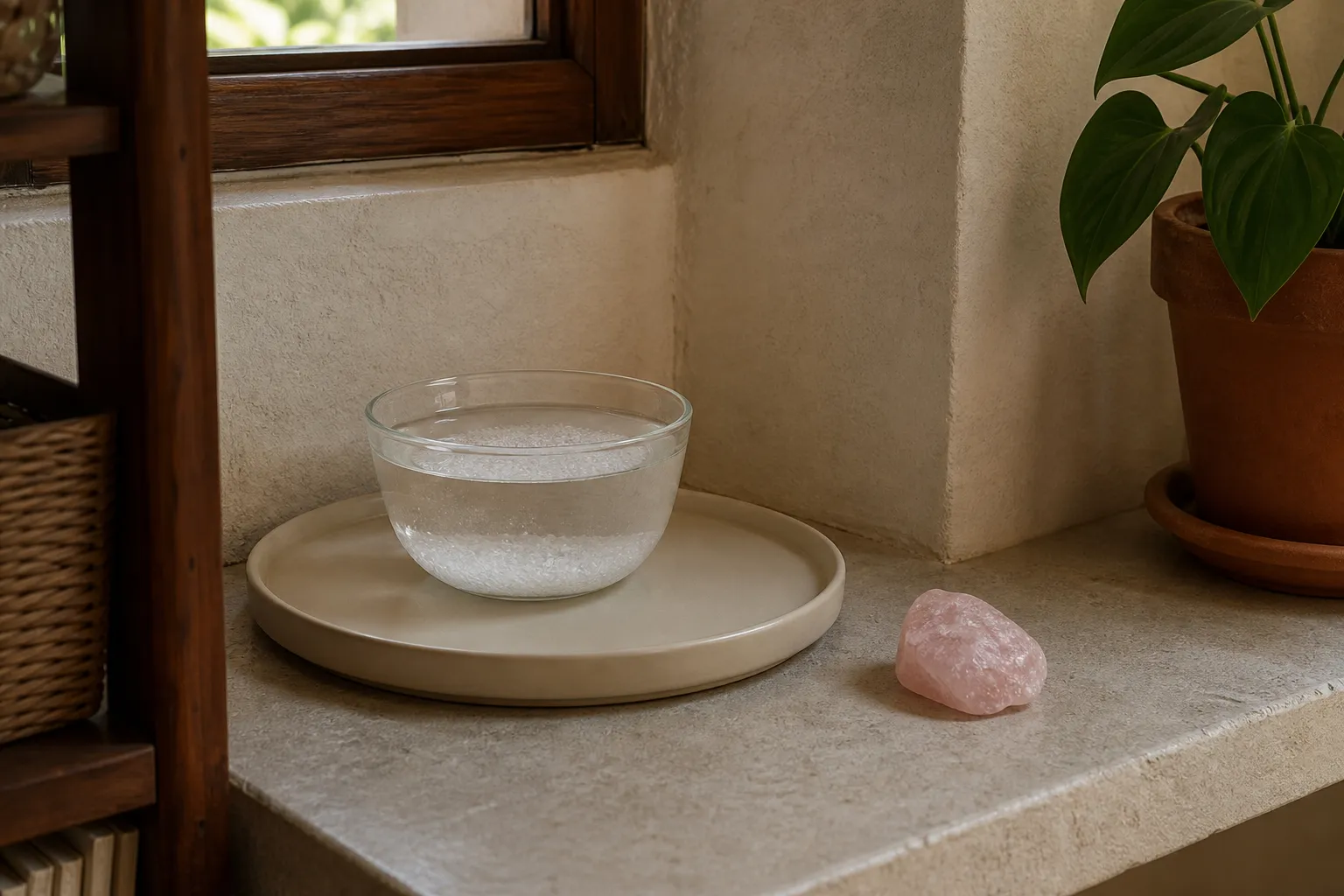
A salt water clearing ritual in the southwest area of the home can be used as a symbolic pause: clean the corner, place a stable bowl or jar of salt water where it will not spill, set an intention around heaviness or relational fatigue, leave it for a chosen period, then remove it with ordinary household care. In a Yin House Energy Salt Water Clearing frame, the southwest is treated as a meaningful room zone, not as a verified switch for changing the home.
The useful part is the structure: noticing the area, naming what feels stagnant, and making one visible change. The limit is just as important. Salt water is not shown here to remove measurable energy, change indoor conditions, or resolve relationship strain.
broader context
Start with the main rose quartz page
This narrower page makes more sense after the broader rose quartz context page.
The Bounded Way to Use It
Start with the physical southwest area before the symbolic language. Find the corner or zone you associate with the southwest, then look at what is actually there: clutter, neglected objects, a tired surface, a forgotten rose quartz piece, old papers, or décor that no longer fits the feeling you want in the room. That observation matters more than elaborate wording.
For a simple salt water clearing ritual, use a stable container, water, and salt. Some versions include metal, but the available material for this page does not support a detailed chemistry or tradition-based procedure. If you include metal, treat any visible change as an ordinary household observation, not as proof that stagnant energy has left.
A restrained sequence
- Clear the surface first, so the ritual is not covering over a visible mess.
- Place the salt water container where it cannot be knocked over or damage nearby materials.
- State the intention in symbolic terms, such as releasing heaviness around connection, resentment, or emotional fatigue.
- Leave the container for a chosen, limited time rather than waiting for a promised sign.
- Remove it carefully, clean the area, and notice whether the room feels more settled to you.
That last phrase matters: to you. The result is a reflective ritual practice, not an independently verified measurement.
What the Southwest Adds
The southwest area of the home is often approached by spiritually oriented readers as a relationship, grounding, or shared-life zone. Here, that remains symbolic placement language. The material available for this page does not verify a specific Feng Shui lineage, a traditional Yin House Energy rule, or a fixed cultural instruction for salt water in the southwest.
That does not make the practice empty for someone who values ritual. It changes the kind of claim that can be made. The southwest can serve as a chosen focus point: a place where you gather attention around partnership, family patterns, domestic tenderness, or the fatigue of carrying too much relational weight.
If rose quartz is already part of the room, keep the specimen before the symbol. You can observe its color, placement, finish, and relationship to nearby objects. A polished rose quartz bowl, a small tumbled stone, or a pale pink sphere may define the space visually, but the stone does not verify the clearing. It gives the ritual a material anchor.
For readers using the phrase “relationship burnout,” the salt water method should remain a room-based cue, not a substitute for conversation, rest, support, or changed behavior. The ritual can mark a wish to stop repeating a pattern. It should not be asked to carry the whole pattern.
When the Answer Changes
The answer changes when the ritual is used to make claims beyond meaning-making. If the goal is to create a moment of reflection in the southwest corner, the practice can stay simple. If the goal is to prove an energetic result, improve air quality, settle relationship distress, or validate a cultural rule, this page does not have the source base to support that.
Children or animals
If the container might be reached by children or animals, choose another reflective practice.
Sensitive surfaces
If the area includes porous stone, wood, metal finishes, textiles, or valuable surfaces, do not place salt water where spills or residue could matter.
Sign-checking anxiety
If the ritual increases anxiety because you keep checking for signs, shorten it or skip the container.
Real strain
If conflict, grief, or exhaustion is the real issue, do not let symbolic clearing replace practical support.
The simplest exception is this: you do not need salt water to perform the symbolic act. You can clear the southwest area by cleaning the surface, moving stale objects, opening light into the room, writing a private note, or placing rose quartz as a visual reminder of gentler attention. Those actions are observable. Their meaning is personal.
The “Spatial Detox” Misunderstanding
“Spatial detox” is a tempting phrase because it sounds decisive. For this page, it should be read as symbolic clearing language only. Salt water clearing is not shown here to change a room in a literal, measurable, or environmental sense. It is better understood as a ritualized way to mark a shift in attention.
The same caution applies to “stagnant energy.” In ordinary spiritual language, the phrase can describe a room that feels heavy, avoided, emotionally charged, or neglected. It should not be treated as a verified physical condition. A corner may feel stagnant because it is dusty, cluttered, dim, associated with old conversations, or simply ignored. Those are real observations. The energy language is interpretation.
“This corner feels heavy to me, so I am using a salt water ritual as a symbolic reset.” The bowl does not need to prove an invisible process.
Visible Changes Are Not Proof of Clearing
Some salt water methods draw attention to visible changes in a container, especially when metal is present. Without stronger source material, this article cannot explain a specific electrochemical reaction or connect residue, color change, or corrosion to energetic results. A dramatic-looking change is still not spiritual verification by itself.
It may still be meaningful to the person performing the ritual, because the object becomes a focus for attention. That is different from evidence.
A grounded interpretation is simple: the container changed, the room was cleaned, the ritual ended, and the person now has a point of reflection. A stronger claim would require stronger support than this page has.
A Rose Quartz Way to Keep It Gentle
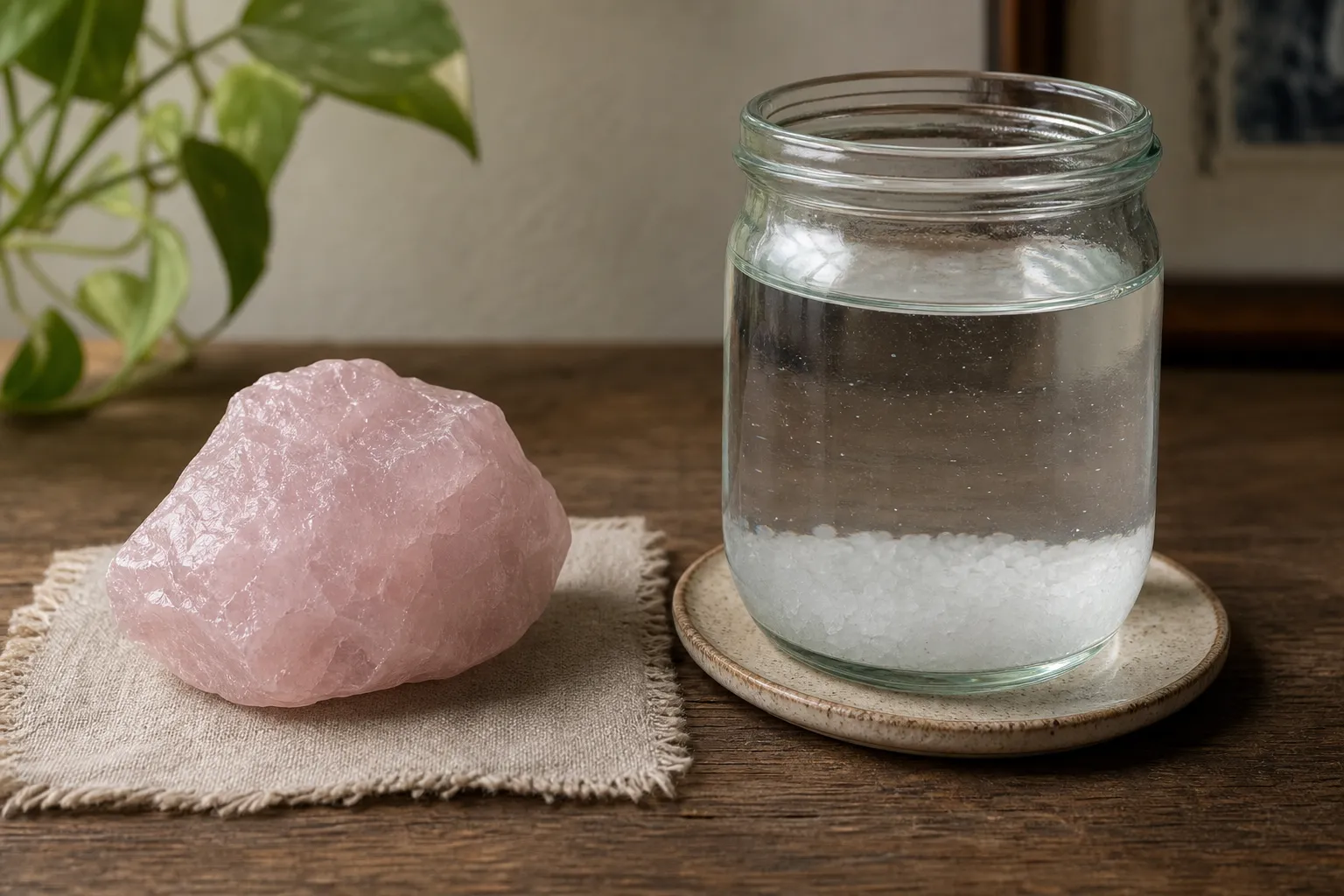
Rose quartz fits this page best as a quiet material companion, not as a promise. If you place rose quartz near the southwest area, keep it away from direct contact with salt water unless you have a clear reason and understand the surface you are handling. The point is not to build a more elaborate setup; it is to keep meaning beside material reality.
A small stone on a dry cloth, a pink quartz object on a shelf, or a simple piece moved from another room can mark the intention without turning the salt water into a test. The stone can stand for softness, repair, or attention in your own symbolic vocabulary. It does not certify the ritual.
This also prevents the practice from becoming a hidden demand. If the southwest corner feels calmer after you clean it, remove the bowl, and place an object with care, that is a lived aesthetic response. It belongs to your room experience, not to a universal rule.
When to Stop
Stop using the salt water method if it creates pressure around signs, results, or fear of doing the ritual incorrectly. A reflective ritual should not make the home feel more fragile. If the practice becomes a way to avoid a conversation, delay a repair, or explain every emotional difficulty through energy language, the ritual has become too heavy for a single corner.
Choose a simpler practice when the room needs visible care more than symbolic intervention. Dust the surface, remove objects linked to old strain, adjust lighting, wash textiles if appropriate, or move the rose quartz piece somewhere it can be seen without clutter. These changes are modest, but they are real.
Choose outside support when “relationship burnout” points to ongoing distress, conflict, depletion, or practical life strain. A salt water clearing ritual may help someone name a threshold, but it should not replace communication, rest, or appropriate help.
The Cleanest Answer
Use the salt water method in the southwest as a symbolic clearing ritual: clean the area, place a stable salt water container with care, set an intention around heaviness or relational fatigue, leave it only for a chosen period, then remove it and return the space to ordinary use. If rose quartz belongs in the area, let it serve as a dry visual anchor for softness and attention.
Do not treat the practice as a literal environmental process, a verified Feng Shui requirement, a chemistry-backed energy method, or a way to fix relationship burnout. The page evidence supports only a careful ritual context with mineral literacy and clear limits.
The strongest version is modest: one corner, one container, one intention, one visible act of care. That is enough for a symbolic clearing.