Analog ritual, clear limits
Why Your Brain Needs an Analog Reset: The Rose Quartz Meditation Protocol
A rose quartz biofield harmonization meditation works best as an analog reset ritual, not as a claim that a crystal changes your body, adjusts a measurable field, or clinically regulates your nervous system. Its practical value is simpler: rose quartz can give your hand, eyes, and attention one quiet place to land.
In this protocol, the stone is not doing the work for you. The useful parts are breath attention, pacing, self-observation, and a symbolic return to gentleness. If phrases like “biofield,” “heart chakra alignment,” or “nervous system regulation” are meaningful to you, keep them as contemplative language rather than health-outcome language.
broader context
Rose quartz context note
This narrower page makes more sense after the broader rose quartz context page.
The Protocol in One Quiet Sequence
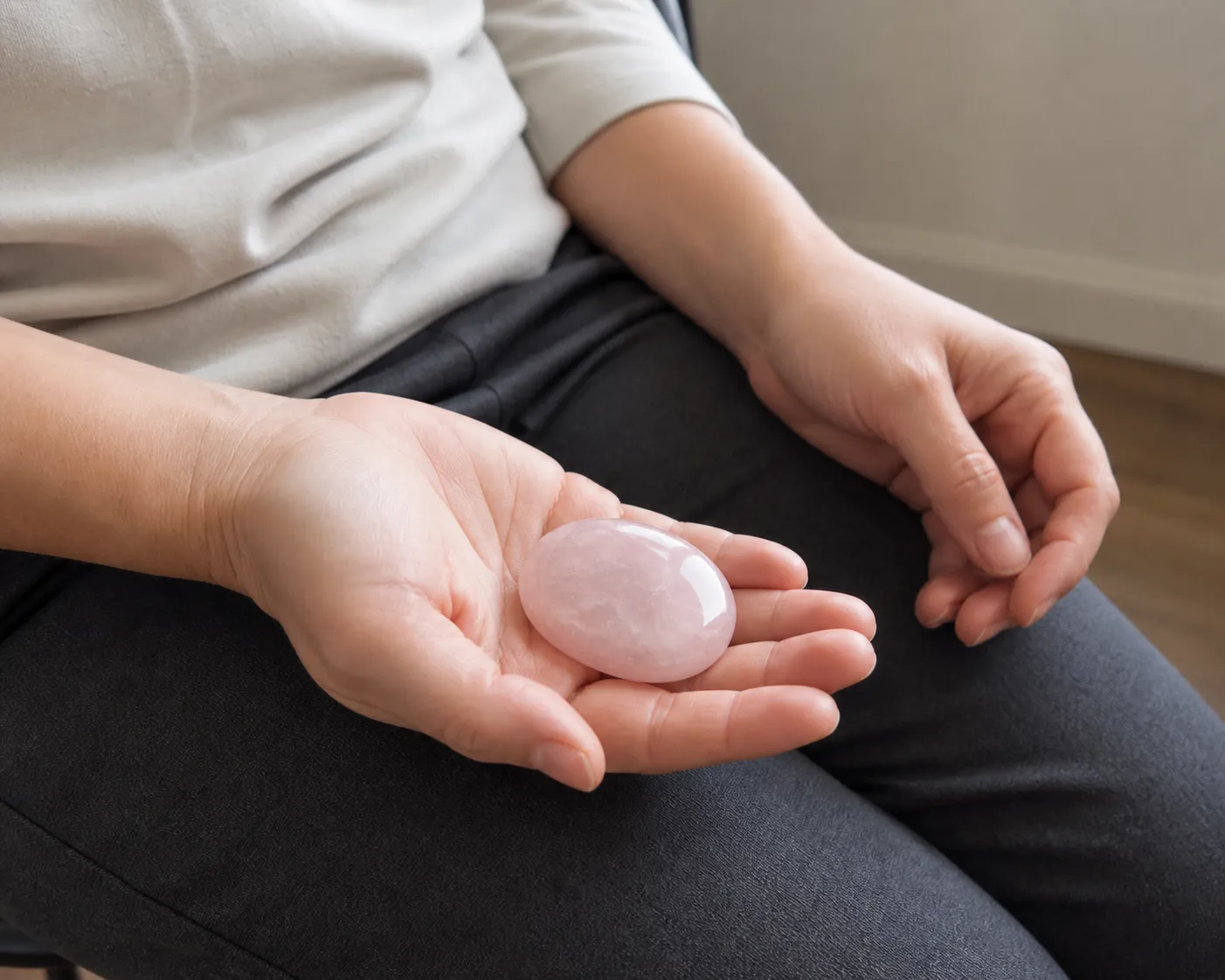
Choose a piece of rose quartz you can hold comfortably, or place a larger piece where your eyes can rest on it. Rose quartz is a quartz variety, and its mineral identity can be described in ordinary material terms. For this practice, the important qualities are physical: weight, color, temperature, texture, and the way a real object interrupts the frictionless speed of a phone.
Set a timer for five to twelve minutes. Short is enough. The goal is not a dramatic inner event; it is a clear pause.
Sit somewhere stable. Let the stone rest in one palm, both hands, or on a surface in front of you. If holding it makes the ritual feel too loaded, keep it nearby instead. The practice should feel self-paced, not compulsory.
Begin with contact: the stone against skin, the chair beneath you, the floor under your feet. Let your eyes soften or close if that feels safe. Take three normal breaths before trying to slow anything down. Many people turn meditation into another performance task. An analog reset begins by reducing effort.
Now use the rose quartz as a symbolic anchor. You might silently name it as “a pause,” “a gentle boundary,” or “a reminder to come back to myself.” If heart-centered language fits your practice, place attention around the chest area without forcing sensation or emotion. If that feels uncomfortable, shift attention to the hands, the breath at the nose, or the surface of the stone.
Middle rhythm
- Inhale naturally and notice the stone.
- Exhale naturally and soften the shoulders.
- Name one word for what is present: tired, guarded, tender, scattered, numb, full.
- Return to contact with the stone before following the next breath.
This is not a test of heart chakra alignment. It is a way to give emotional exhaustion a small, non-digital container. Some readers may find that the object makes mindful attention easier because it gives the mind something concrete to return to. Others may find that plain breathing, walking, or a cup of tea works better. Both responses are valid.
Close with re-entry. Put the stone down deliberately. Look around the room. Name one ordinary next action: drink water, answer one message, step outside, stretch, write one sentence, or rest. A calming ritual should return you to the day, not pull you away from it.
Why the Analog Part Matters
What the screen does
A screen pulls you through updates, messages, comparison, and unfinished loops.
What the stone does
A stone does almost nothing. That is its advantage here. It does not notify you. It does not ask for interpretation. It gives the hand and eye one simple place to rest.
The strongest practical reason to try this rose quartz meditation protocol is not that rose quartz has a verified effect on a biofield. The better reason is that an analog object changes the setting of attention.
Public-health sources discuss meditation and mindfulness as practices some people use in stress-related contexts, with safety limits. That support belongs mainly to the meditation layer: pausing, breathing, noticing, and returning attention. It does not automatically transfer to rose quartz-specific claims.
This distinction keeps the practice honest. If the ritual helps you settle, the likely support comes from the structure: sitting down, reducing input, observing breath, and naming the emotional load before reacting. Rose quartz may make that structure feel more tangible, beautiful, or personally meaningful. It should not be framed as the mechanism that guarantees the result.
The same care applies to nervous system language. In everyday wellness writing, people often use it to mean feeling steadier, less flooded, or more grounded. Here, it should stay at that everyday level. A rose quartz ritual may support a calming frame for some readers, but it is not a substitute for qualified support when symptoms are severe, persistent, or escalating.
Using Biofield and Heart Language Carefully
“Biofield harmonization meditation” comes from complementary-health and spiritual-wellness vocabulary. It may be meaningful reader language, but the available source boundary does not establish that rose quartz produces measurable harmonization.
A grounded version sounds like this: “I am using rose quartz as a reminder to pause, breathe, and relate to myself with more gentleness.”
A less careful version would turn the stone into an active force with promised outcomes. That is not supported by the available material, and it is not needed for a worthwhile ritual.
Heart chakra alignment needs the same restraint. It can be used as spiritual or symbolic language for heart-centered reflection: compassion, tenderness, grief, openness, boundaries, or the wish to soften harsh self-talk. It should not be treated as a verified internal adjustment. If chakra language is part of your worldview, the protocol can hold it gently. If it is not, the same practice can be described as chest-area awareness, emotional naming, or reflective breathing.
The rose quartz itself can still matter aesthetically and symbolically. Its soft pink color is why many readers associate it with gentleness and affection. But symbolism is not evidence of an effect. A symbol works because you relate to it.
What Changes the Answer
This protocol fits best when you want a brief, self-paced pause: a way to interrupt scrolling, soften a stressful transition, or create a small ritual around emotional fatigue. It is less appropriate when you need a primary response to severe distress, panic, dissociation, intrusive memories, depressive symptoms, or avoidance of needed care.
The answer also changes if meditation itself feels destabilizing. Not everyone feels calmer when sitting still. For some people, closing the eyes or focusing inward can intensify discomfort. If that happens, keep the eyes open, shorten the practice, shift attention to the room, or stop. A grounded ritual is allowed to be brief. It is allowed to be ordinary. It is allowed not to work for you.
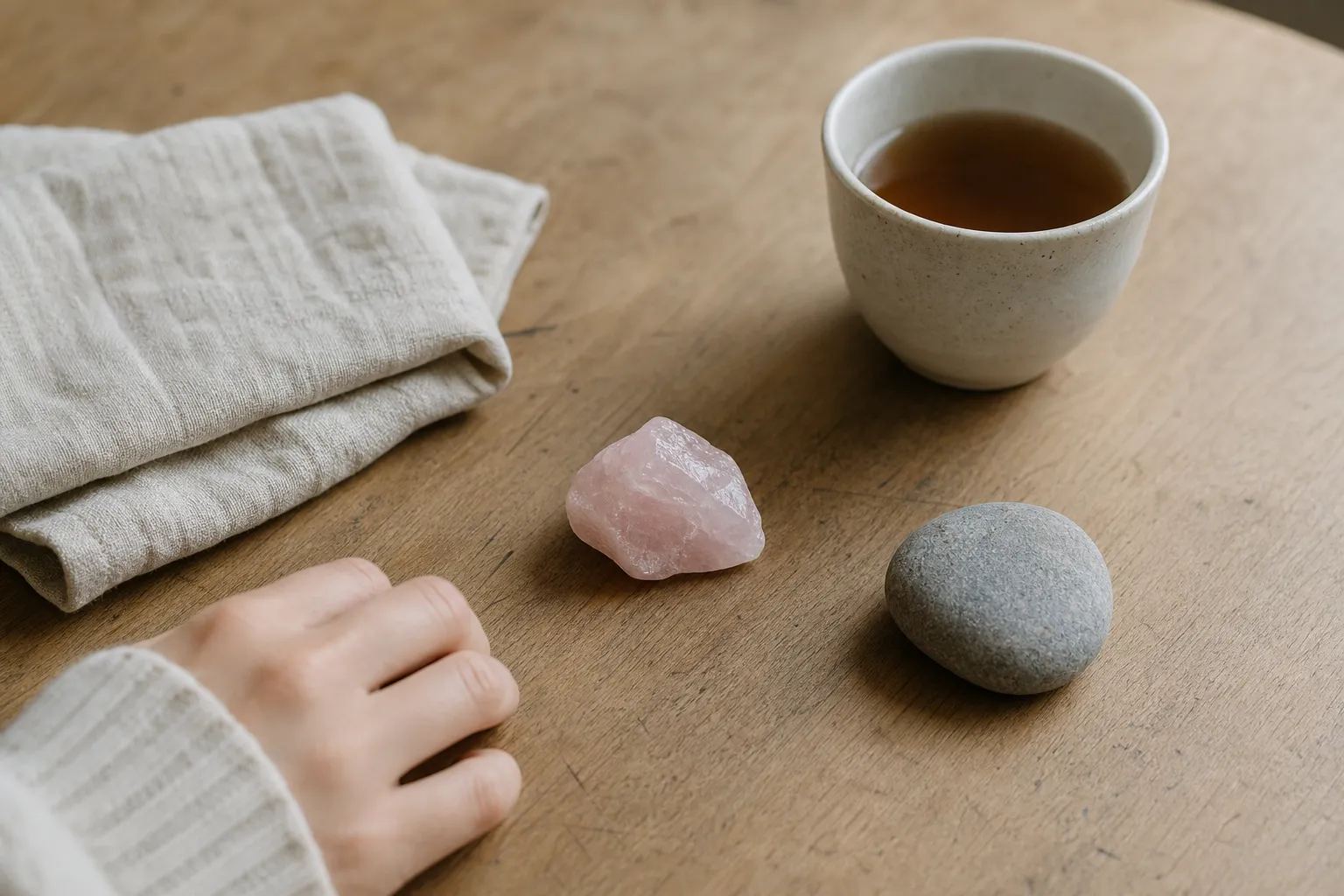
Your relationship to the stone matters too. If rose quartz feels comforting, it can serve as a tactile meditation anchor. If it feels like pressure to believe something, perform spirituality correctly, or force softness when you are angry or depleted, choose another object. A smooth pebble, a cup of tea, a folded cloth, or a hand on the table can serve the same analog role.
The setting also matters. A five-minute practice between meetings is different from a longer evening reflection. For emotional exhaustion, shorter may be kinder. The goal is not to excavate every feeling. The goal is to notice enough to stop moving through the day on pure momentum.
Common Confusion Around Rose Quartz Meditation
Mineral identity versus emotional effect
Rose quartz can be identified as a quartz variety. That tells us what the object is. It does not show that it produces emotional, energetic, or therapeutic outcomes.
Meditation evidence versus crystal-specific claims
A rose quartz meditation includes meditation, but the crystal-specific layer remains outside what the available evidence can support.
Symbolic language versus measurement
“Biofield,” “alignment,” “energy,” and “heart opening” may be meaningful words inside a personal ritual. They become misleading when written as objective results. A cleaner approach is to keep them inside the frame of intention: “I am practicing as if I can meet this moment with steadier attention.”
Calm as the only correct goal
Sometimes the honest result of a pause is realizing you are angry, lonely, overloaded, or in need of help. That does not mean the ritual failed. It may mean the analog reset did its modest job: it interrupted autopilot long enough for you to notice what was already there.
A Bounded Practice for Emotional Exhaustion
Use this version when you feel drained but still able to choose a small reflective pause.
- Place the rose quartz in your hand or within sight. Say, silently or aloud: “This is a pause, not a demand.” Let that sentence set the boundary.
- For one minute, notice only physical contact. Do not analyze your feelings yet.
- For three to six minutes, pair breath with one question: “What am I carrying right now?” Answer in single words or short phrases. If the mind gets busy, touch the stone with your thumb and return to the next breath.
- For one minute, ask: “What is one kind next step?” Keep the answer practical. It might be sending a delayed message, eating something, lying down, stepping away from a conversation, or deciding to seek support.
- End by putting the stone somewhere visible but not central. The symbolism is useful when it supports life; it becomes less useful if the ritual turns into avoidance.
That is the cleanest answer: the stone anchors attention, the breath paces the pause, the reflection names the emotional load, and the closing action returns you to reality.
Safety and Evidence Limits
The available source pool does not support claims that rose quartz changes a biofield, produces heart chakra outcomes, resolves emotional exhaustion, or clinically regulates the nervous system. The narrower and more useful claim is this: a rose quartz ritual may help some readers make meditation feel more concrete, personal, and analog.
Stop the practice if it increases distress, panic, dissociation, intrusive memories, or a sense of being unsafe. If emotional symptoms are severe, worsening, or interfering with daily life, seek qualified support rather than relying on a crystal ritual. Meditation should not become a reason to delay care, ignore urgent symptoms, or pressure yourself into stillness when stillness feels harmful.
Within those limits, the protocol can still be valuable. It gives a busy mind a small physical threshold: pick up the stone, slow the breath, name the load, choose the next step, return. That is the analog reset.