Rose quartz ritual use
Aligning with Venus: Essential Oil Pairings for Your Rose Quartz Rituals
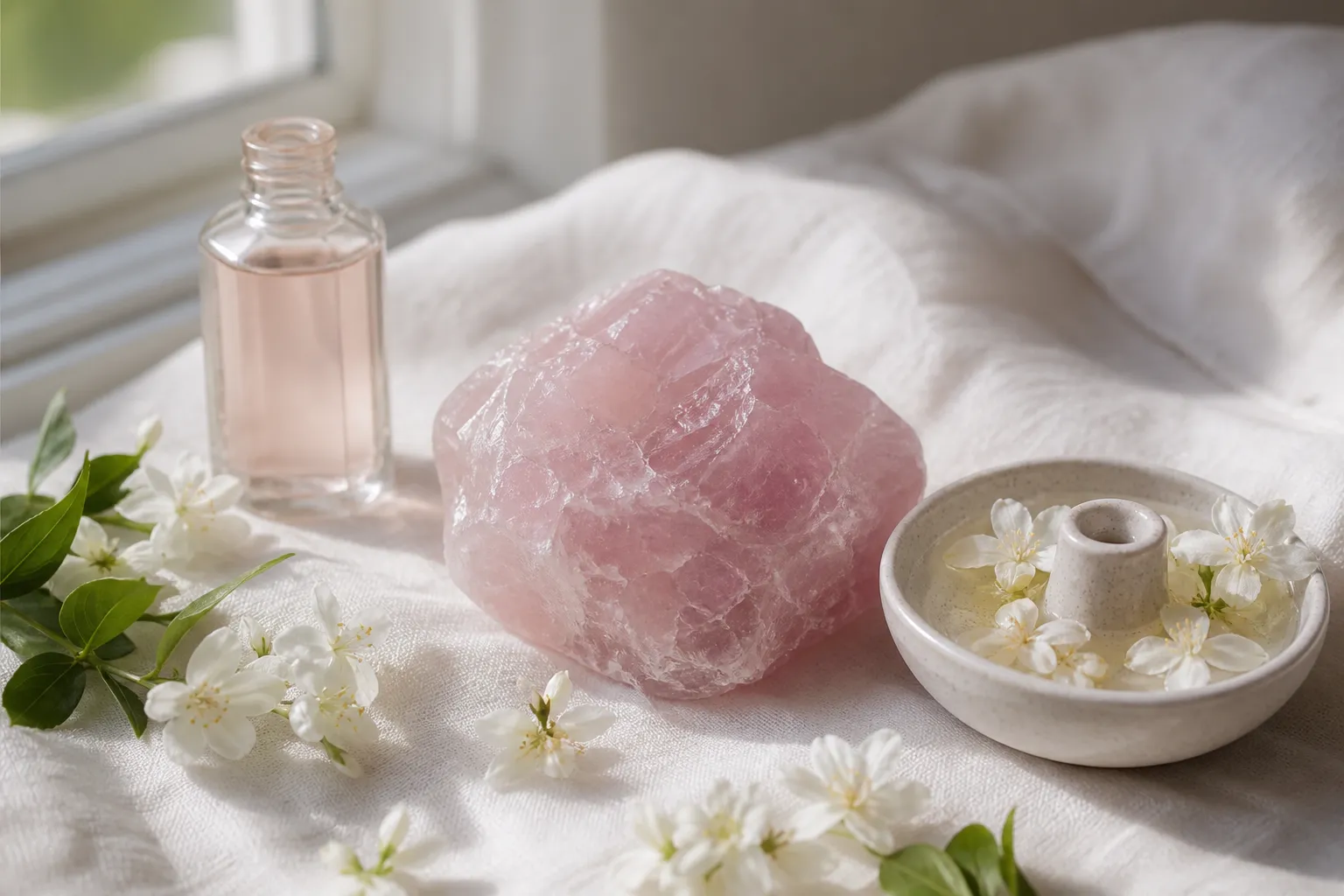
A rose quartz ritual pairs best with essential oils when the stone is treated as the visual anchor and the scent as the atmosphere. For a Venus-aligned practice, the clearest direction is soft, floral, and rounded: jasmine as the central note, with rose, geranium, lavender, or sweet citrus used lightly around it. That is the useful answer to Rose quartz aromatherapy synergy here: choose oils for symbolic mood, sensory immersion, and aesthetic fit, not for guaranteed outcomes.
The stone remains a mineral object. The oil remains a concentrated aromatic material. The ritual meaning comes from how you arrange them.
broader context
Start with the main rose quartz page
This narrower page makes more sense after the broader rose quartz context page.
Start with Venus as a Mood, Not a Claim
Venus days can be used as a personal timing cue if that symbolism matters to you. They work best here as an organizing rhythm, not as proof that a ritual will produce a specific result. A simple Venus-aligned setup might be rose quartz on a clean surface, one floral scent in the room, and an intention written in ordinary personal language.
A Venus-centered scent palette usually leans toward softness, beauty, affection, receptivity, and aesthetic pleasure. Those words describe a ritual mood. They are not measured effects. Within that frame, jasmine makes sense as the focal pairing because it is floral, warm, and sensuous in character. Rose quartz, especially when pale, translucent, or softly clouded, gives the arrangement a quiet visual field that can hold that scent without making the setup feel crowded.
A restrained sequence is enough
- Place rose quartz where it can be seen clearly.
- Choose one main oil, such as jasmine, instead of layering many scents.
- Keep the fragrance in the room atmosphere rather than on the stone or skin.
- Use light, cloth, a tray, or a small dish to shape the setting.
- Keep the intention symbolic: beauty, tenderness, attention, or appreciation.
A sensory rose quartz ritual does not become more grounded by adding more oils or stronger claims.
Jasmine as the Center Note
Jasmine works best when it is treated as the emotional color of the setting. It can feel dense, floral, warm, and intimate, so it rarely needs much support. In a rose quartz ritual, jasmine is usually the center note; the stone supplies the pale visual quiet, and the scent supplies atmospheric depth.
If jasmine feels too heavy, soften the pairing instead of intensifying it. Lavender can make the setting quieter. Geranium keeps a floral profile while adding a greener edge. A small amount of sweet orange or bergamot can make the arrangement feel brighter. Rose can be beautiful with jasmine, but both are strong floral choices, so the pairing is best kept minimal in a small room or short practice.
These are mood-setting pairings, not evidence-backed instructions. The useful test is sensory fit: does the scent make the rose quartz arrangement feel more coherent, or does it overpower the ritual object?
Build Sensory Immersion Without Overdoing It
Sensory immersion works when the visual, scent, touch, and timing cues point in the same direction. With rose quartz essential oil pairings, that does not mean placing oil on the stone or turning the practice into a complicated blend. It means creating a room environment where the mineral, fragrance, light, and gesture feel related.
1
Set the rose quartz first.
2
Add scent second.
3
Adjust the room third.
4
Begin only after the space feels settled.
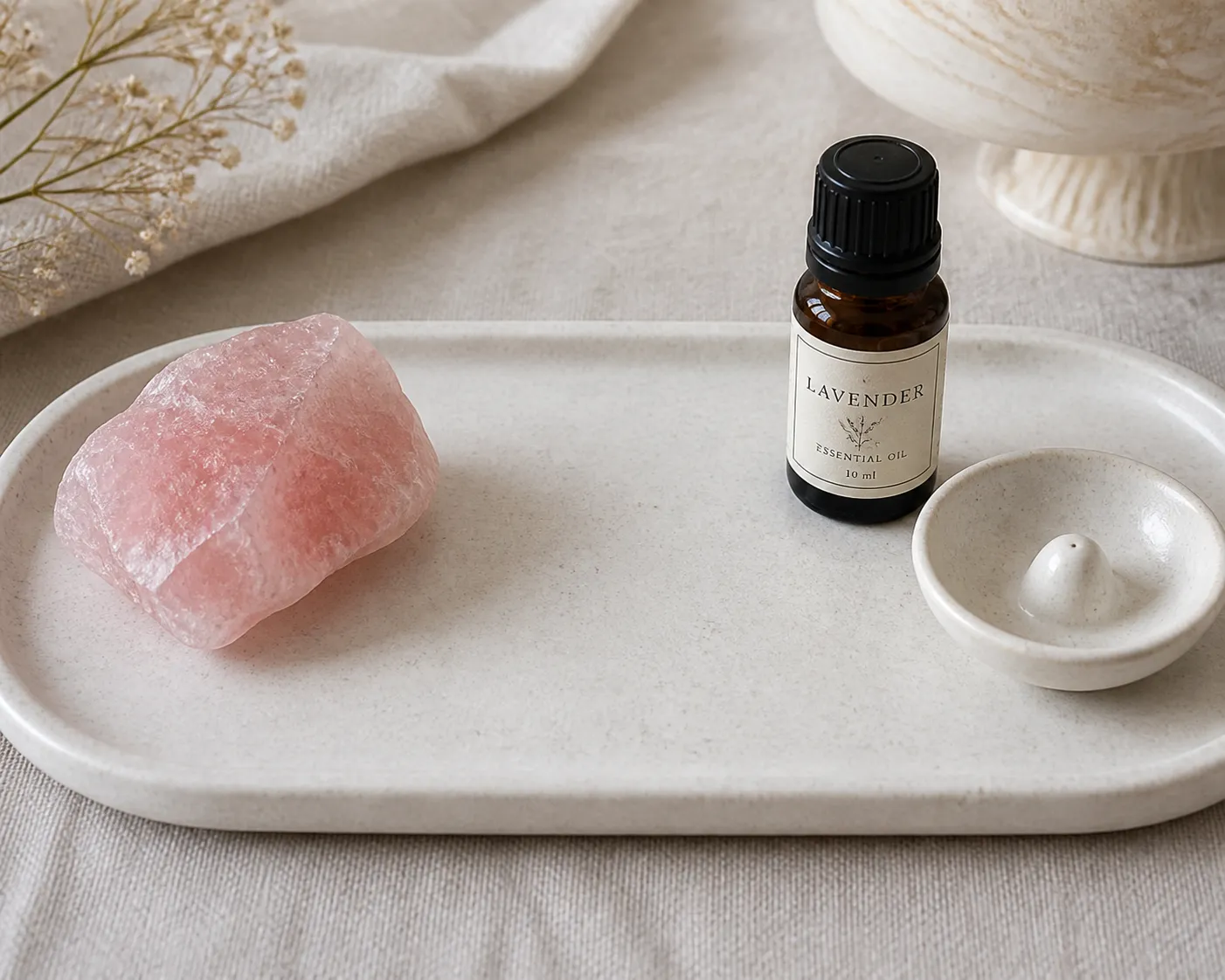
The rose quartz can sit on a tray, cloth, book, saucer, or bare surface. The oil can be used in a diffuser, on a scent strip, or through another room-safe method you already understand. The important distinction is that the oil does not need to touch the stone. For this page, pairing means symbolic and sensory alignment, not physical contact.
Contrast also matters. If the rose quartz is very pale, jasmine can add warmth. If the stone is deep pink or visually saturated, a lighter scent may keep the arrangement from feeling heavy. If the room already has candles, perfume, flowers, or incense, reduce the oil rather than adding another layer.
The better question is not “Which oil is strongest?” It is “Which scent lets the rose quartz remain visible in the ritual?”
What Changes the Right Pairing
The right pairing changes with room size, scent sensitivity, time of day, and the role of the ritual. A Venus-aligned evening practice may suit jasmine more naturally than a quick morning reset. A small bedroom may make a strong floral oil feel intrusive. A shared home may call for a quieter scent, or no essential oil at all.
The answer also changes if the ritual is more visual than aromatic. Some people want rose quartz as an interior object first and a ritual object second. In that case, the best pairing may be a faint background scent, not a named blend. Others want scent to carry the sensory immersion; then jasmine can lead while the stone remains the visual center.
The stone itself can shift the choice. A polished heart, a palm stone, a carved bowl, and a raw chunk do not create the same mood. A polished piece can feel intimate and handled; a raw specimen can feel more mineral and less decorative. The oil pairing should follow that visual character rather than forcing every rose quartz object into the same romantic script.
Use these decision points
- If the rose quartz is already visually delicate, choose one soft oil and stop.
- If jasmine feels too intense, move toward lavender, geranium, or a light citrus accent.
- If the ritual is for a shared room, keep the scent minimal or skip it.
- If the purpose is Venus days ritual planning, let timing shape the scene, not the claim.
- If any oil feels physically unpleasant, the symbolic match is not worth keeping.
A pairing is successful when it supports attention. It does not need to prove anything beyond that.
Common Confusion: Pairing Is Not Proof
The main confusion around rose quartz aromatherapy synergy is the word “synergy.” In commercial and spiritual language, it can sound as if the stone and oil produce a verified combined outcome. This page does not use the word that way. Here, synergy means a symbolic and sensory fit between materials: pink quartz, floral scent, chosen timing, and ritual mood.
Venus days can be misunderstood in the same way. A Venus day may be useful as a personal calendar cue, especially for readers who enjoy symbolic timing. It should not be treated as a guarantee of a specific life change. The timing can help you decide when to do the practice; it does not supply evidence for the result.
Jasmine can also be overread. It may be meaningful in a ritual because of its scent profile and the associations people bring to floral materials, but the supplied research material for this page does not support health, attraction, fertility, beauty, sleep, anxiety, trauma, hormone, skin, or clinical claims. Keep the language close to atmosphere: floral, warm, soft, enveloping, ceremonial, intimate.
Rose quartz has the same boundary. It can be used as a symbol of affection, gentleness, or aesthetic softness in a ritual setting. That does not make it a tool with verified external effects. The specimen before the symbol matters here; the visible stone is real, and the interpretation is chosen.
Essential Oil Boundaries
Essential oils are concentrated aromatic materials, so a ritual page should not treat them as harmless decoration. Do not ingest them. Keep them away from eyes and mucous membranes. Do not assume skin contact is suitable, especially with sensitive skin, allergies, asthma, pregnancy, children, pets, or shared indoor spaces. If your situation needs qualified guidance, seek that before using oils.
This page also has no usable public safety sources or exact handling references in the supplied material, so it should not provide dilution ratios, medical-style tables, or technical instructions. That absence keeps the advice narrow: use scent conservatively, avoid body-outcome claims, and do not put ritual symbolism ahead of ordinary caution.
It is also sensible to avoid coating rose quartz with oil. Oil can leave residue on surfaces, cloth, bowls, shelves, or the stone itself. For a cleaner setup, separate the mineral from the aromatic material: stone on one surface, scent in the air or on a separate scent object. The pairing remains intact without physical contact.
A Simple Venus and Jasmine Setup
For a short Venus-aligned practice, choose one piece of rose quartz and one jasmine-centered scent direction. Place the stone where the light shows its surface clearly. Add scent lightly, using a method you already know is appropriate for your space. Sit with the arrangement for a few minutes and keep the intention in ordinary words: attention to beauty, tenderness toward the self, care in relationships, or appreciation for the room you are in.
If jasmine is too strong, let jasmine shape the idea rather than dominate the scent. Pair rose quartz with lavender for quietness, geranium for green floral balance, or a small citrus note for brightness. If you want a more traditional romantic atmosphere, jasmine and rose can sit together, but restraint matters. Heavy floral layering can turn sensory immersion into sensory clutter.
The ritual does not require a complex blend. It requires a clear relationship between the object, the scent, the timing, and the mood.
Short Answers
Can I put jasmine oil directly on rose quartz?
It is better not to. This page treats pairing as symbolic and atmospheric, so the oil does not need to touch the stone. Keeping them separate also avoids residue on the specimen or nearby surfaces.
Is Venus-aligned timing necessary?
No. Venus days can be used as a personal ritual calendar if that symbolism matters to you, but the pairing still works as an aesthetic practice without timed scheduling.
What is the best oil pairing if jasmine feels too strong?
Use jasmine less, or choose a softer direction such as lavender, geranium, rose used sparingly, or a light sweet citrus. The best choice supports the rose quartz setting without overwhelming the room.
A rose quartz ritual with essential oils is strongest when it stays honest about what it is: a composed sensory scene, shaped by symbolism, timing, scent, and visible material. Venus can guide the mood. Jasmine can carry the floral center. Rose quartz can hold the visual quiet. The outcome remains personal practice, not proven promise.