Crystal ritual boundary
Clearing the Digital Smog: A Guide to Acoustic Crystal Purification
Singing bowl crystal aura clearing is a symbolic, sensory ritual. It is not a verified way to remove electromagnetic residue, cleanse a measurable field, protect against devices, or produce a confirmed energetic change in a crystal. If you use the phrase “digital smog,” the safest meaning is metaphorical: the heavy, crowded feeling that can come from screens, alerts, noise, busy rooms, or overstimulation.
A singing bowl can still give the ritual a clear shape. Sound, silence, intention, and careful placement help mark a shift from “handled,” “busy,” or “forgotten” to “noticed again.” The value is in attention and meaning. The boundary is that acoustic crystal purification should not be described as a scientific process unless stronger evidence is available.
broader context
Rose quartz context note
This narrower page makes more sense after the broader rose quartz context page.
What Acoustic Crystal Purification Can Mean
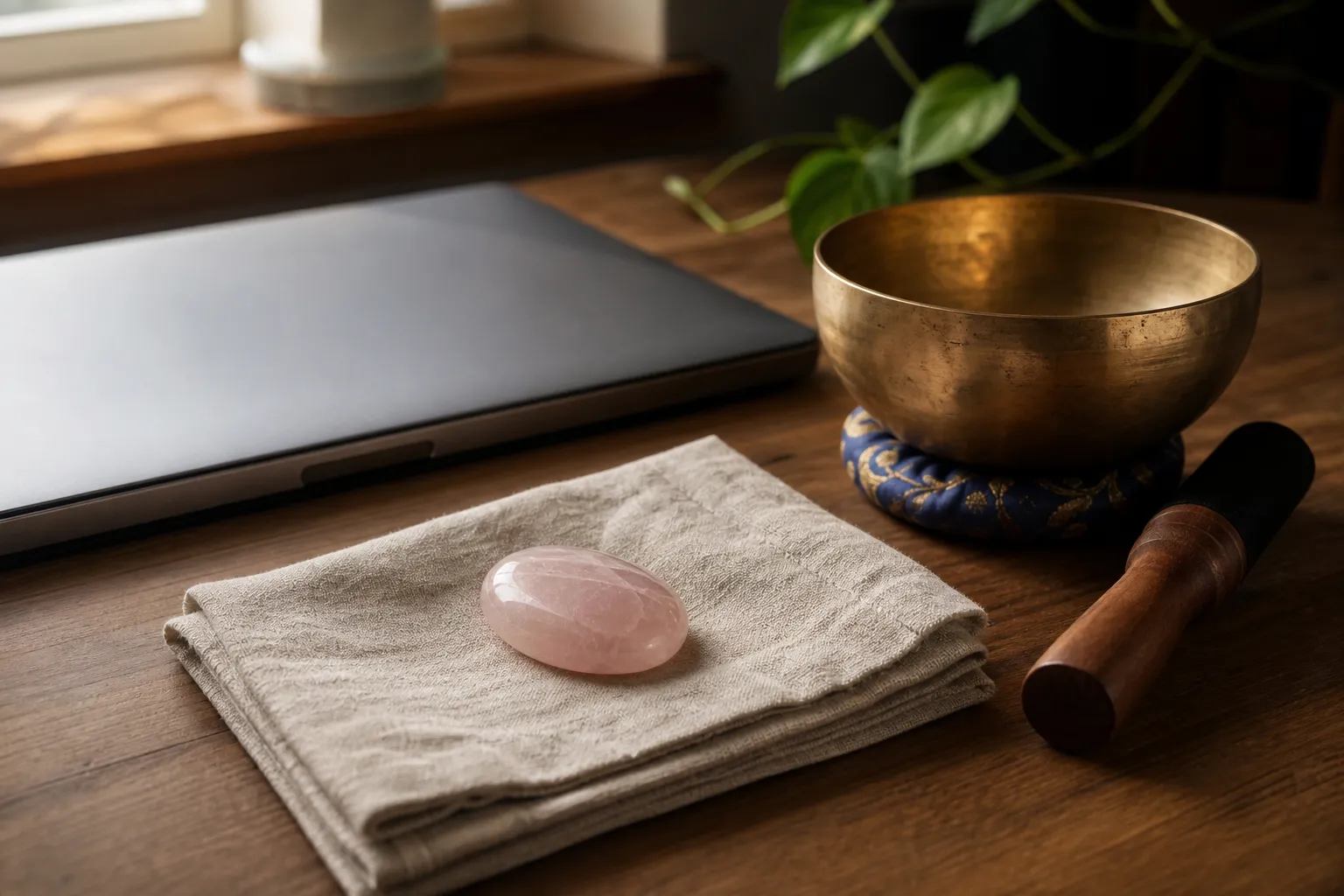
In crystal-care language, “clearing” usually means returning a stone to a state that feels quiet, intentional, or ready for use. With rose quartz or another crystal, a singing bowl can become part of that reset: place the stone, sound the bowl, pause, notice the room, and close with a simple intention.
That does not mean sound has been shown to erase a substance, field, or device-related residue from the crystal. Terms such as “aura clearing,” “digital smog,” “frequency,” and “electromagnetic residue” work best here as belief-based or poetic language. They may describe how someone frames the ritual, but they should not be treated as confirmed mechanisms.
A grounded version sounds like this: a singing bowl crystal clearing ritual uses sound as a focal point for symbolic renewal. The tone may help you slow down. The crystal’s placement may help you treat the object with care. The intention may help you decide how you want to use the stone next. Those are real parts of a ritual experience, but they are not proof of physical purification.
This distinction matters because some of the language can sound technical. A singing bowl produces audible sound and vibration; that much can be heard and felt. The unsupported leap is saying that the vibration purifies crystals, removes digital residue, shields against electronics, or changes personal health outcomes.
A Gentle Singing Bowl Crystal Clearing Ritual
If you want to practice singing bowl crystal aura clearing, keep it simple and careful. The aim is not to prove that the crystal has changed. The aim is to create a deliberate pause around an object that carries personal, aesthetic, or symbolic meaning.
Choose and prepare
Choose one crystal rather than the whole collection. Rose quartz is a common choice for readers who connect it with softness, affection, or interior calm, but the same approach can be used with other stones. If the crystal is dusty, clean it physically first; a sound ritual does not replace ordinary care.
Place with care
Place the crystal near the singing bowl, not automatically inside it. Some stones can chip, slide, or knock against the bowl. A cloth, tray, or flat surface keeps the setting intentional without making the setup fragile. If the bowl is large and the stone is stable, placing it inside may be fine, but it is not required for the ritual to feel complete.
Name the purpose
Before sounding the bowl, name the purpose in plain language. For example: “I am letting this object return to quiet use after a noisy day.” That keeps the intention tied to your experience rather than to a claim about unseen residue.
Sound and pause
Sound the bowl gently. Let the tone rise, fade, and leave a short silence. You can repeat this a few times, but there is no evidence-based number of rings, minutes, or rotations that makes the practice more effective. The rhythm should support attention, not chase a guaranteed result. If the tone feels sharp, too loud, or irritating, soften it or stop.
As the sound fades, look at the crystal without forcing a meaning onto it. Notice color, surface, weight, temperature, and where it sits in the room. This sensory observation is one of the most grounded parts of the practice: you are paying attention to the stone as both an object and a symbol.
Close by deciding where the crystal belongs next. It might return to a bedside table, desk, shelf, meditation corner, or small arrangement with other objects. This aftercare step matters. A stone placed thoughtfully is less likely to become clutter, a forgotten charm, or a place where too much expectation gets stored.
What Changes the Answer
The basic answer stays the same: singing bowl crystal clearing can be meaningful as ritual, but it should not be presented as verified purification. What changes is how cautious, simple, or private the practice should be.
Claim language
“I use sound to mark a symbolic reset” is grounded. “The bowl removes electromagnetic residue from the crystal” goes beyond what this page can support. Private symbolism can be flexible; public claims in a class, shop, video, or product page need much clearer limits.
The crystal itself
A handled stone may need ordinary cleaning more than ceremony. A display crystal may simply need dusting and a better location. A personally meaningful stone may benefit from the pause and attention of a ritual, even if nothing measurable is being purified.
Context
“Digital smog” can be useful if you mean the feeling of being crowded by devices, messages, bright screens, and background noise. It becomes misleading when treated as a literal residue that a bowl can remove from crystals, rooms, bodies, or electronics. If your concern is electrical safety, device exposure, or environmental health, this ritual is not the right tool for that question.
Sound
A bowl’s tone can feel pleasant, grounding, sharp, or distracting depending on the room and the listener. That makes it a personal sensory tool, not a universal cleansing method. Near pets, shared walls, sleeping people, or a quiet household, the considerate version may be one soft tone or a silent intention instead.
Common Confusion Around Digital Smog and Aura Clearing
The easiest mistake is treating poetic language as technical language. “Aura clearing” often sounds like a definite process, but in this article it is better read as spiritual shorthand for resetting attention, mood, or symbolic use. The phrase can be useful because readers search for it, not because it proves that an aura has been measured or changed.
“Digital smog” works the same way. As a metaphor, it captures a modern kind of overload: devices, notifications, bright screens, and invisible systems making a room feel busy even when it looks still. As a scientific claim about residue on crystals, it goes too far.
“Acoustic resonance” also needs a modest frame. In ordinary terms, a singing bowl makes sound and vibration. That sound can shape the ritual atmosphere. It should not be stretched into proof that crystals are being reprogrammed, detoxified, or electromagnetically cleared.
Sound-based wellness language needs the same care. Some readers use it broadly for relaxing or meaningful practices. Here, the bowl is best described as part of a reflective ritual, not as a tool for addressing health, mental health, electrical safety, or electromagnetic protection concerns.
Crystal Placement Suggestions That Keep the Ritual Grounded
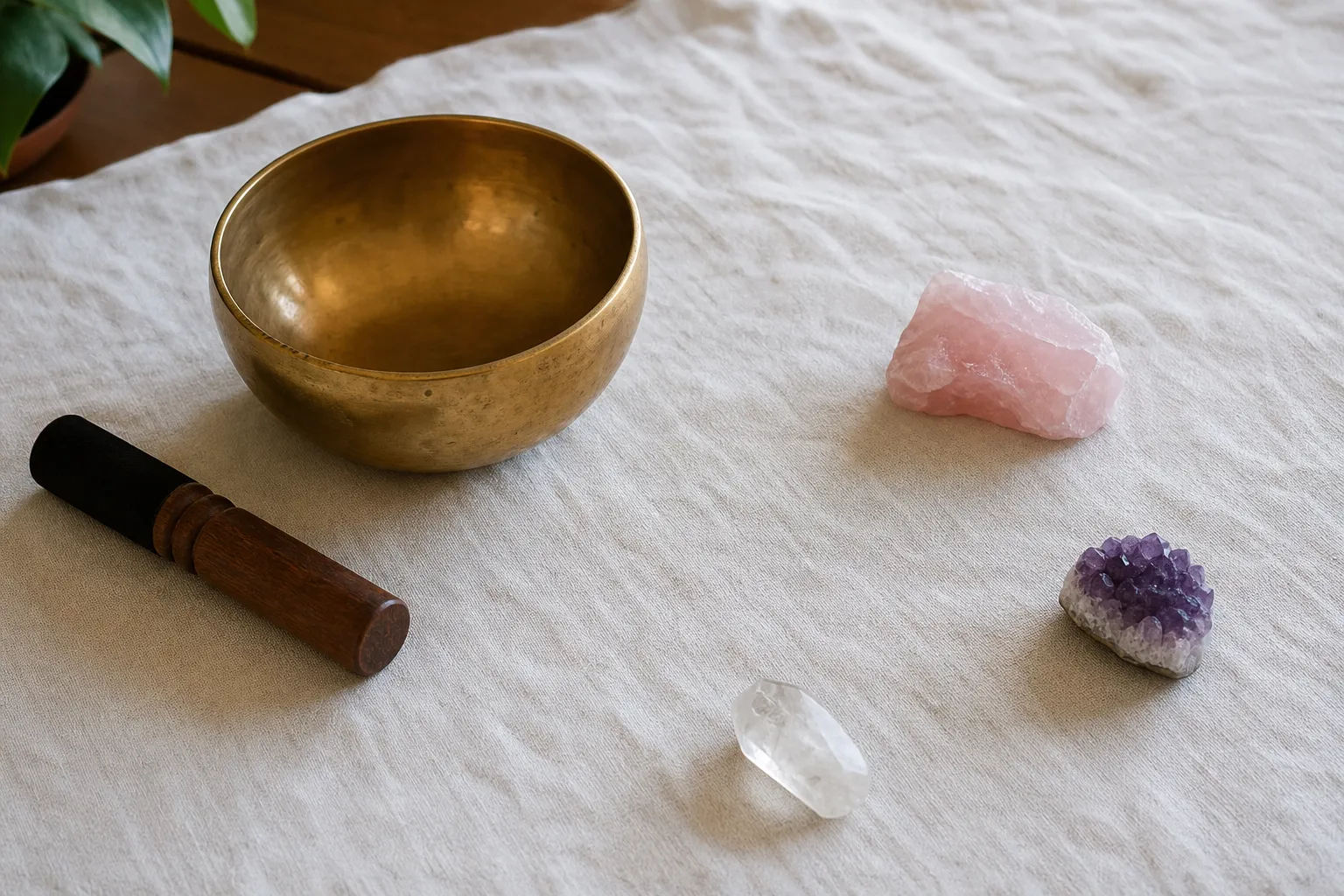
Placement can make the ritual feel coherent without implying that a specific shape or layout guarantees an effect. Think in terms of clarity, care, and symbolism.
Single rose quartz piece
Place it on a clean cloth beside the bowl, close enough to feel included but not close enough to be struck. If the stone is polished, a soft surface can prevent sliding. If it is rough, give it enough space so edges do not scrape the bowl or nearby objects.
Small group of crystals
Arrange them in a simple half-circle around the bowl. This keeps the sound source visually central without suggesting that a complex layout is required. You can group stones by use: desk stones, bedside stones, display pieces, or crystals you handle often.
Room reset
Choose one location rather than moving the bowl through every corner as if chasing a contaminant. A table, floor cushion, altar shelf, or quiet desk can become the ritual point. The focus is not to cleanse the entire room in a measurable sense; it is to mark a transition from digital noise to quieter attention.
Afterward, do something ordinary and concrete. Put the crystal somewhere visible. Clear the nearby surface. Turn off one unnecessary device if that supports the “digital smog” metaphor for you. Write one sentence about what the stone represents now. These small actions anchor the ritual better than elaborate claims about invisible residue.
The Evidence Boundary to Keep in View
The current source base for this page does not include high-quality public references, citable user reports, professional tests, or confirmed firsthand evidence. That absence does not make the ritual meaningless, but it does limit what can be responsibly claimed.
A careful summary is this: singing bowl crystal aura clearing may be used as a personal crystal clearing ritual, intention-setting ritual, or symbolic crystal reset. It may help some people create a calmer atmosphere because they find the sound, silence, and placement meaningful. It should not be described as scientifically verified acoustic crystal purification, EMF removal, medical support, or confirmed energetic repair.
This boundary is especially important for rose quartz readers because the stone often sits between material reality and emotional symbolism. The mineral is a real object with color, texture, weight, and care needs. It is also a symbol people use for softness, affection, memory, interiors, or ritual attention. A singing bowl can belong to the symbolic side of that relationship without pretending to answer scientific questions it cannot carry.
Until stronger sources are added, the strongest version of the practice is modest: clean what is physically dirty, place the crystal carefully, use the bowl as a sensory marker, set an intention, and avoid claiming more than the ritual can show.
A Short Checklist Before You Begin
Use this checklist if you want the ritual to stay clear and grounded:
- Choose one crystal or a small group, and remove visible dust first.
- Place the crystal securely near the bowl, not where it can be struck.
- Use intention language about symbolic reset, not measurable purification.
- Keep the sound gentle, brief, and responsive to the room.
- Treat “digital smog” and “electromagnetic residue” as metaphors.
- Finish with ordinary aftercare: thoughtful placement, less clutter, and a clear next use.
Acoustic crystal purification is most coherent when it is honest about what it is: a quiet ritual of attention. The bowl does not need to prove invisible cleansing to be useful. The crystal does not need exaggerated claims to feel meaningful. When the language stays symbolic and the practice stays careful, singing bowl crystal clearing can be a graceful way to reset your relationship with an object, a room, or a noisy moment.