Rose quartz care note
Why Your Pink Quartz is Turning White: The Science of UV Fading
If your pink quartz or rose quartz sat in strong sunlight and now looks pale, cloudy, washed out, or almost white, the most likely explanation is a change in how the stone is interacting with light. UV Fading in Quartz is a real concern in the broad sense: quartz color can depend on defects, inclusions, trace elements, trapped charges, and light-absorbing centers that may be affected by radiation, heat, or long exposure.
But the everyday answer is not as simple as “sunlight always turns rose quartz white.” Some pale rose quartz only looks whiter because of surface film, scratches, lighting, or natural cloudy zones inside the stone. The practical response is to reduce strong light exposure, check whether the change is internal or surface-level, and avoid treating every pale specimen as permanently faded.
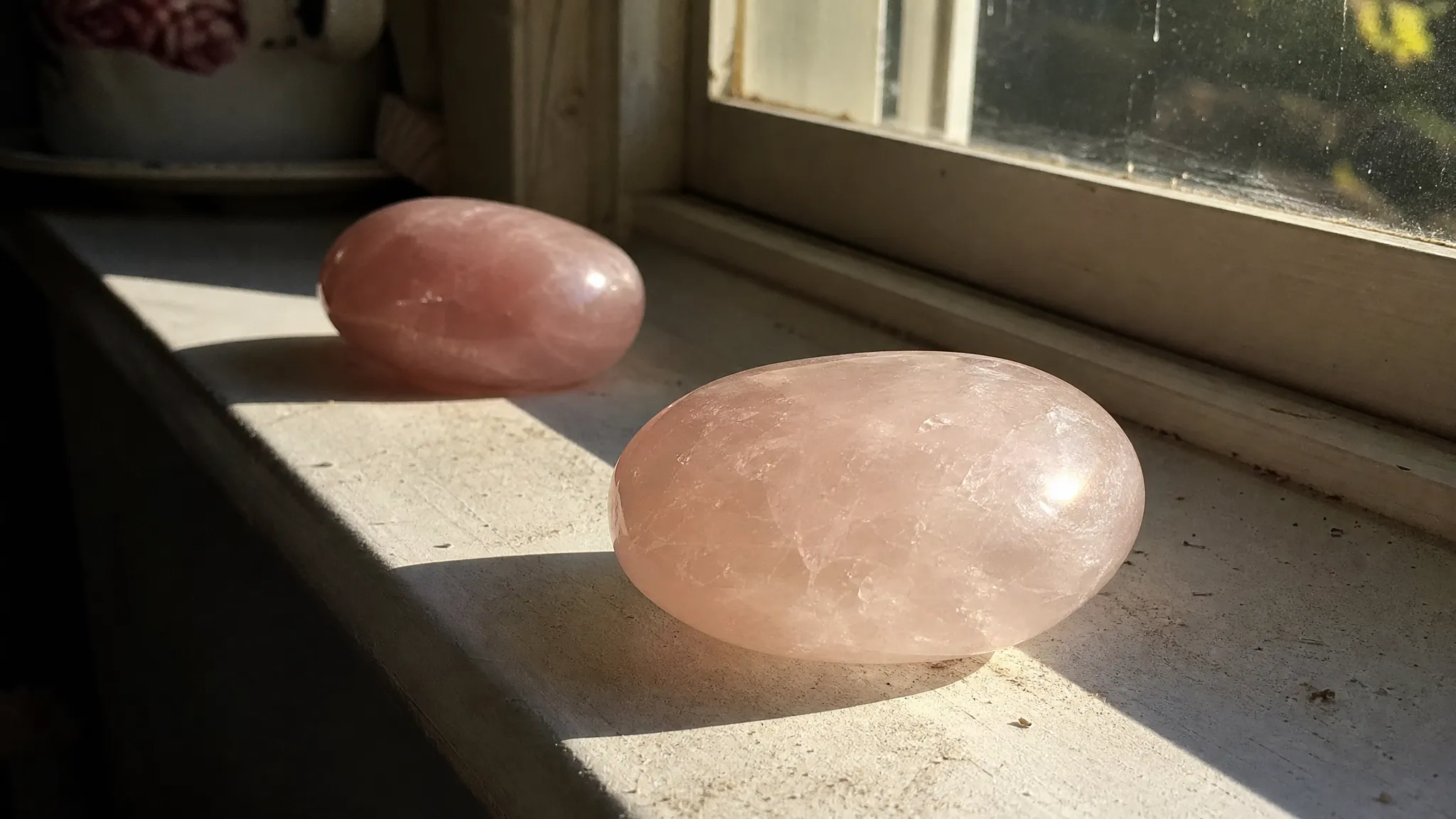
What sunlight can do to pink quartz color
Rose quartz is not pink because of an outside paint layer. Its color comes from the way light passes through, scatters inside, and is absorbed by the material. When that balance changes, the stone can look less pink even if its shape, polish, and hardness seem unchanged.
Quartz coloration is a mineralogical issue. Different quartz varieties get their colors through different combinations of structural defects, trace impurities, irradiation history, trapped charges, growth conditions, and microscopic inclusions. Rose quartz itself is not explained by one universal formula; mineralogical literature has discussed titanium-related color centers as well as inclusion-related causes for rose coloration.
That matters because sunlight is not just “brightness.” It includes visible light, ultraviolet radiation, and heat. In some minerals, energetic light can affect color-producing defects or absorption features. If a rose quartz specimen’s pink appearance depends partly on a light-sensitive feature, prolonged exposure may make the color look weaker.
The limit is important: laboratory studies on quartz often use controlled irradiation, spectroscopy, or heating conditions that are not the same as a crystal sitting on a windowsill. They support the broader mechanism, not a guaranteed household timeline. We cannot honestly say that every rose quartz piece will fade, or that a specific number of sunny days will turn it white.
Why it may look white instead of just lighter pink
A soft pink stone begins close to white already. Many rose quartz pieces are only faintly colored, and the pink is often uneven through the stone. If the pink component weakens even a little, the remaining appearance may read as milky, chalky, grayish, or white.
Internal cloudiness can make this stronger. Rose quartz may contain veils, fractures, growth zones, and cloudy areas that scatter light. When the pink tone is strong, those features still look rosy. When the pink tone is weak, the same scattering can make the stone look whitish. That does not mean a new white substance has formed; it may mean the underlying milky character is now more visible.
Background and lighting also matter. A piece that looked pink on a dark shelf can look much paler on a white windowsill or in harsh front light. Photos can exaggerate the change because cameras often adjust white balance automatically.
Still, if the same stone looked clearly pink before long exposure and now looks consistently paler in neutral indoor light, light-related fading is a reasonable possibility.
Color centers, defects, and inclusions in plain terms
A color center is a tiny structural feature in a crystal that absorbs certain parts of visible light. Some involve missing atoms, substituted elements, trapped electrons, or trapped holes. When those features absorb light in a certain way, the human eye sees color.
Quartz is silicon dioxide, but natural quartz is not a perfectly featureless lattice. It can contain trace elements, strained growth layers, hydrogen-related defects, alkali-related defects, aluminum-related centers, titanium-related features discussed in rose quartz research, and microscopic inclusions. Not all of these create visible pink color, but they show why quartz coloration is more complicated than a single ingredient.
This is why “pink quartz turning white” is usually not the same as paint wearing off. Unless the object was coated, dyed, treated, or misrepresented, the color question is mostly internal: absorption, scattering, inclusions, and defect behavior.
When sunlight is probably part of the answer
Sunlight becomes a stronger suspect when the pattern matches the exposure.
Look for clues such as:
- the stone sat on a bright windowsill, in a sunroom, or near glass for a long time;
- the side facing the window is paler than the shaded side;
- several stones in the same sunny spot became paler, while similar stored pieces did not;
- the color still looks weaker under soft, neutral indoor light.
Heat can complicate the picture. A windowsill may become warm, and some color centers in quartz varieties are affected by heat under stronger treatment conditions. A household display is much milder than laboratory or gem-treatment conditions, but the object may still experience a mix of light, UV, warmth, dust, and repeated temperature changes.
The safest practical assumption is conservative: strong direct sun is not needed for displaying rose quartz, and limiting it removes one avoidable stress on a color-sensitive object.
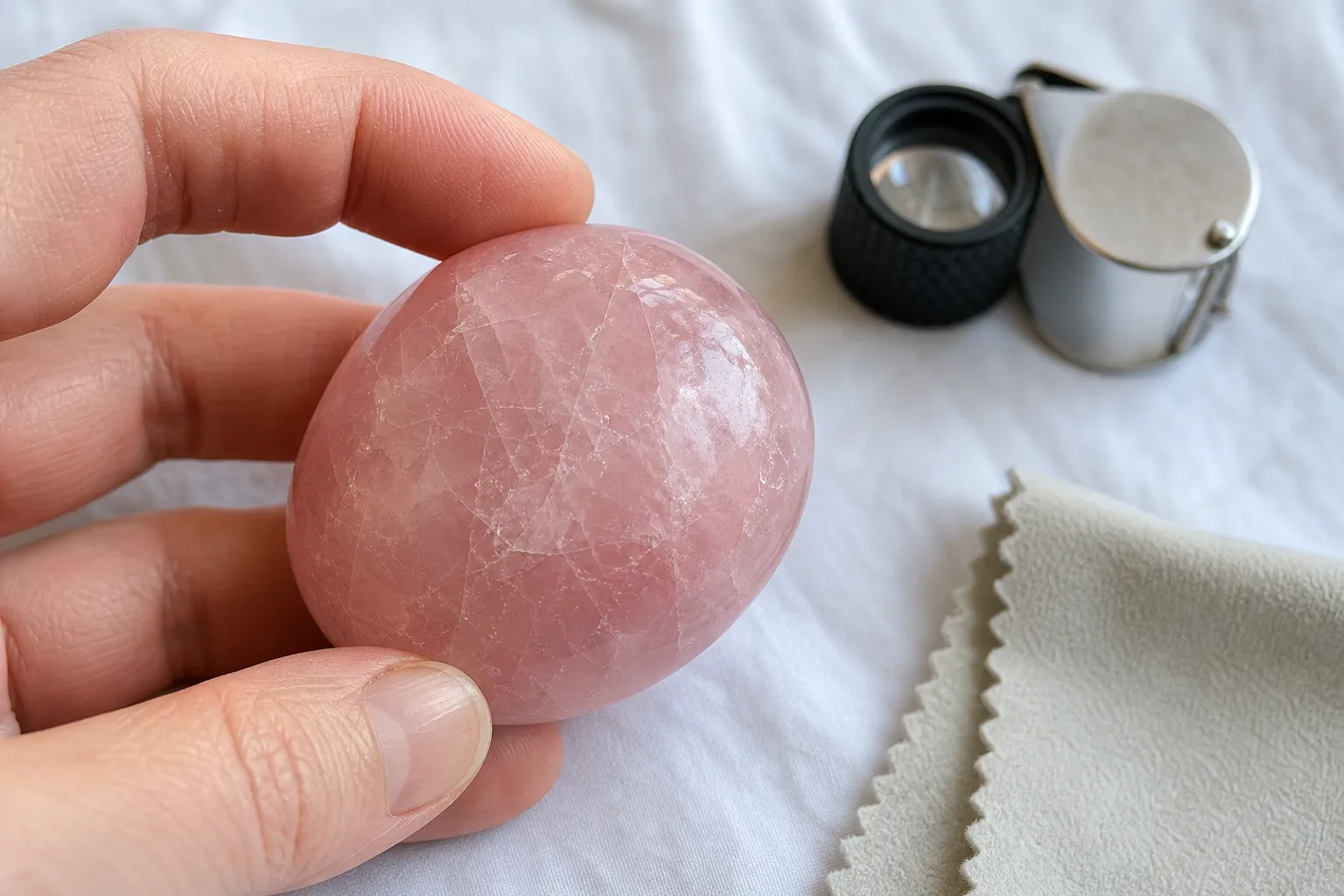
When it may not be UV fading
Before deciding your rose quartz has truly faded, check the simpler explanations.
A thin layer of dust, skin oil, candle residue, incense smoke, water minerals, or cleaning-product residue can make a polished stone look cloudy. On pale pink quartz, that cloudiness can read as white. Try a soft dry cloth first; if needed, use a slightly damp cloth and dry the stone afterward.
Fine scratches can also create a white or frosted look. Tumbled stones, beads, and carved pieces may develop surface abrasion from handling, storage with harder objects, or rubbing against metal findings. Scratches scatter light, so a glossy pink surface can become dull and whitish even if the internal color has not changed much.
Lighting is another common trap. Compare the stone in soft indirect daylight, on a neutral gray or off-white background. Avoid direct sun, colored lamps, and phone photos as your only evidence. If the stone still looks much paler in consistent neutral light, the change is more likely to be real.
Natural zoning matters too. Rose quartz can be uneven. A rotated specimen may show a paler face that was always there.
Can the pink color come back?
For an ordinary household specimen, there is no reliable home method for restoring faded rose quartz color. The available mineralogical research helps explain why quartz color can involve defects, absorption centers, inclusions, irradiation response, and heat sensitivity, but it does not provide a safe domestic recipe for reversing a pale rose quartz piece.
Be cautious with online suggestions that involve heating, freezing, soaking, or elaborate “recharging” routines. Some may be personal display practices, but they should not be treated as methods for reversing mineral color change. Heating is especially risky for finished objects because they may contain fractures, inclusions, adhesives, coatings, metal settings, or prior treatments.
If the piece is valuable as jewelry, a mineral specimen, or an inherited object, skip experiments. Keep it out of direct sun, avoid abrasive cleaning, and document its current appearance in neutral light. For a high-value piece, a qualified gemological or mineralogical assessment may help distinguish natural rose quartz from treated material, surface damage, or another pink stone sold under a quartz-like name.
How to care for rose quartz after a fading scare
You do not need to hide rose quartz in darkness. Just stop using direct sunlight as the display condition if preserving color matters.
Keep it in bright indirect light rather than full sun. A shaded shelf, cabinet, bedside table away from the window line, or display area with filtered light is usually more sensible than a sunny sill. Rotate display pieces if one side receives more light than the other. Store beads and jewelry away from sunny windows when not in use.
Clean gently. Start with a soft dry cloth. If needed, use a slightly damp cloth and dry the stone afterward. Avoid gritty powders, acidic cleaners, bleach, and aggressive polishing methods unless you know the surface can tolerate them. Many “white” appearance problems are caused by scattering or residue, and over-cleaning can make that worse.
If you want to monitor the change, take a reference photo in the same place, on the same background, under the same indirect light every few months. It is not a scientific measurement, but it is better than comparing memory against changing light.
The bounded answer
Pink quartz can look white after sunlight exposure because its color depends on internal optical behavior. Quartz color can be connected to defects, inclusions, impurities, trapped charges, and absorption centers, and some of those features may respond to light, radiation, or heat.
For rose quartz, the exact cause of pink coloration is not one settled household rule, so different stones may behave differently. If your rose quartz looks paler after strong light exposure, sunlight may have contributed. Before calling it permanent UV fading, check for surface film, abrasion, lighting effects, and natural zoning. Going forward, keep rose quartz in indirect light and treat strong sun as unnecessary exposure rather than a harmless display choice.